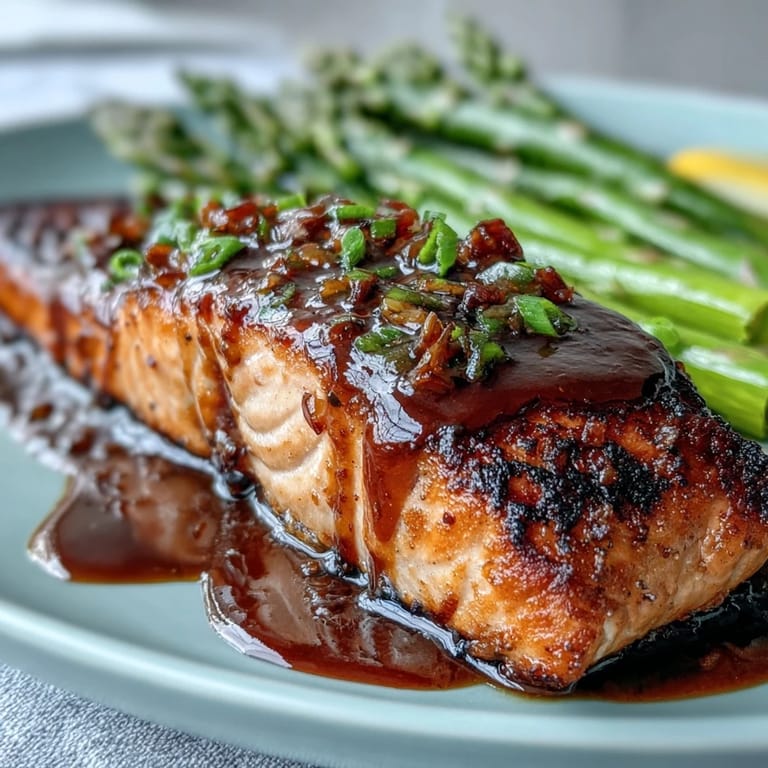
 Save to Pinterest
 There's something about the sizzle of salmon hitting a hot pan that makes me feel like I'm actually cooking something worthwhile. Years ago, I'd overcomplicate fish dishes, drowning them in sauces and second-guessing myself the whole time. Then a friend casually threw together salmon, asparagus, and garlic butter on a sheet pan while we were chatting about nothing in particular—and somehow it became the dish I make whenever I want to feel like I know what I'm doing. The beauty of it is that simplicity isn't laziness; it's confidence.
I made this for my sister's unexpected visit last spring when she showed up unannounced with her new partner. I had maybe twenty minutes before they arrived, and I remember standing in the produce section debating whether I could pull off something that didn't feel thrown together. This recipe saved me—the lemon and asparagus screamed fresh and intentional, while the garlic butter made it feel thoughtful. By the time they walked in, the kitchen smelled incredible, and nobody needed to know I'd basically improvised the whole menu.
Ingredients
- Salmon fillets (4, about 6 oz each), skin-on or skinless: This is the star, so buy the best quality you can find—look for vibrant color and avoid anything that smells fishy in a bad way, which is how you know it's past its prime.
- Fresh asparagus (1 lb), woody ends trimmed: Hold a spear in the middle and bend it gently until it snaps naturally; discard the tough bottom part and keep the tender upper half.
- Lemon (1), sliced into rounds: Those thin slices aren't just decoration—they release juice during roasting and keep the fish moist while adding subtle flavor throughout.
- Unsalted butter (4 tbsp), melted: Use real butter here because it's the backbone of everything; margarine will never give you that rich, golden depth.
- Garlic (3 cloves), minced: Mince it fresh rather than using jarred, or you'll wonder why the whole dish tastes slightly off.
- Fresh lemon juice (1 tbsp): A squeeze of brightness that keeps the richness from becoming heavy and ties the whole plate together.
- Dijon mustard (1 tsp): Trust me on this one—it's barely noticeable but adds complexity that makes people ask what your secret is.
- Salt (1/2 tsp), black pepper (1/4 tsp), and red pepper flakes (1/4 tsp, optional): Start conservative with seasoning since the butter and lemon add their own punch, and you can always taste and adjust.
- Fresh parsley (2 tbsp), chopped, for garnish (optional): A small handful scattered on top right before serving adds color and a fresh herbal note that feels generous.
Tired of Takeout? 🥡
Get 10 meals you can make faster than delivery arrives. Seriously.
One email. No spam. Unsubscribe anytime.
Instructions
- Get your oven ready:
- Preheat to 400°F and line a large baking sheet with parchment paper or foil. The parchment is your friend here—cleanup is half the joy.
- Arrange everything on the sheet:
- Place salmon fillets in the center with asparagus scattered around them in a single layer. Tuck lemon slices between the salmon and asparagus; they'll release steam and flavor as things roast together.
- Build the garlic butter sauce:
- Whisk together melted butter, minced garlic, lemon juice, Dijon mustard, salt, pepper, and red pepper flakes in a small bowl. The mixture should smell absolutely incredible at this point—that's how you know you're on the right track.
- Coat everything evenly:
- Drizzle the sauce over salmon and asparagus, making sure both get a fair share. Don't be shy; this sauce is what makes the whole thing sing.
- Roast until tender:
- Put it in the oven for 15 to 18 minutes. The salmon is done when it flakes easily with a fork and has turned from translucent to opaque; the asparagus should be tender but still have a little snap. If you're unsure about the salmon, err on the side of slightly underdone because carryover cooking will finish it gently.
- Finish and serve:
- Scatter fresh parsley over everything while it's still warm, and serve immediately with lemon wedges on the side for anyone who wants extra brightness.
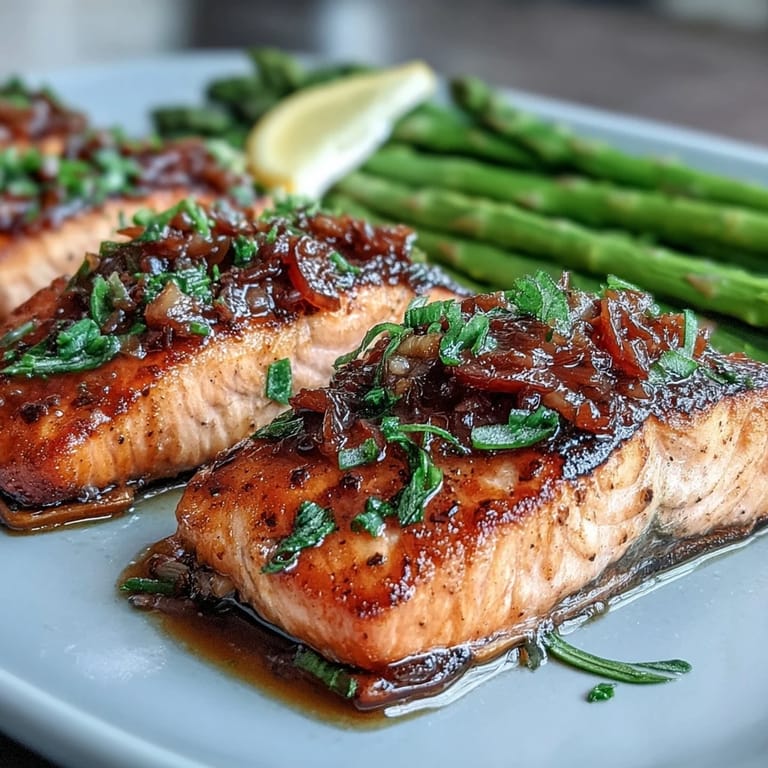 Save to Pinterest
 There was this one dinner where a guest cut into their salmon and said, 'This tastes like spring'—and I realized it wasn't pretentious or flowery, just true. The brightness of the lemon, the delicate minerality of the fish, the slight bitterness of the asparagus all working together made something bigger than the sum of its parts. That's when I understood why people keep asking for this recipe.
The Secret of Sheet Pan Cooking
Sheet pan meals aren't shortcuts; they're a different way of thinking about flavor. When everything cooks together in the same space, the juices mingle, the aromas build on each other, and somehow the finished dish tastes more cohesive than if you'd cooked components separately. I've started thinking of the pan itself as an ingredient—the heat distribution, the steam that rises and condenses back onto the food, the way the edges of the asparagus get slightly caramelized. It's subtle alchemy that takes practically zero extra effort on your part.
Wine Pairing and Serving Ideas
A crisp white wine like Sauvignon Blanc or Pinot Grigio is the obvious choice, but the reason it works is worth understanding—the acidity in the wine echoes the lemon in the dish, and the mineral notes complement the salmon without overpowering it. Serve this alongside something simple like a grain salad or crusty bread to soak up the extra butter sauce pooling on the plate. I've also found that roasted new potatoes tossed with a little of that leftover garlic butter turn this from a main into a complete, elegant meal.
Variations and Flexibility
The beauty of this dish is how forgiving it actually is. Green beans, broccolini, or even zucchini work beautifully if you don't have asparagus on hand. Some nights I add a sprinkle of grated Parmesan over the asparagus right before roasting, which creates these little crispy, umami-forward spots that are dangerously addictive. If you're feeling adventurous, a tiny pinch of smoked paprika in the butter sauce adds a subtle warmth that nobody can quite identify but everyone loves.
- Prepare this dish up to the butter-drizzling stage a few hours ahead, then pop it in the oven right before serving.
- Leftover salmon flakes beautifully into a cold salad the next day with some of that lemon dressing mixed in.
- The garlic butter sauce works just as well on other fish like halibut, cod, or even shrimp if you're in the mood for something different.
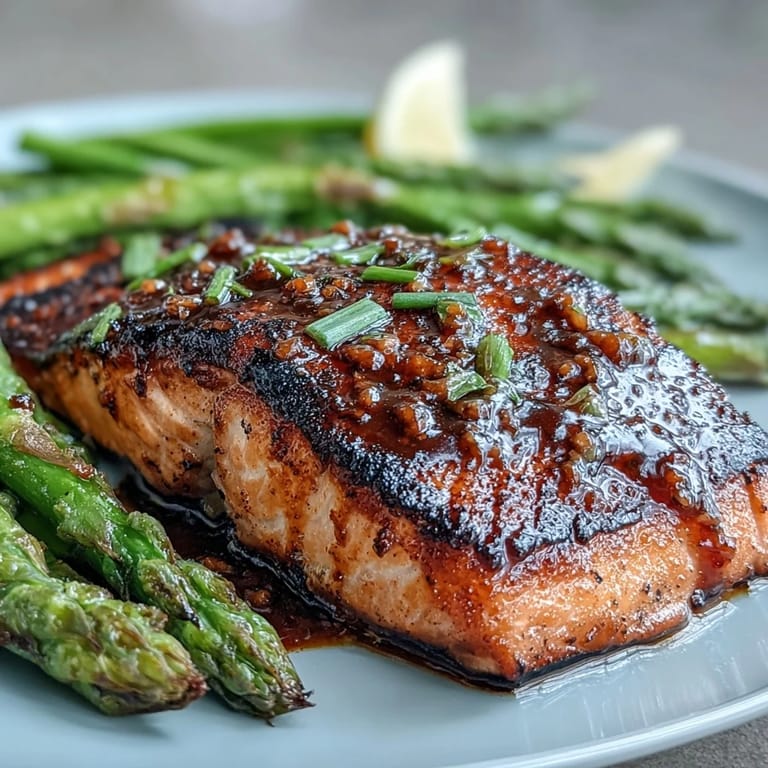 Save to Pinterest
 This recipe has become my answer to 'I want to cook something impressive but I'm honestly tired.' It feels like you're doing something fancy when really you're just letting good ingredients shine. That's the whole point.
Questions & Answers
- → How do I know when the salmon is fully cooked?
The salmon is done when it flakes easily with a fork and is opaque throughout. Roasting for 15-18 minutes at 400°F usually achieves this.
- → Can I use frozen salmon fillets?
Yes, but thaw them completely before roasting to ensure even cooking and better texture.
- → What can I substitute if I don’t have asparagus?
Green beans or broccolini work well as alternatives for similar texture and flavor.
- → How to enhance the garlic butter sauce flavor?
Adding a sprinkle of grated Parmesan over the asparagus before roasting adds an extra layer of richness.
- → What wines pair well with this dish?
Crisp white wines like Sauvignon Blanc or Pinot Grigio complement the buttery and citrus flavors excellently.