 Save to Pinterest
 The first time I made banitsa, I was standing in my grandmother's kitchen on a cold Sofia morning, watching her hands move with practiced ease through layers of phyllo so thin you could read through them. She never used a recipe, just muscle memory and the way the dough felt between her fingers. Years later, I finally understood what she was doing—and why every layer mattered. Now when I make it, I can almost hear her humming that old folk song while the butter sizzles and the pastry begins to turn golden.
I remember bringing a still-warm square to my neighbor one Sunday afternoon, and she came back twenty minutes later asking if I could make another one because her whole family had crowded around the kitchen table and devoured it without saving her a piece. That's when I knew this recipe was worth keeping close.
Ingredients
- Feta cheese: Crumbled into fine pieces, it distributes evenly and creates those pockets of salty richness that make banitsa unforgettable—use full-fat for the creamiest texture.
- Plain yogurt: This adds moisture and tang, keeping the filling smooth instead of grainy, which is the secret to authentic banitsa.
- Eggs: They bind everything together and create a custardy layer between the phyllo sheets when baked.
- Whole milk: Thinning the mixture slightly so it seeps into every layer and creates that silky interior.
- Phyllo dough: Buy it frozen and thaw it slowly overnight in the fridge—rushing this step makes it brittle and prone to tearing.
- Unsalted butter, melted: Each brushed layer becomes crispy and golden, so don't skip this step or use oil as a substitute.
- Salt and black pepper: Season boldly here since the filling absorbs flavor differently once baked.
Tired of Takeout? 🥡
Get 10 meals you can make faster than delivery arrives. Seriously.
One email. No spam. Unsubscribe anytime.
Instructions
- Prepare your workspace:
- Preheat the oven to 180°C and grease your baking dish with a touch of melted butter, making sure to coat the corners. This prevents sticking and helps the phyllo crisp up against the sides.
- Make the filling:
- Whisk eggs, yogurt, milk, salt, and pepper until completely smooth and pale, then gently fold in the feta so you don't break it into powder. The mixture should be thick but spreadable.
- Ready the phyllo:
- Unroll it and immediately drape a damp towel over the stack to keep it from drying out and cracking—phyllo can turn brittle in seconds. Work with one sheet at a time and keep the rest covered.
- Start the base layers:
- Place one phyllo sheet in the dish and brush it lightly with melted butter using gentle, overlapping strokes. Repeat with three more sheets, buttering each one, building your first protective layer.
- Layer and fill:
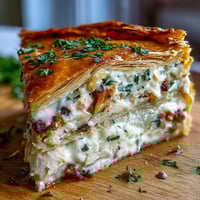
- Spread a quarter of the cheese mixture evenly over the phyllo, then add 3–4 more buttered sheets. Repeat this pattern until all filling is used, finishing with 3–4 dry sheets on top for crispness.
- Score and finish:
- Using a sharp knife dipped in hot water, cut the banitsa into squares or diamonds before baking—this prevents the phyllo from shattering when you slice it later. Pour any remaining butter over the top.
- Bake to golden:
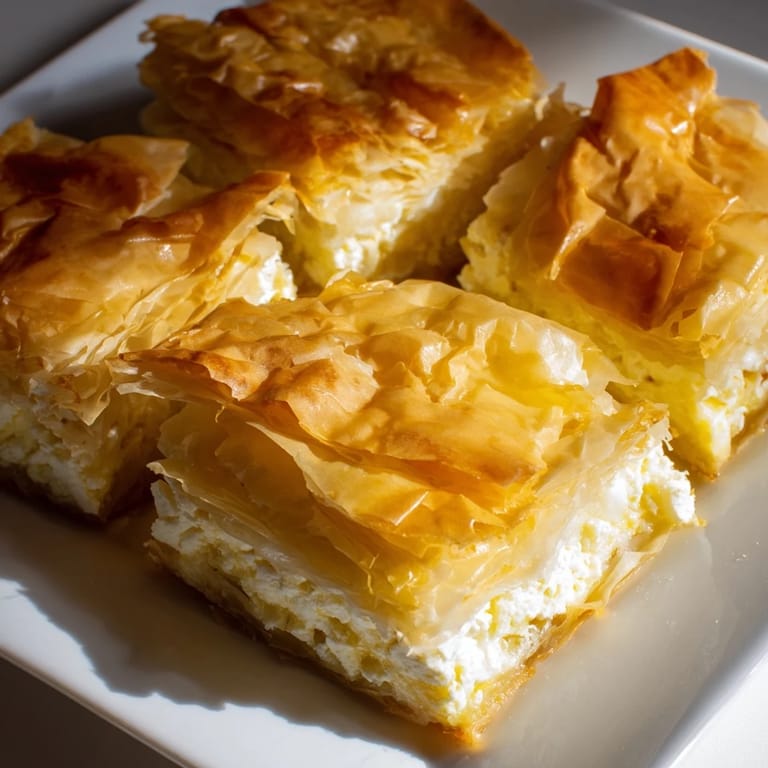
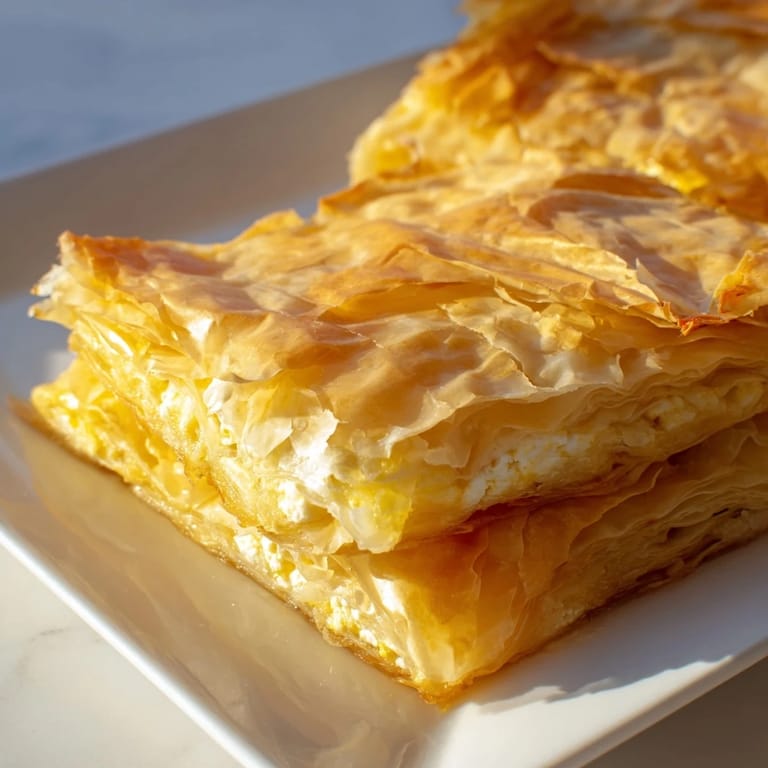
- Bake for 30–35 minutes until the top is deeply golden and you can hear a faint crackling sound. It should smell nutty and rich, not burnt.
- Cool before serving:
- Let it rest for 10 minutes so the filling sets slightly, making it easier to pick up and eat. Serve warm or at room temperature with ayran or a fresh salad.
 Save to Pinterest
 There's something profound about banitsa that goes beyond the flavors—it's the ritual of it, the way each buttered layer is a small act of care. Every time I make it, I'm connected to a tradition that's been passed down through generations of cooks who understood that the best food is built slowly, layer by layer.
The Phyllo Philosophy
Phyllo dough intimidates people, but it's actually forgiving once you understand it. The key is respecting its dryness and working with speed and confidence—hesitation is what causes it to crack. If a sheet tears, don't panic; it becomes invisible under the next layer and the filling, and honestly, some of the best banitsa I've made had at least one imperfect sheet hiding inside.
Making It Your Own
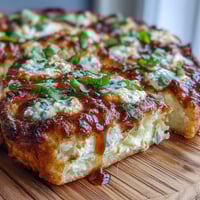
The beauty of banitsa is how it welcomes additions without losing its identity. Fresh dill or parsley stirred into the filling adds herbaceous brightness, while a pinch of nutmeg creates unexpected warmth. I've experimented with half sirene cheese for a milder flavor, caramelized onions for depth, and even roasted red peppers for a subtle sweetness. The ratio of phyllo to filling is what matters; adjust your additions without oversaturating the mixture.
Beyond Breakfast
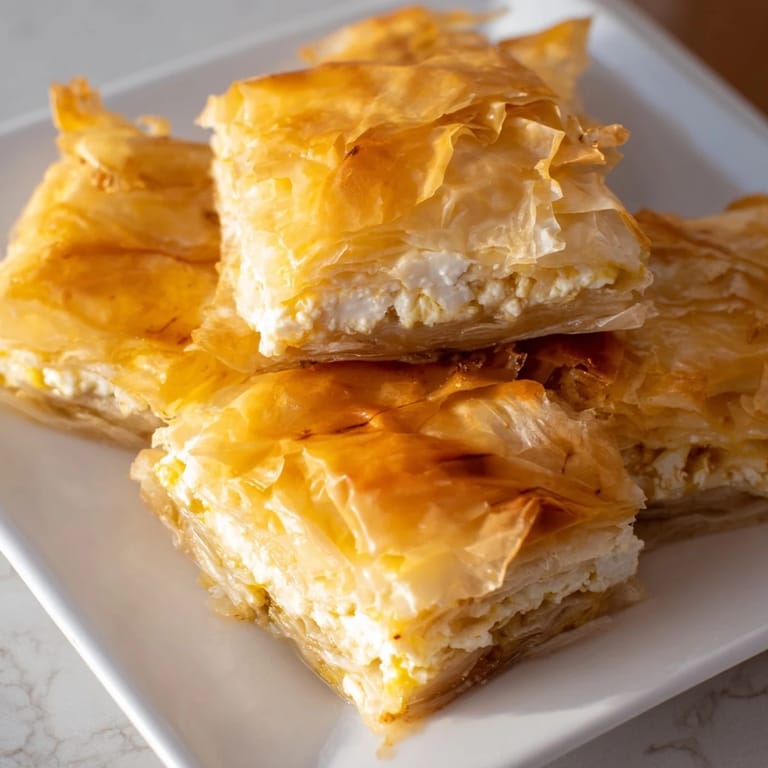
While banitsa is traditionally a morning dish in Bulgaria, I've served it at every hour without apology. Warm from the oven for breakfast, cut into small squares as a party appetizer, or sliced for a quick lunch with a cold salad and that essential glass of ayran. It keeps well for a few days in an airtight container and actually tastes better the next day once the flavors have settled.
- Pair it with cold ayran, fresh cucumbers, and tomatoes for an authentic Bulgarian meal.
- Save leftovers by storing them in the fridge and reheating gently in a 160°C oven for 10 minutes to restore crispness.
- Double the recipe and freeze an unbaked banitsa, then bake straight from frozen, adding just 5–10 extra minutes to the baking time.
 Save to Pinterest
 Every slice of banitsa is a small reminder that the best recipes aren't complicated—they're just made with intention and respect for what came before. Serve it warm, watch someone's face light up, and you'll understand why this dish has survived centuries.
Questions & Answers
- → What type of cheese is used in Bulgarian Banitsa?
Feta cheese is traditionally used, providing a salty and tangy flavor that complements the eggs and phyllo layers.
- → How should the phyllo dough be handled to prevent drying out?
Keep the phyllo covered with a damp towel during preparation to maintain its moisture and prevent it from cracking.
- → Can fresh herbs be added to the filling?
Yes, adding chopped fresh dill or parsley to the cheese-egg filling adds a fresh, aromatic touch.
- → What is the best way to serve this pastry?
Serve warm or at room temperature, ideal for breakfast, brunch, or as a savory snack alongside ayran or a light salad.
- → Is it possible to substitute the feta cheese?
Half the feta can be replaced with Bulgarian sirene cheese or ricotta for a milder, creamier flavor.