 Save to Pinterest
 The first time I made lahmacun, my Turkish neighbor stopped by just as the oven hit its highest temperature, and the smell of that thin, blistering dough hitting the heat made her pause at my kitchen door. She watched me spread the spiced meat mixture and said nothing for a moment, then smiled—apparently I'd nailed something she'd been trying to teach me for months. Now whenever I make it, I think of that instant when she recognized something of her own kitchen in mine.
I served these to friends on a Thursday night without much fanfare, just pulled them straight from the oven and squeezed lemon over the top. One person rolled theirs up with fresh parsley and onion, and suddenly everyone was doing it, transforming these little flatbreads into something they could hold and eat like street food. The casual energy of it stuck with me—sometimes the best meals are the ones nobody overthinks.
Ingredients
- All-purpose flour (300 g): The foundation of your dough, giving you that tender crumb beneath a crispy exterior once it hits the heat.
- Warm water (180 ml): Temperature matters here—too hot kills the yeast, too cool and nothing rises; aim for the warmth of a comfortable bath.
- Instant yeast (1 tsp): Your rising agent; keep it in the fridge if you bake infrequently, since it loses potency quickly.
- Sugar and salt (1 tsp each): Sugar feeds the yeast and adds subtle sweetness to balance the savory topping, while salt strengthens the gluten structure.
- Olive oil (2 tbsp for dough, 2 tbsp for topping): The richness that makes every bite feel intentional; don't skimp here.
- Ground lamb or beef (300 g): Lamb gives an earthier flavor that feels more traditionally Turkish, but beef works beautifully if that's what you have.
- Onion, garlic, tomato, and red bell pepper: Finely chopped, these create the aromatic base—the finer the chop, the better they meld into the meat.
- Tomato paste (2 tbsp): Concentrated sweetness and umami; this small amount makes a surprising difference.
- Fresh parsley (2 tbsp): Adds brightness that cuts through the richness; fresh herbs matter more than dried here.
- Cumin and paprika (1 tsp each): The spices that whisper Turkish kitchen to anyone who takes a bite.
- Chili flakes and black pepper (1/2 tsp and 1/2 tsp): Heat and depth, adjustable to your preference—taste as you go.
- Lemon wedges and fresh herbs for serving: These final flourishes are not optional; they brighten everything and make it taste complete.
Tired of Takeout? 🥡
Get 10 meals you can make faster than delivery arrives. Seriously.
One email. No spam. Unsubscribe anytime.
Instructions
- Bring the yeast to life:
- Dissolve your yeast in the warm water with the sugar, and let it sit for a minute—you'll see it start to bloom and smell faintly yeasty, which means it's ready. This small step ensures your dough actually rises instead of sitting stubbornly flat.
- Build the dough:
- Combine flour and salt in a large bowl, then pour in the yeasty water and olive oil all at once. Mix until shaggy, then knead for 5 to 7 minutes until the dough becomes smooth and elastic, no longer sticky.
- Let it rise:
- Cover the bowl loosely with a towel and set it somewhere warm—30 minutes is usually enough for it to double in size, though a warmer kitchen will speed this up. You'll know it's ready when you poke it and the indentation springs back slowly.
- Build your topping:
- In a separate bowl, combine the ground meat with all the chopped vegetables, spices, and olive oil, mixing thoroughly until everything is evenly distributed. Taste a tiny pinch and adjust the salt and spices if needed—this mixture should taste bold.
- Get your oven ready:
- Preheat to the highest temperature your oven reaches, ideally 250°C (480°F), and place a pizza stone or baking tray inside to get blazingly hot. This preheating step is where the magic happens—the heat creates that crispy, blistered edge.
- Shape your lahmacuns:
- Divide the risen dough into 8 pieces and gently stretch each one into a thin oval about 20 cm across, working on a lightly floured surface. The thinner you can make it without tearing, the crispier your finished lahmacun will be.
- Top and bake:
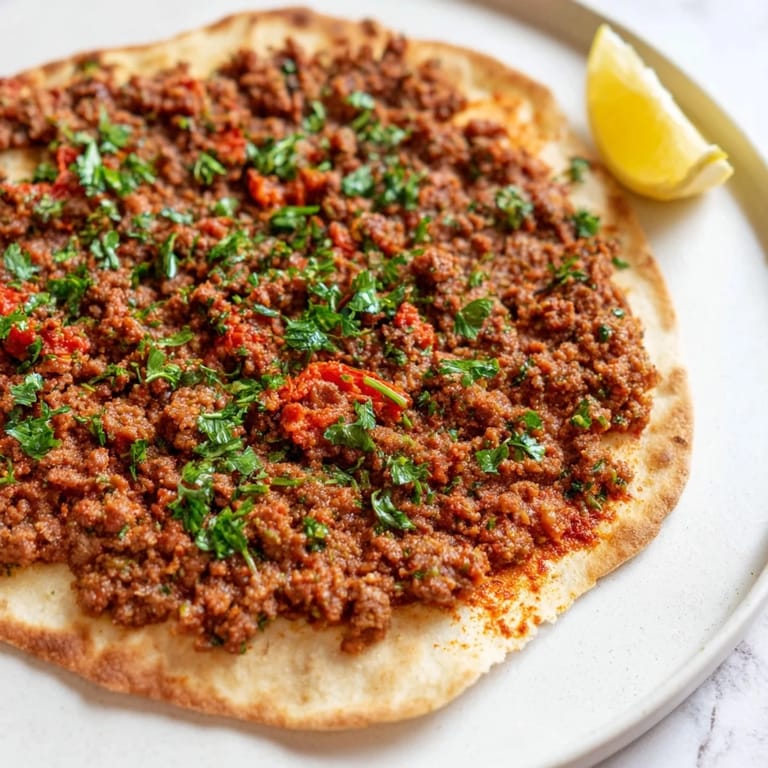
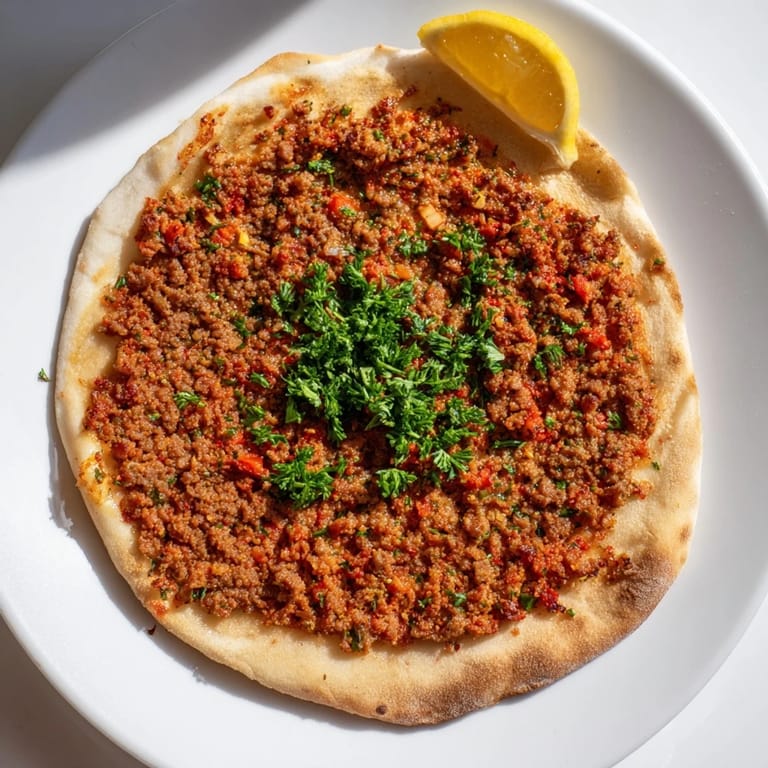
- Spread a thin, even layer of the meat mixture over each dough round, leaving a tiny border around the edge. Carefully transfer to your hot tray or stone—work quickly so the oven stays hot, and bake for 6 to 8 minutes until the edges are dark and crispy and the meat is cooked through.
- Finish and serve:
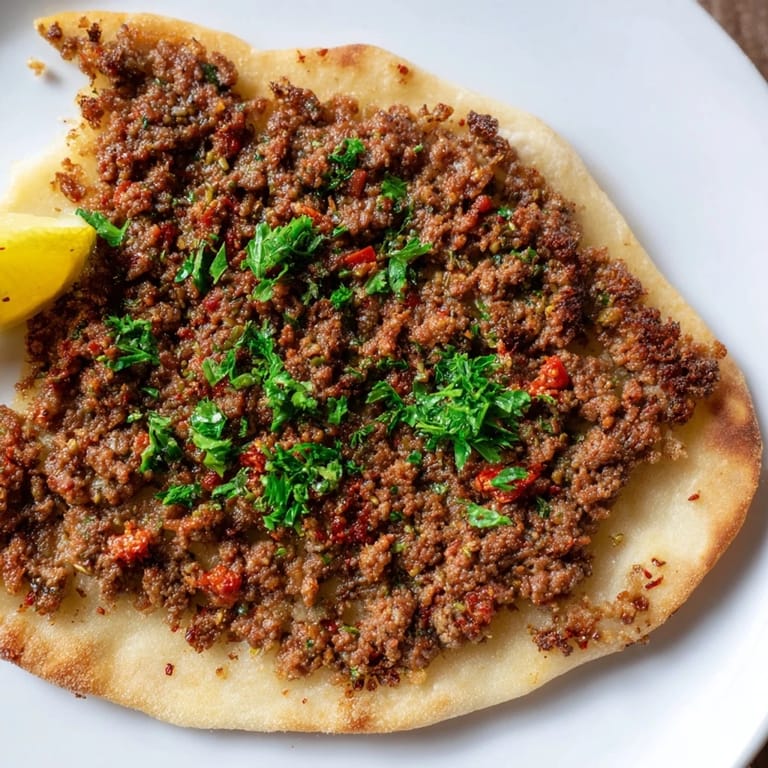
- The moment they come out, add a squeeze of fresh lemon and a scatter of fresh parsley or mint. If you like, arrange sliced onions and sumac on the side for people to add themselves.
 Save to Pinterest
 There's a moment, right after they come out of the oven, when steam rises and the smell hits you—it's almost dizzyingly good, and it's exactly when you need to stop yourself from eating three in a row before your guests get any. That's the moment I know this recipe is working.
Rolling and Eating Lahmacun
The traditional way to eat lahmacun is to roll it up like a thin sandwich, tucking in fresh herbs, sliced raw onions, and maybe a squeeze of lemon, then eating it with your hands while it's still warm. This transforms the flatbread into something more interactive and playful, and somehow the flavors come together differently when you're rolling it yourself. I've found that putting out a small plate of fresh mint, parsley, and thinly sliced red onion alongside lets everyone customize their own experience.
Scaling and Storage
This recipe naturally makes 8 lahmacuns, which serves 4 people generously, but the proportions are easy to halve if you're cooking for just two, or double if you're feeding a crowd. Leftovers will keep in an airtight container for a couple of days, though they're never as crispy as the moment they come out of the oven—I usually reheat them uncovered in a 180°C oven for 5 minutes to restore some of that texture.
Variations Worth Trying
Once you nail the basic version, the fun begins—I've made these with spiced ground chicken, with a mushroom and walnut mixture for vegetarian guests, and even with a mix of minced lamb and pine nuts for a slightly richer flavor. The dough and technique stay the same; it's the topping that can shift with whatever you have on hand or whatever mood you're in. Here are some combinations that have worked beautifully:
- Use half lamb and half beef for a more complex, rounded flavor that feels less heavy than lamb alone.
- Add a tablespoon of pomegranate molasses to the meat mixture for a subtle fruity tang that makes people pause and ask what that flavor is.
- Top with crispy fried onions or a drizzle of tahini sauce after baking for entirely different textural layers.
 Save to Pinterest
 Making lahmacun at home teaches you something about the value of simplicity—a few good ingredients, high heat, and timing are all you need to create something that tastes like it came from a proper Turkish kitchen. Once you've made it, you'll understand why this flatbread shows up at street corners and family tables across Turkey.
Questions & Answers
- → What type of dough is used for Lahmacun?
A soft dough made with flour, yeast, olive oil, and water, kneaded until smooth and rolled very thin for a crisp finish.
- → Which meats are suitable for the topping?
Ground lamb or beef are traditional choices, combined with finely diced vegetables and spices for a savory topping.
- → How is the dough prepared before baking?
After mixing ingredients, the dough is kneaded for several minutes and allowed to rise until doubled before shaping into thin rounds.
- → What spices enhance the flavor of the topping?
Common spices include cumin, paprika, black pepper, and optional chili flakes, adding warmth and depth to the meat mixture.
- → Can Lahmacun be made vegetarian?
Yes, by substituting the meat with a mushroom and walnut mixture, it offers a flavorful vegetarian alternative.
- → What are common garnishes served with Lahmacun?
Fresh parsley, lemon wedges, sliced onions, and sumac are commonly added to brighten and balance the rich toppings.