 Save to Pinterest
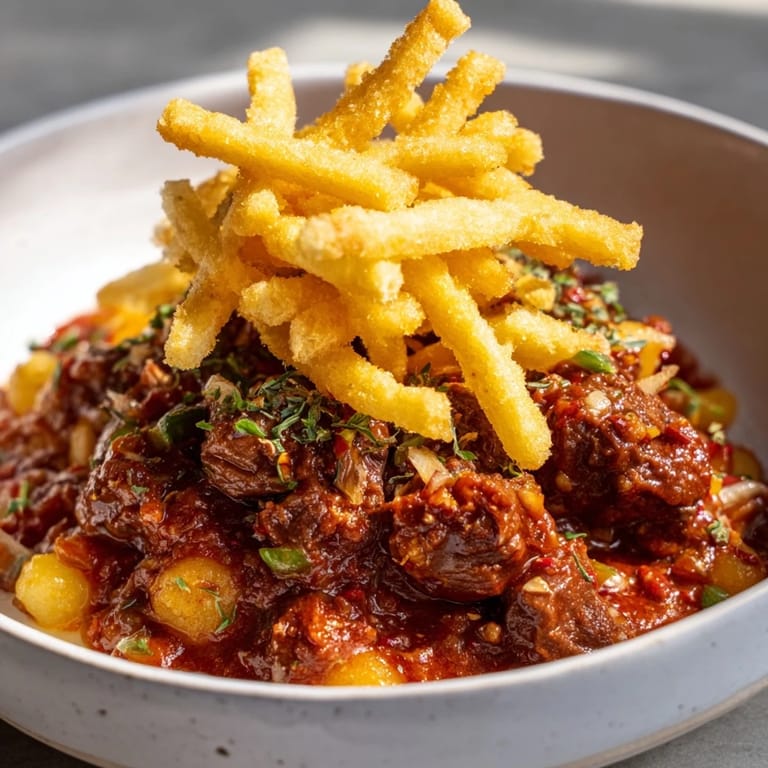
 I discovered Czech goulash at a small pub in Prague during a freezing January, where a steaming bowl arrived at my table with crispy potato strips piled high on top. The waiter explained that this wasn't fancy food, it was honest food—the kind that warmed you from the inside out on days when the wind cut through the cobblestone streets. I watched locals tear into their bowls with such genuine pleasure that I knew I had to learn how to make it. Years later, I still chase that same feeling every time I brown the beef and that paprika-laced aroma fills my kitchen.
I made this for my partner during our first winter living together, filling our tiny apartment with that unmistakable paprika perfume. He came home from work, stopped in the doorway, and just stood there for a moment before asking what smelled so good. That bowl became our thing, the meal we'd make on cold nights when we wanted to feel less alone in the world.
Ingredients
- Beef chuck (800 g, cut into 2.5 cm cubes): This cut needs the time to break down and become melt-in-your-mouth tender, and it's forgiving if you don't have perfectly uniform pieces.
- Sweet Hungarian paprika (2 tbsp): This is the soul of the dish, so don't skip it or substitute with smoked paprika unless you want a different flavor entirely.
- Caraway seeds (1 tsp): They give that earthy, slightly licorice-like note that makes you taste authenticity in every bite.
- Onions and garlic: The aromatic base that caramelizes into the foundation of everything else.
- Beef broth (750 ml): Quality matters here since there's nowhere for mediocre broth to hide in a simple sauce.
- Large potatoes (4): Choose waxy varieties if you can; they hold their shape better when fried and don't turn to mush.
- Vegetable oil (500 ml for frying): You'll need enough to properly fry the potatoes without them crowding and steaming instead of crisping.
Tired of Takeout? 🥡
Get 10 meals you can make faster than delivery arrives. Seriously.
One email. No spam. Unsubscribe anytime.
Instructions
- Golden the aromatics:
- Heat oil in a heavy pot over medium heat and add onions, stirring until they turn a deep golden color around 8 minutes. This isn't rushing—let them caramelize properly so they add sweetness and body to your sauce.
- Build the spice base:
- Stir in garlic, caraway seeds, and paprika, cooking for just 1 minute while stirring constantly. This releases their flavors without burning the paprika, which would turn bitter and ruin everything.
- Sear the beef:
- Add beef cubes and brown them on all sides, about 5 minutes total. Don't crowd the pot or they'll steam instead of brown, so work in batches if needed.
- Layer in the rest:
- Stir in tomato paste, marjoram, salt, pepper, and bay leaf, coating the meat in this rich mixture. Sprinkle flour over and stir well to distribute it throughout so the sauce thickens as it cooks.
- Simmer low and slow:
- Add bell pepper and beef broth, bring to a boil, then reduce heat to low, cover, and let it simmer for 1.5 to 2 hours, stirring occasionally. The beef should be fall-apart tender and the sauce should coat a spoon.
- Prep the potato strips:
- While the goulash cooks, cut peeled potatoes into thin matchsticks using a mandoline or sharp knife. Rinse them in cold water to remove excess starch, then pat completely dry with a clean towel—dampness is the enemy of crispy fries.
- Fry to golden perfection:
- Heat 500 ml oil in a deep pan to 180°C (350°F) and fry potato strips in batches until golden and crispy, about 3 to 4 minutes each. Drain them on paper towels and season with salt immediately while they're still warm.
- Finish and serve:
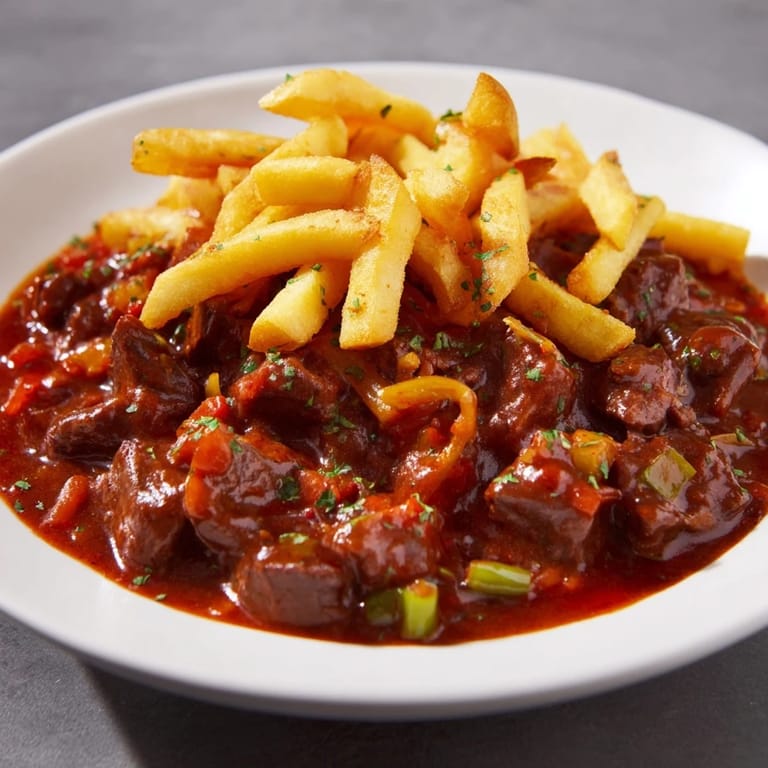
- Remove the bay leaf from the goulash, taste, and adjust seasoning. Serve hot goulash in bowls topped with crispy fried potato strips for that textural contrast that makes this dish sing.
 Save to Pinterest
 I remember my Czech grandmother watching me make this, not saying much, just nodding when I got the details right. When she tasted it, she smiled in that way that meant I'd finally understood something important about food and family. That bowl became my inheritance, more precious than any recipe written on paper.
Why Paprika Is Everything
Paprika isn't just a spice in goulash, it's the entire flavor story, and understanding this changed how I cook Hungarian food forever. The sweet paprika creates that deep mahogany color and gentle warmth, while the long simmer mellows any edges and lets it become part of the sauce rather than sitting on top of it. I learned this the hard way when I once tried to save time by adding extra paprika near the end, and it tasted sharp and one-dimensional instead of complex and welcoming.
The Texture Game
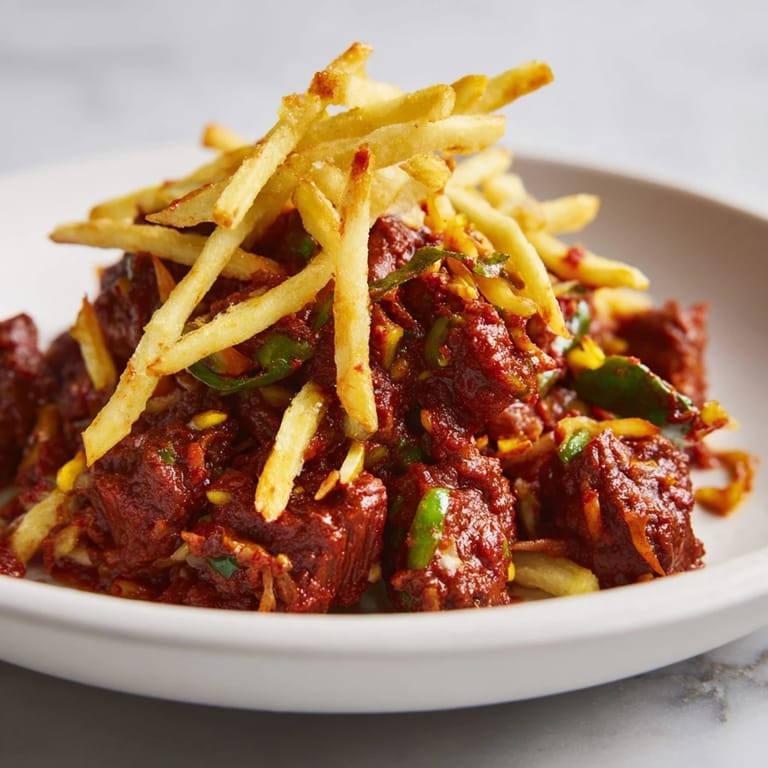
What separates this dish from a simple beef stew is the crispy potato contrast, and it's absolutely worth the extra step and oil. The moment those golden strips hit the hot goulash, they soften slightly on the bottom while staying crunchy on top, creating this dynamic that keeps you interested in every bite. I've tried shortcuts like adding boiled potatoes or serving them on the side, but they never captured that magic.
Making It Your Own
Once you've made this recipe a few times and feel confident with the technique, the dish becomes a canvas for your preferences and what you have on hand. Some people add mushrooms or root vegetables to the goulash, others finish with sour cream stirred in instead of dolloped on top, and I've even experimented with a splash of red wine for extra depth. The foundation is solid enough that it welcomes gentle improvisation.
- A dollop of sour cream and fresh parsley on top adds richness and brightness that cuts through the meat beautifully.
- For extra heat, add hot paprika or chili flakes at the table so everyone can control their own spice level.
- This reheats beautifully and actually tastes better the next day once the flavors have settled into each other.
 Save to Pinterest
 This goulash has fed me through seasons and circumstances, always reliable and always deeply satisfying. Make it when you need something that feels like coming home.
Questions & Answers
- → What cut of beef works best for this dish?
Beef chuck cut into 2.5 cm cubes is ideal because it becomes tender and flavorful after slow simmering.
- → How can I achieve crispy potato strips?
Cut potatoes into thin matchsticks, rinse and dry well, then fry in hot oil at 180°C (350°F) until golden and crispy.
- → Can I use gluten-free flour in the sauce?
Yes, substituting all-purpose flour with gluten-free flour thickens the sauce without altering the flavor.
- → What spices give this dish its characteristic flavor?
Sweet Hungarian paprika, caraway seeds, and marjoram create the rich, aromatic profile typical of this Czech classic.
- → How long should the beef simmer for tenderness?
Simmer the beef gently for 1.5 to 2 hours until the meat is very tender and the sauce has thickened.