 Save to Pinterest
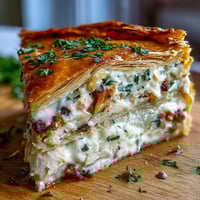
 The first time I made spanakopita, my kitchen smelled like sunshine and Greece before I'd ever been there. My neighbor had just returned from Athens and handed me a tupperware of homemade phyllo, still warm, along with a handwritten note about her grandmother's version. I was intimidated by the delicate sheets, but once I layered them with that buttery green filling and watched it transform into something golden and crackling, I understood why this pie had survived centuries. It wasn't magic, just patience and good ingredients working together.
I brought this to a beach dinner party one July evening, and watching people's faces when they bit through that shattered top layer was worth every brushstroke of olive oil. Someone's eight-year-old asked for seconds, which felt like the highest compliment. That night reminded me that the best dishes aren't about complexity—they're about balance and the feeling of being nourished.
Ingredients
- Fresh spinach: Two pounds seems like a lot until it wilts down; frozen works beautifully if you squeeze it dry until your hands hurt—that step matters more than you'd think.
- Feta cheese: The salty, tangy backbone of this entire pie; crumble it yourself from a block rather than using pre-crumbled, which can feel chalky.
- Phyllo dough: Thaw it slowly in the refrigerator overnight, never at room temperature, and keep unused sheets covered with a barely damp towel while you work.
- Fresh dill: This is not the place to skip fresh herbs; the dry version tastes like straw by comparison, and dill is what makes this taste like Greece.
- Ricotta or cottage cheese: Optional but worth it if you like a silkier filling; it also stretches the feta further without losing flavor.
- Eggs: They bind everything together and help the filling set without turning rubbery.
- Olive oil or butter: Use good olive oil if you have it; the flavor seeps into every layer and matters.
- Scallions and parsley: These add brightness and prevent the filling from feeling one-note and heavy.
Tired of Takeout? 🥡
Get 10 meals you can make faster than delivery arrives. Seriously.
One email. No spam. Unsubscribe anytime.
Instructions
- Prepare your workspace:
- Preheat your oven to 350°F and grease a 9x13-inch dish lightly—enough so nothing sticks, but you're not trying to deep fry it. Have all your ingredients prepped and nearby because phyllo waits for no one.
- Cook the aromatics:
- Heat 2 tablespoons of olive oil in a large skillet and add your chopped onion and sliced scallions, letting them soften and turn translucent over about 5 minutes. You want them tender and fragrant, the foundation that everything else builds on.
- Wilt the spinach:
- If using fresh spinach, add it in batches—it seems impossible until it suddenly becomes a manageable amount. Keep cooking until the moisture evaporates; this is crucial because watery filling makes soggy phyllo. If using frozen, just make sure it's thoroughly drained.
- Cool and combine:
- Once the spinach mixture has cooled slightly, transfer it to a bowl and fold in your dill, parsley, crumbled feta, ricotta if using, beaten eggs, black pepper, nutmeg, and salt to taste. The filling should taste assertively seasoned because it's going to be encased in neutral phyllo.
- Layer the base:
- Lay your first sheet of phyllo in the prepared dish, letting the edges hang over the sides like you're making a edible nest. Brush it lightly with olive oil or melted butter—light, not drenched—and repeat with 6 or 7 more sheets, brushing each one.
- Fill and top:
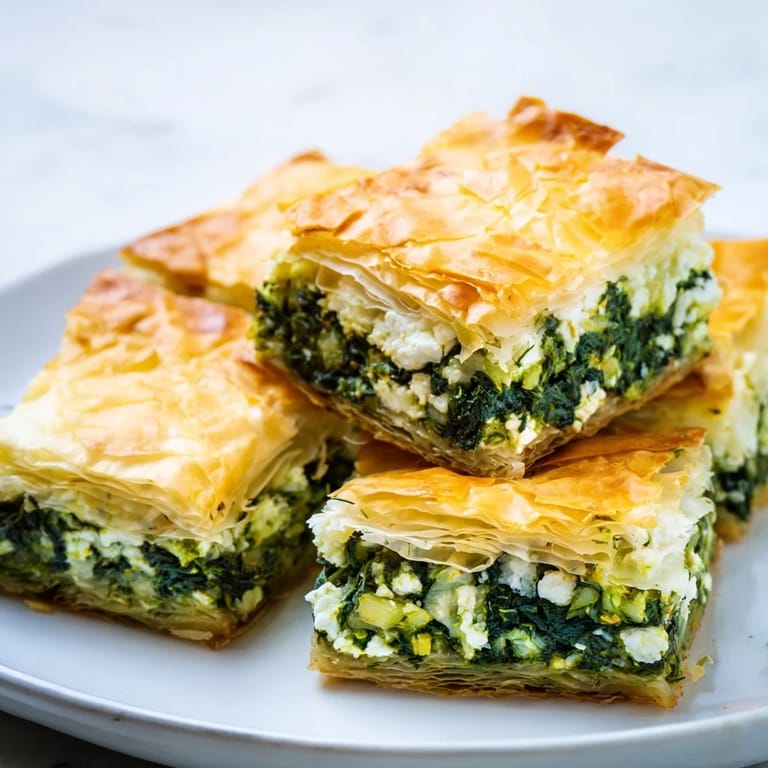
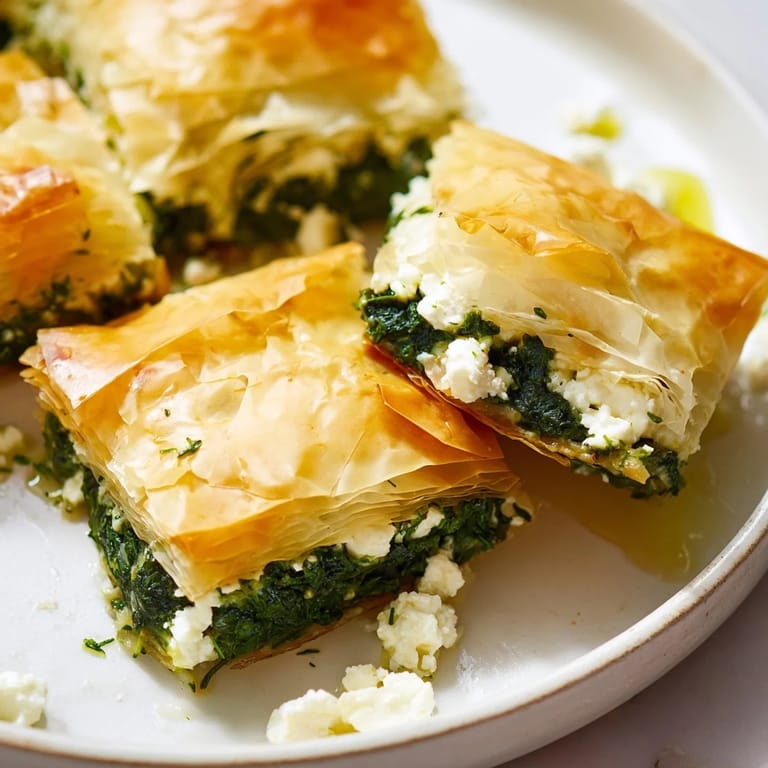
- Spread your spinach-feta mixture evenly across the phyllo base, then top with remaining phyllo sheets, brushing each with oil and tucking the overhanging edges back into the dish at the end. It should look like a golden, buttery package.
- Score and bake:
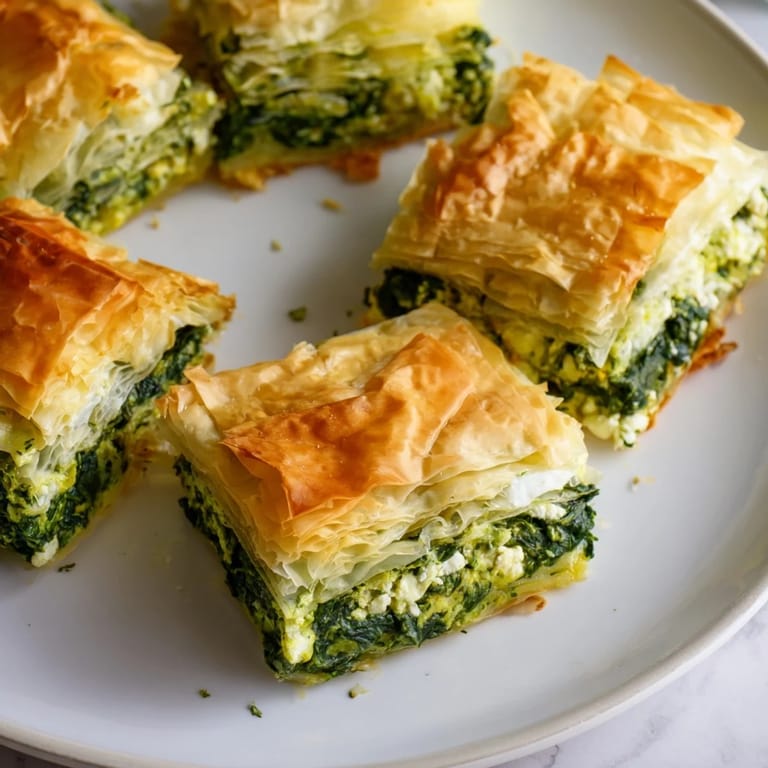
- Using a sharp knife, cut the top into squares or diamonds for cleaner serving, but don't cut all the way through to the filling. Bake for 35 to 40 minutes until the top is deep golden and sounds crisp when you tap it lightly.
- Rest and serve:
- Let it cool for 10 minutes—this helps it hold together when you cut it. Serve warm, and watch people's faces light up.
 Save to Pinterest
 Years later, I made this for my partner's family dinner, and his grandmother, who'd grown up eating versions of this in the old country, asked for my recipe. That moment felt like being handed a secret that wasn't really mine to keep, just to pass on. Food like this connects us to places we've never been and times we didn't live through.
Working with Phyllo Without Stress
Phyllo has a reputation for being difficult, but it's really just temperamental, like a shy person who's kind once you understand them. The key is keeping unused sheets covered with a barely damp (not wet) kitchen towel so they don't dry out and crack. Work quickly but not frantically—rushed hands tear things unnecessarily. If a sheet tears, simply layer it anyway; once it's baked and golden, no one will notice the imperfection, and the irregularities actually catch more oil and crisp up beautifully.
Building Flavor in the Filling
The filling is where all the personality lives, and Greek home cooks know that balance matters more than perfection. The feta provides salt and tang, the ricotta (if you use it) adds softness, and the fresh herbs—especially dill—are what make someone say this tastes like real spanakopita. Don't be shy with the black pepper or nutmeg; they're quiet flavors that brighten the earthiness of the spinach. Taste as you go, and remember that seasoning should be confident, never apologetic.
Serving and Storage
Spanakopita is best eaten the day it's baked while the phyllo still shatters satisfyingly under your fork, but it reheats gracefully in a 300°F oven until warmed through and re-crisped. Leftovers keep in an airtight container for three days, and you can also freeze the unbaked pie for up to two months—just add 10 minutes to the baking time if baking from frozen.
- Serve it with a squeeze of fresh lemon and a crisp white wine like Assyrtiko or Sauvignon Blanc.
- It's equally good at room temperature as a picnic food or appetizer.
- Pair it with a simple Greek salad or some tzatziki for dipping if you want to lean into the Mediterranean moment.
 Save to Pinterest
 This is the kind of dish that reminds you why people cook: not for complexity, but for the moment when something humble becomes extraordinary. Make it for people you care about.
Questions & Answers
- → What type of cheese is used in spanakopita?
Feta cheese is the main cheese, often combined with ricotta or cottage cheese for added creaminess.
- → Can I use frozen spinach instead of fresh?
Yes, frozen spinach works well if thoroughly thawed and drained to remove excess moisture.
- → How should the phyllo pastry be handled to prevent drying?
Keep phyllo covered with a damp towel while working and brush each layer lightly with olive oil or melted butter.
- → What herbs enhance the flavor in this dish?
Fresh dill and parsley add bright, aromatic notes that complement the spinach and cheese filling.
- → Is it necessary to score the top before baking?
Scoring helps portion the pie easily after baking without cutting through all layers.