 Save to Pinterest
 I discovered this salad on a Tuesday morning when my kitchen felt too small for another heavy breakfast. Sunlight was streaming through the window, and I had a sudden craving for something that felt alive on my tongue—something green and sharp and clean. That first bite of crisp cabbage with the bright lemon dressing made me realize how rare it was to eat something that tasted like pure energy, not habit. It became my go-to whenever I wanted to reset, not because of any wellness trend, but because it genuinely made me feel good.
I made this for a friend who'd been stressed about an upcoming trip, and she ate two bowls while telling me about her worries. Something about the sound of the knife hitting the cutting board, the way the vegetables tumbled into the bowl, seemed to calm both of us. By the time we sat down, the salad had already done half the work—it just gave us permission to breathe and talk without the usual dinner-party pressure.
Ingredients
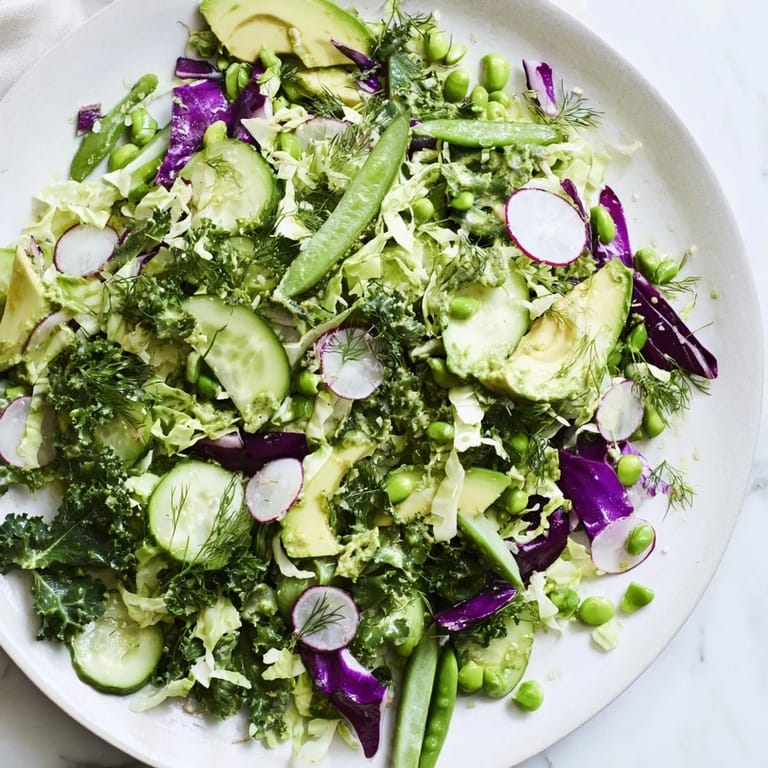
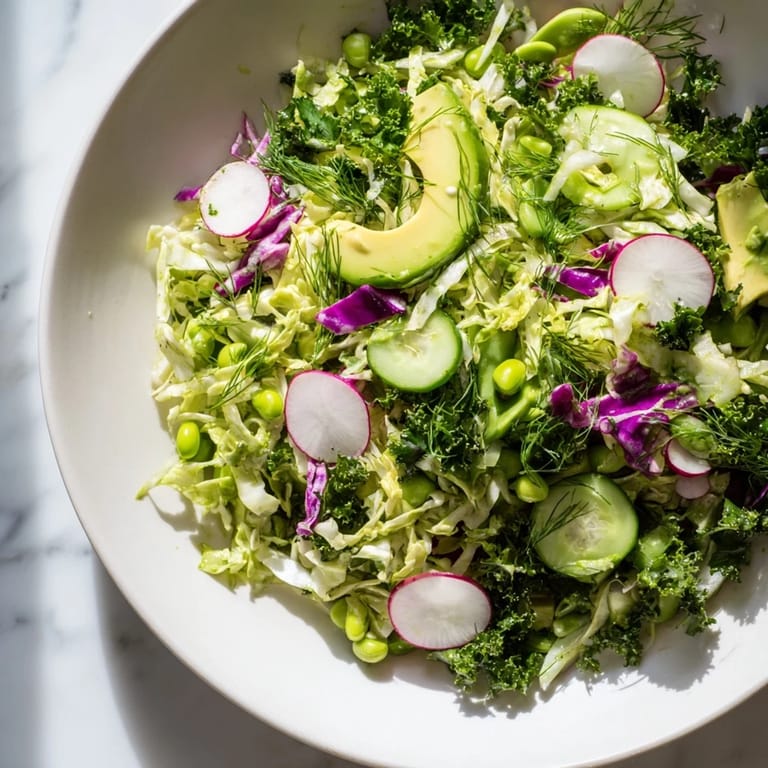
- Green cabbage: The foundation of this salad, mild and crisp when shredded thin; this is what gives you that satisfying crunch even after the dressing soaks in.
- Purple cabbage: Adds earthiness and visual drama without changing the flavor profile too much.
- Kale: Removes the stems or you'll have chewy bits that don't belong; the leaves should be tender enough that you want to eat them raw.
- Cucumber: Choose one that feels firm and has thin skin; it brings coolness and hydration to every bite.
- Sugar snap peas: These stay sweet and crunchy if you don't dress them too early; they're the surprise that makes people ask what that is.
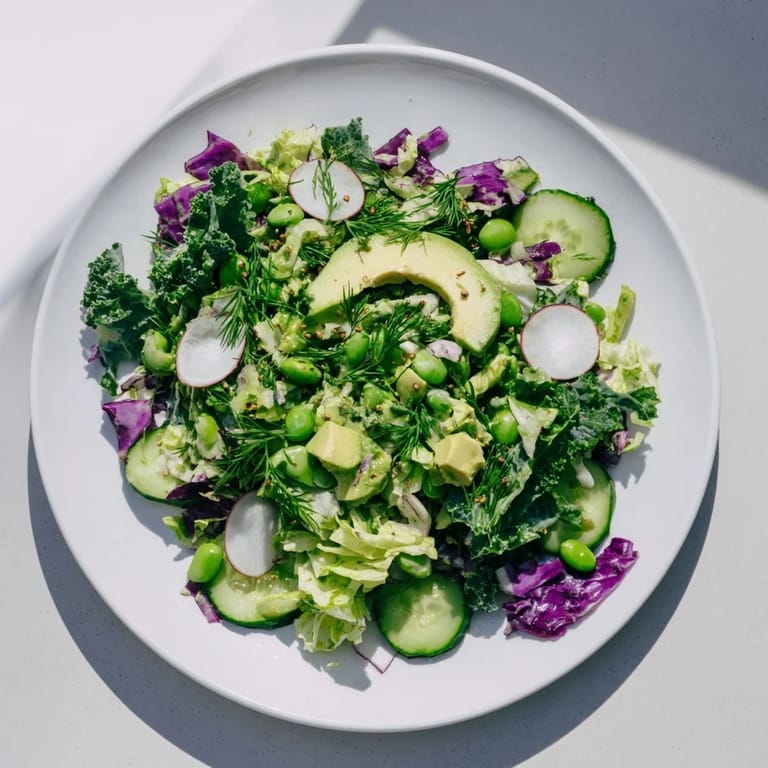
- Avocado: Add this at the very last moment, or it turns gray and sad; it softens the sharpness of the dressing beautifully.
- Fresh herbs—parsley, dill, chives, tarragon: These aren't decorative; they're the voice of the salad, giving it personality and making it taste like someone cared.
- Green onions and radishes: Sharp and peppery, they're the wake-up call that keeps this salad from being forgettable.
- Extra virgin olive oil: Use one you actually like tasting on its own; this dressing is so minimal that the oil matters.
- Lemon juice and apple cider vinegar: Together they create a brightness that's more complex than lemon alone; the vinegar adds a gentle tang that lingers.
- Dijon mustard: Just a teaspoon, but it acts like an emulsifier and gives the dressing backbone.
Tired of Takeout? 🥡
Get 10 meals you can make faster than delivery arrives. Seriously.
One email. No spam. Unsubscribe anytime.
Instructions
- Prep your vegetables with intention:
- Shred the cabbages on the largest holes of a box grater or use a mandoline if you have one; you want them feathery, not chunky. Slice everything else roughly the same thickness so the salad feels coherent when you eat it.
- Build the base:
- Combine all the raw vegetables in a large bowl, but hold the avocado back; you'll add that when you're about to serve. There's something meditative about tossing a bowl of vegetables together, watching the colors distribute.
- Make the dressing in a jar:
- Add the oil, lemon juice, vinegar, mustard, and minced garlic to a small mason jar or bowl. This is the moment where everything shifts from separate ingredients to something unified.
- Whisk until emulsified:
- Shake the jar vigorously or whisk by hand until the mixture becomes cloudy and thick, not glossy. You'll feel the difference—it suddenly coheres.
- Dress and rest:
- Pour the dressing over the salad and toss thoroughly with your hands or two spoons, making sure every piece gets coated. Let it sit for five to ten minutes; this isn't laziness, it's how the flavors actually find each other.
- Taste and adjust:
- Before you serve, taste a bite. The dressing might need more salt, more lemon, or a pinch more herb depending on your vegetables and palate. This is where the recipe becomes yours.
 Save to Pinterest
 I once brought this salad to a dinner party where I didn't know many people, and it became the thing everyone wanted the recipe for—more than the complicated main course I'd worried about all day. There was something about its simplicity and honesty that made people relax, and that mattered more than impressing anyone.
The Magic of Raw Vegetables
There's a reason this salad works: raw vegetables are alive in a way cooked ones can't be. They have texture and snap and a brightness that feels almost electric on your tongue. When you eat this salad, you're eating vegetables at their most honest, before heat or time changes them. It's a conversation with the vegetable itself, not a transformation of it. That directness is what makes this feel like a reset rather than just another meal.
Dressing Strategy and Variations
The dressing is deliberately minimal because the vegetables deserve to be heard. But if you want to shift the flavor, you can swap the tarragon for basil, add a touch of maple syrup for subtle sweetness, or increase the vinegar if you like more punch. I've made versions with red wine vinegar, with lime juice instead of lemon, with a bit of tahini whisked in for richness. The structure stays the same, but the personality changes. You can't really fail here; you can only discover what your version of this salad tastes like.
When to Make This and How to Serve It
This salad works as a light lunch, a side dish, or a foundation for grilled fish or chicken. It's perfect for warm weather when you want something refreshing but substantial. I've also made it in winter and served it at room temperature as part of a mezze board, where its brightness cuts through richer foods. The point is that it adapts to what you need it to be.
- For meal prep, assemble everything except the avocado and dressing, then dress and finish it just before eating.
- If you're taking this somewhere, transport the dressing separately and toss it in at the last moment.
- Leftover salad without dressing keeps in the fridge for a day; dressed, it's best eaten within an hour or two.
 Save to Pinterest
 This salad has taught me that simplicity isn't about laziness; it's about respect for the ingredients and for whoever is eating. It's become my answer to the question of how to cook when you want to feel well.
Questions & Answers
- → What greens are used in this salad?
The salad combines green and purple cabbage with kale to provide a crunchy and nutrient-rich base.
- → How is the dressing prepared?
The dressing blends olive oil, fresh lemon juice, apple cider vinegar, Dijon mustard, minced garlic, and chopped herbs, whisked until emulsified.
- → Can this dish be made ahead?
Yes, it can be prepared up to two hours in advance; add avocado just before serving to maintain freshness.
- → Are there suggestions for added texture?
For extra crunch, roasted sunflower or pumpkin seeds can be sprinkled on top before serving.
- → What dietary considerations does this dish accommodate?
This salad is vegan, gluten-free, and dairy-free, making it suitable for a wide range of dietary preferences.