 Save to Pinterest
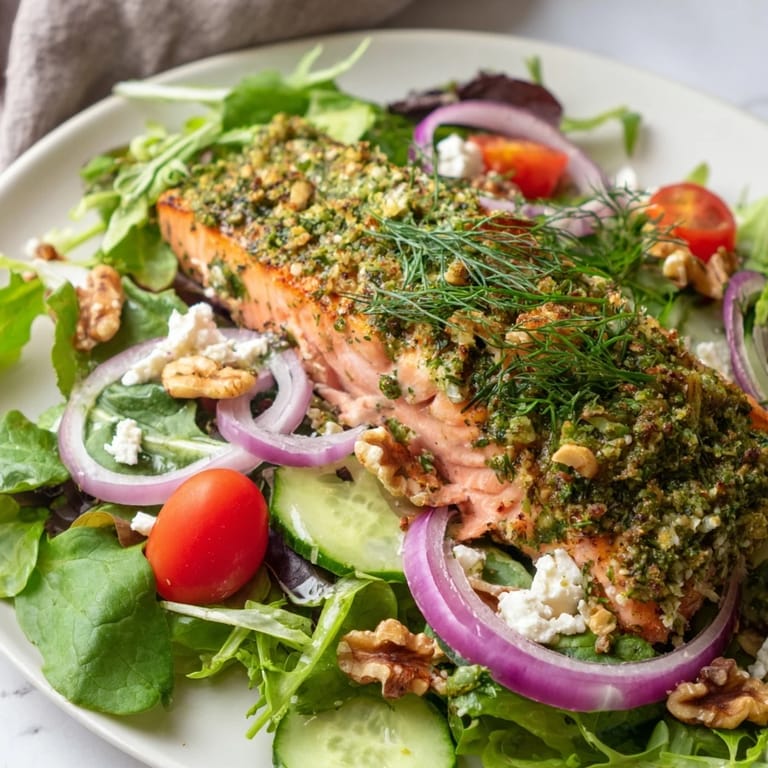
 I discovered this dish on a Tuesday evening when my kitchen was flooded with golden light and I had just enough salmon to feed four hungry friends. The herb paste came together almost by accident—a handful of fresh dill, some parsley I'd meant to use elsewhere, and a squeeze of lemon—and something about the way those green flecks clung to the coral flesh felt right. Twenty minutes later, plates were empty and someone asked for the recipe, which is how I knew it was worth keeping.
I made this for my sister on a Friday when she was visiting from out of town, and watching her fork into the warm salmon while steam rose from the plate reminded me why I love cooking. She's not usually a salad person, but something about the way the dressing pooled around those soft greens and the way the herb crust had that slight crisp made her reach for more. Food doesn't have to be complicated to feel like you've done something thoughtful.
Ingredients
- Salmon fillets (4, skinless, about 150 g each): Look for fillets that smell like the ocean, not fishy—that's your sign they're fresh. Pat them completely dry before the herb paste goes on; any moisture on the surface will steam rather than take on that golden crust.
- Olive oil (2 tbsp for the paste): This becomes the glue that holds your herb crust together, so don't skip it or use a substitute here.
- Dijon mustard (2 tsp): It adds a subtle tang that bridges the herbs and the fish without screaming mustard.
- Lemon juice (1 tbsp): Fresh, always—bottled won't give you that bright note.
- Fresh parsley, dill, and chives (1 tbsp each, finely chopped): The holy trinity of herb crusts; if you only have two of them, use more of those rather than adding something else.
- Garlic powder (1 tsp): Keeps the crust from being watery the way fresh garlic would.
- Salt and pepper (1/2 tsp each): Taste your paste before spreading it; you can always add more but you can't take it out.
- Mixed salad greens (120 g, about 4 cups): A mix of arugula, spinach, and romaine gives you different textures and flavors rather than one note.
- Cherry tomatoes (1 cup, halved): Halve them just before serving so they don't leak.
- English cucumber (1/2, sliced): English cucumbers have fewer seeds and thinner skin, so you can eat them skin and all.
- Red onion (1/4, thinly sliced): The thin slice means they soften slightly in the vinaigrette without overpowering everything.
- Toasted walnuts or almonds (1/4 cup, optional): Toasting them yourself takes three minutes under a dry pan and changes everything; they go from tasting like nothing to tasting like themselves.
- Feta cheese (60 g, crumbled, optional): The saltiness ties the warm fish to the cool salad.
- Extra-virgin olive oil (3 tbsp for vinaigrette): This is where you use your good oil; it's worth it for four tablespoons.
- White wine vinegar or lemon juice (1 tbsp): Either works, but vinegar gives you a sharper edge.
- Honey or maple syrup (1 tsp): Just enough to round out the sharp notes without making it sweet.
- Dijon mustard (1 tsp for the vinaigrette): Helps emulsify the dressing so it doesn't separate on the plate.
- Salt and pepper (to taste): Always finish tasting your vinaigrette right before you dress the salad.
Tired of Takeout? 🥡
Get 10 meals you can make faster than delivery arrives. Seriously.
One email. No spam. Unsubscribe anytime.
Instructions
- Heat your oven and prepare your stage:
- Set the oven to 200°C (400°F) and line a baking sheet with parchment paper. You want everything ready before the salmon even leaves the fridge; cold fish cooks more evenly.
- Make the herb paste:
- In a small bowl, stir together the olive oil, Dijon mustard, lemon juice, chopped parsley, dill, chives, garlic powder, salt, and pepper. The mixture should look like wet sand with visible green flecks, not a smooth paste.
- Coat the salmon:
- Pat the salmon fillets dry with a paper towel—this is the step people skip and it matters. Lay them on the baking sheet and spread the herb paste evenly across the top of each fillet, using the back of a spoon to press it gently into the fish.
- Bake until just cooked:
- Slide the pan into the oven and set a timer for 12 minutes. At 12 minutes, check by flaking the thickest part with a fork; if it flakes easily and is opaque all the way through, you're done. If there's still translucent flesh at the center, give it another 2–3 minutes. The moment it's cooked through, take it out; overcooked salmon is dry salmon.
- Build your salad base:
- While the salmon bakes, combine the mixed greens, halved cherry tomatoes, sliced cucumber, thinly sliced red onion, toasted nuts, and crumbled feta (if using) in a large bowl. Don't dress it yet.
- Whisk the vinaigrette:
- In a small bowl, whisk together the extra-virgin olive oil, white wine vinegar (or lemon juice), honey, Dijon mustard, and a pinch of salt and pepper. Taste it and adjust; it should taste bright and a little sharp, not mellow.
- Dress and serve:
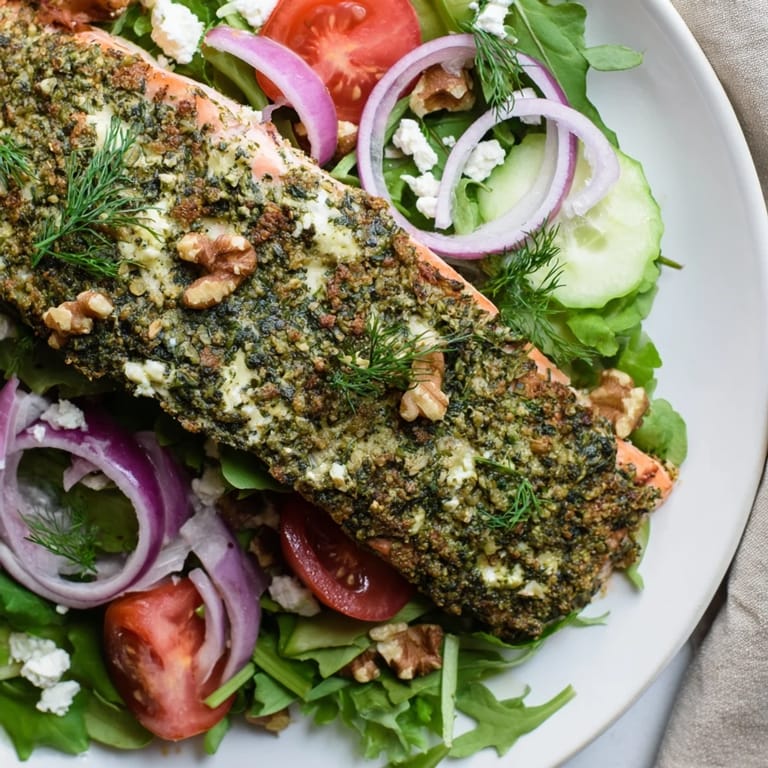
- Drizzle the vinaigrette over the salad and toss gently with salad tongs just until everything is coated. Divide the dressed salad among four plates, then place one warm herb-crusted salmon fillet on top of each. Serve right away while the salmon is still warm and the greens are still crisp.
 Save to Pinterest
 There's a particular kind of satisfaction that comes from setting a warm plate in front of someone and watching them cut into fish that's still steaming, seeing the herb crust release its aroma. My neighbor ate this for the first time at my place on a Sunday evening, and months later she told me she'd made it for her parents. Small moments like that are why I keep cooking.
Why This Works as One Plate
Serving warm salmon on top of cool salad means you get temperature contrast without any extra work—the fish stays warm enough to taste rich, the greens stay crisp enough to taste alive, and the warm vinaigrette from the warm fish starting to pool around the greens is something that happens naturally. You're not wrestling two separate components; you're building one plate that tastes like it planned itself.
The Herb Paste Matters
Fresh herbs are non-negotiable here because they're not garnish, they're the whole point. The oil and mustard hold them onto the fish, but it's the dill and parsley that make you want another bite. I've tried making this with dried herbs and it tastes like you were trying to make something better than what you had.
Ways to Change It Without Breaking It
The base stays the same, but this dish is flexible enough to bend with what you have and what you're craving. Some nights I add sliced avocado to the salad just before serving, or I'll toss in cooked quinoa if I want something more substantial. Other times I'll swap the feta for goat cheese or use whatever nuts I have toasted in my pantry.
- Trout works just as well as salmon if you can't find good salmon or if you want something milder.
- If you want the salad heavier, add cooked grains like farro or barley, or toss in some white beans the night before and keep them in the vinaigrette.
- A crisp Sauvignon Blanc is the obvious pairing, but sparkling water with lemon keeps this feeling light and fresh.
 Save to Pinterest
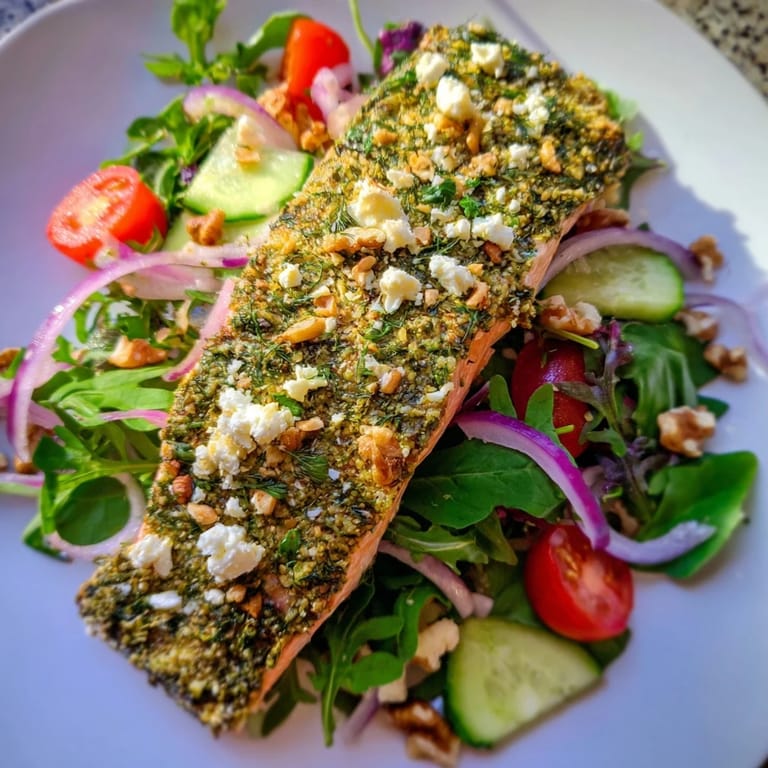
 This meal feels restaurant-quality but tastes like home cooking, which is the best kind of thing to know how to make. It's the dish I turn to when I want to feed people well without spending all day in the kitchen.
Questions & Answers
- → What herbs are used in the crust for the fish?
The crust combines fresh parsley, dill, and chives finely chopped, mixed with garlic powder, salt, and pepper.
- → How can I tell when the salmon is done baking?
Bake the salmon until it flakes easily with a fork, typically 12–15 minutes at 200°C (400°F).
- → Can I substitute the greens in the salad?
Yes, mixed salad greens can include arugula, spinach, romaine, or your preferred leafy greens.
- → What dressing pairs well with the salad?
A zesty vinaigrette made of olive oil, white wine vinegar or lemon juice, honey or maple syrup, Dijon mustard, salt, and pepper complements the dish perfectly.
- → Are there optional ingredients for added texture?
Toasted walnuts or almonds and crumbled feta cheese can be added for extra crunch and creaminess.
- → Can I replace the salmon with other fish?
Trout or other firm fish can be used as alternatives to salmon for this preparation.