 Save to Pinterest
 I first encountered this dish at a gallery opening in Copenhagen, where a minimalist chef presented vegetables like brushstrokes on a canvas. What struck me most wasn't just the visual sophistication—it was how the arrangement told a story of motion and intention. I came home inspired to recreate that magic in my own kitchen, realizing that this wasn't just about arranging vegetables; it was about capturing a moment of energy and movement on a plate. Now whenever I prepare it, I'm transported back to that evening, and I get to share that same sense of wonder with everyone I cook for.
I remember preparing this for a dinner party where my friend Sarah had just moved into her first apartment. She was nervous about hosting, worried she couldn't pull off anything sophisticated. When I arranged those vegetables in that deliberate blur of color across her white ceramic platter, something magical happened—her shoulders relaxed. She realized that beauty and elegance don't require complexity, just intention and care. That night, the dish became less about food and more about confidence, about showing her that she absolutely belonged at her own table.
Ingredients
- 1 small golden beet, thinly sliced: Golden beets are milder and earthier than their crimson cousins—they won't stain everything magenta, which I learned the hard way. Use a mandoline for perfectly uniform thickness; inconsistent slices ruin the visual effect.
- 1 small red beet, thinly sliced: The jewel tone that anchors your color story. Let it sit at room temperature for the sweetest flavor; cold beets taste almost mealy by comparison.
- 1 small watermelon radish, thinly sliced: This is your secret ingredient—the stunning pink and white interior creates natural patterns without any extra work. If you can't find it, any breakfast radish works, but watermelon radish elevates the entire visual.
- 1 Persian cucumber, thinly sliced: Persian cucumbers are shorter and sweeter than standard ones, with fewer seeds. They stay crisp longer, which matters when you're building a composed plate.
- 4 baby carrots, peeled and sliced on a bias: Bias cuts—at an angle rather than straight across—make them look more deliberate and sophisticated. The angle catches light differently, enhancing the motion effect.
- 80 g creamy goat cheese, at room temperature: Cold goat cheese won't spread properly into those small dollops. Take it out 30 minutes before plating. Choose a log-style cheese rather than crumbly; it's easier to portion.
- 2 tbsp toasted hazelnuts, roughly chopped: Toast them yourself if possible—store-bought sometimes taste stale. The warmth and aroma matter more than you'd think.
- 1 tbsp black sesame seeds: These have a nuttier flavor than white ones and look infinitely more striking against the bright vegetables.
- 1/2 cup microgreens (such as arugula or radish): Microgreens are delicate; add them last and handle gently. They wilt if dressed too early, so if you're not serving immediately, keep them separate.
- 1 tbsp fresh dill, fronds only: Use only the feathery tops, not the woody stems. The fronds look more refined and taste less intense.
- 2 tbsp extra virgin olive oil: This is tasted raw, so quality matters deeply. Choose something with character—peppery, herbaceous, something that makes you notice it.
- 1 tbsp fresh lemon juice: Always squeeze fresh. Bottled tastes chemical in a dish this delicate and simple.
- 1 tsp honey: A tiny amount rounds out the acidity and brings out the vegetables' natural sweetness. Don't skip it thinking it's unnecessary.
- Salt & freshly ground black pepper, to taste: Season the dressing generously before plating; the vegetables taste bland with timid seasoning.
Tired of Takeout? 🥡
Get 10 meals you can make faster than delivery arrives. Seriously.
One email. No spam. Unsubscribe anytime.
Instructions
- Make your dressing first:
- Whisk together the olive oil, lemon juice, honey, salt, and pepper in a small bowl. Taste it—this is your opportunity to adjust flavors before anything else happens. It should be balanced, bright, and make you want to drink it. Set it aside while you prepare everything else. This step seems simple, but a well-made dressing is what transforms arranged vegetables into a dish.
- Slice everything paper-thin:
- Use a mandoline if you have one; it creates the uniformity that makes the kinetic effect actually work. If slicing by hand, take your time with a sharp chef's knife, aiming for slices thin enough to see light through them. Thicker slices break the visual spell and change the eating experience entirely.
- Build your motion on the platter:
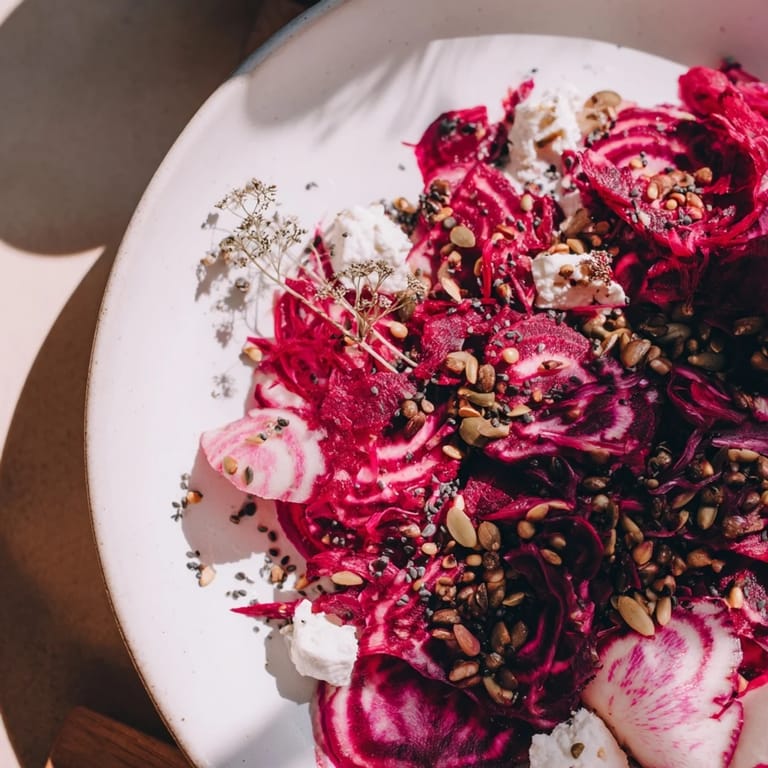
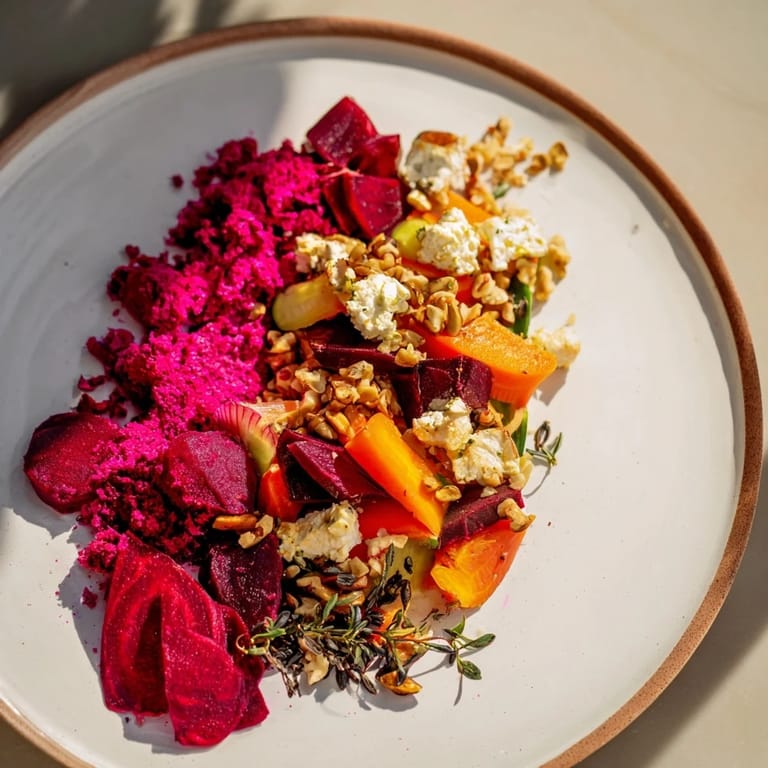
- Start at one edge with the densest cluster—overlap the vegetable slices like cards in a house, creating a concentrated, layered area. This is your anchor point. Then, as you move across the platter toward the opposite edge, gradually space the slices further apart. The effect should look like the vegetables are moving, dispersing from dense to scattered. This takes more patience than you'd expect, but it's the whole point.
- Dot the goat cheese strategically:
- Place small dollops of goat cheese in the densest area—use a small spoon or your fingers, aiming for pieces about the size of a hazelnut. Place fewer dollops as you move toward the sparse side. The cheese anchors the composition and provides creamy pockets throughout.
- Trail the nuts and seeds:
- Sprinkle the hazelnuts and black sesame seeds, concentrating them heavily on the dense side and gradually trailing off toward the edges. They should enhance the sense of movement, not scatter randomly. The visual rhythm matters as much as the flavors.
- Finish with the greens:
- Scatter the microgreens and dill fronds, again with the heaviest concentration on the dense side, fading toward the sparse edge. These delicate garnishes add life and freshness to every bite.
- Dress it carefully:
- Drizzle the dressing across the platter in a light, even hand. Use slightly less dressing toward the sparse side to maintain the visual contrast. The vegetables should glisten, not glimmer in a pool of oil.
- Serve with intention:
- This dish doesn't improve with sitting. Serve it immediately while the vegetables are at peak crispness and the visual impact is undeniable. The moment you set it on the table is the moment it's most beautiful and most delicious.
 Save to Pinterest
 What I love most about this dish is how it transcends being merely food. I've watched quiet people come alive describing the arrangement, watched children pause mid-conversation to admire the colors. Once, a guest asked if I was a visual artist before realizing I was just a home cook with an appreciation for beauty. That's when I understood: sometimes the most meaningful meals are the ones that make people stop and truly see what's in front of them.
The Art of Vegetable Arrangements
Modern plating isn't actually about complexity—it's about paying attention. Every restaurant serving minimalist food is teaching us something our grandmothers knew: that vegetables deserve respect. When you slow down and arrange them intentionally, you're not being pretentious, you're being reverent. You're saying these beets and cucumbers are worth your time, worth your careful hands, worth being seen. That mindfulness transfers to how people experience the food. They taste it differently when they can see the care.
Choosing Your Vegetables Seasonally
The beauty of this dish is its flexibility within structure. In spring, replace some roots with thinly sliced asparagus or snap peas. Summer welcomes heirloom tomatoes and young zucchini. Fall is for beets, carrots, and parsnips. Winter is when you can finally appreciate the sweetness of stored roots. The arrangement technique stays the same, but the vegetables tell the story of the season. This is how you cook with intention and locality without sacrificing elegance.
Wine Pairings and Serving Moments
This appetizer shines before a meal, but it also stands alone beautifully as a light lunch or first course. The crisp acidity of a Sauvignon Blanc or dry sparkling wine is essential—the wine's brightness mirrors the dish's freshness. If serving as a vegetarian main, add a simple soup before it or crusty bread alongside. The key is not overshadowing what's already on the plate. This dish wants to be the star, not a supporting role.
- Serve on chilled plates if possible; cold surfaces keep the vegetables crisp longer and make the colors pop even more vibrantly
- If you must prepare it more than 15 minutes ahead, keep the vegetables and cheese separate, assembling only when guests are seated
- A squeeze of fresh lemon at the table never hurts—let people adjust the brightness to their preference
 Save to Pinterest
 Every time you make this, you're not just preparing food—you're practicing the art of attention. And that's something the world needs more of right now.
Questions & Answers
- → What is the purpose of the kinetic blur arrangement?
It creates a visually dynamic presentation by starting with densely clustered ingredients that gradually become sparse, evoking motion and enhancing the dining experience.
- → Can the goat cheese be substituted for dietary preferences?
Yes, plant-based cheese can replace goat cheese for vegan options without compromising texture or tang.
- → Which vegetables are best for this dish?
Thinly sliced root vegetables like golden and red beets, watermelon radish, Persian cucumber, and baby carrots provide vibrant colors and crisp textures.
- → How does the dressing complement the ingredients?
The dressing, made with olive oil, lemon juice, and honey, adds brightness and a subtle sweetness that balances the earthiness of the vegetables and richness of the cheese.
- → What nuts and seeds enhance the texture here?
Toasted hazelnuts add crunch and warmth, while black sesame seeds contribute subtle nuttiness and visual contrast.
- → Is the dish best served immediately?
Yes, serving immediately preserves the freshness and visual impact of the layered ingredients and dressing.