 Save to Pinterest
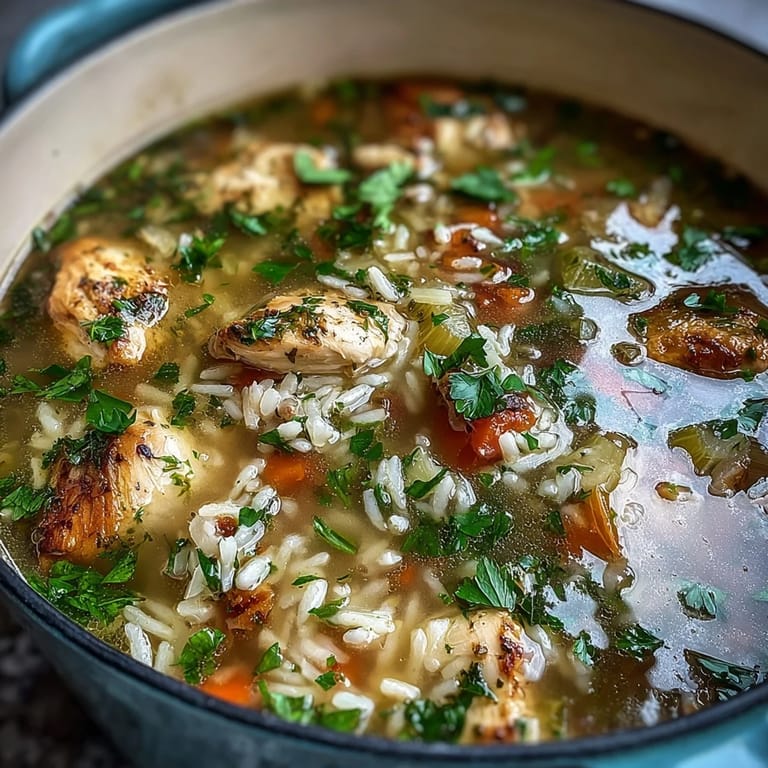
 There's something about stirring a pot of simmering broth that makes everything slow down. I discovered this soup on a Tuesday afternoon when my fridge held nothing but chicken breasts, carrots, and rice, and I needed something that felt like care in a bowl. What started as making do with what I had became the meal I reach for whenever life feels hectic or someone needs feeding. The simplicity of it surprised me most—no fussy techniques, just one pot and the patience to let flavors marry together.
I made this for a friend who'd just moved into a new apartment with nothing but boxes and takeout containers. Watching her face when that first spoonful hit—the way the warmth seemed to settle something in her—reminded me why cooking matters. She texted me the recipe three days later asking if I could walk her through it again, and now it's become her go-to when she's overwhelmed. That's when I knew this wasn't just soup; it was permission to take care of yourself without pretense.
Ingredients
- Chicken breasts: Cut into bite-sized pieces so they cook evenly and become tender without drying out—those smaller chunks are your secret to avoiding rubbery chicken.
- Yellow onion, carrots, and celery: This is your flavor foundation, and sautéing them first builds a depth that transforms the whole soup.
- Garlic: Just three cloves minced fine, adding that quiet savory note that makes people ask what the secret ingredient is.
- Spinach or kale: Stirred in at the end so it stays bright and doesn't fade into the background.
- Long-grain white rice: Rinsing it first prevents starchiness and gives you individual grains instead of a cloudy broth.
- Low-sodium chicken broth: Eight cups is your canvas—using low-sodium lets you control the salt and taste the actual chicken.
- Dried thyme and oregano: These herbaceous notes make the soup taste like it simmered all day, even though it didn't.
- Bay leaf: Remove it before serving, but while it's in there it's doing quiet work building complexity.
- Olive oil: Just one tablespoon, enough to get things started without making the soup heavy.
- Lemon juice and parsley: The brightness at the end that makes everything taste fresher and more alive.
Tired of Takeout? 🥡
Get 10 meals you can make faster than delivery arrives. Seriously.
One email. No spam. Unsubscribe anytime.
Instructions
- Build the base:
- Heat olive oil over medium heat, then add your diced onion, carrots, and celery. Let them soften for about four to five minutes, stirring occasionally until the kitchen smells sweet and vegetal. You'll know it's ready when the onion turns translucent and the carrot pieces bend slightly when you push them with your spoon.
- Bloom the garlic:
- Add minced garlic and stir constantly for exactly one minute—this is the moment everything smells like comfort. Don't let it brown or it'll turn bitter and overshadow everything else.
- Toast the chicken:
- Add your chicken pieces and let them sit undisturbed for a minute before stirring, until the edges turn golden and opaque. They don't need to cook through yet; they're just getting introduced to the heat.
- Combine and simmer:
- Stir in rice, dried herbs, bay leaf, salt, and pepper, then pour in all the broth at once. Bring it to a rolling boil, then reduce to a gentle simmer, cover, and let it bubble quietly for twenty minutes.
- Finish with greens:
- Stir in spinach or kale and watch it wilt into the broth in just two to three minutes, turning the soup a deeper, more nourishing-looking green. Taste it now—this is when you adjust salt and pepper until it tastes like the best version of itself.
- Final touches:
- Remove the bay leaf, squeeze in lemon juice if you're using it, and scatter fresh parsley across the top. Serve immediately while everything is still steaming.
 Save to Pinterest
 The first time I made this for my partner, they asked for seconds before the bowl was even finished. That simple act—someone wanting more of something you created—made the whole apartment feel different, warmer somehow. It's funny how a one-pot soup can become the meal that gets requested, the one people remember, the comfort you serve up on difficult days.
The Art of the Reheating
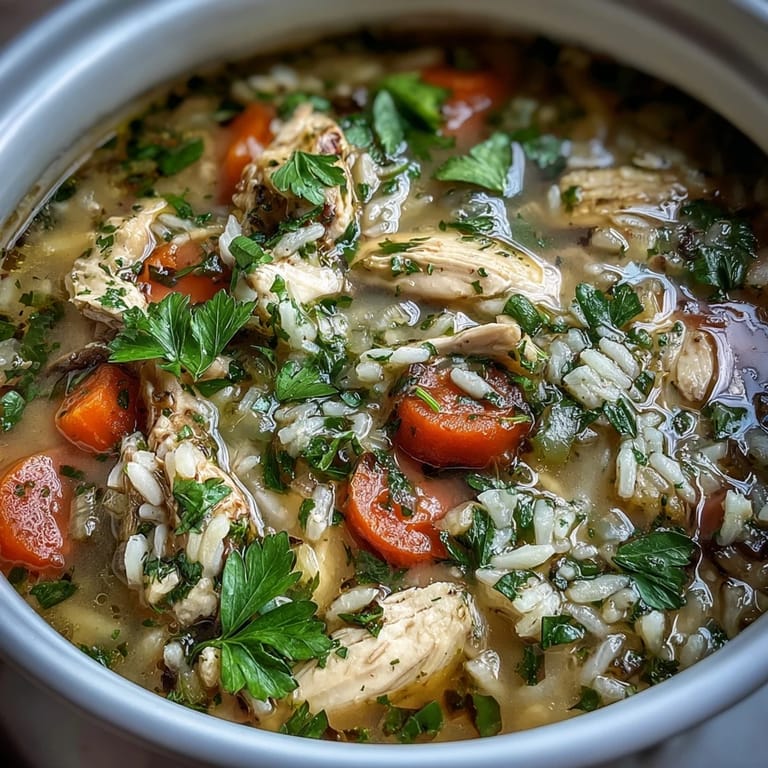
Leftovers actually taste better the next day because the rice continues absorbing the broth, creating a thicker, more cohesive soup. But this means when you reheat, you need to add a splash of extra broth to return it to its original silky consistency. I keep the soup in glass containers in the fridge and reheat gently on the stovetop rather than the microwave—it respects the flavors better and gives you a moment to yourself as you stir and wait.
Variations That Work
The beauty of this recipe is how forgiving it is with substitutions. Brown rice works perfectly if you have more time and want a nuttier flavor—just add fifteen more minutes to the simmer time and be patient. For a vegetarian version, simply skip the chicken entirely, use vegetable broth instead, and stir in a can of drained chickpeas for that protein element that makes the soup feel substantial. You can even add a parmesan rind while simmering, which dissolves into the broth adding umami, though you'll fish it out before serving.
Why This Soup Never Disappoints
There's honesty in this recipe—no tricks, no complicated techniques, just ingredients that trust each other to create something greater. The one-pot approach means you're not juggling multiple pans or worrying about timing different components. This is the kind of cooking that teaches you something about patience and simplicity, the kind that becomes a reflex when you need nourishment fast.
- Taste as you go, especially with seasoning—you can always add more salt but you can't take it back.
- Keep extra broth on hand for reheating, since the rice will eventually absorb everything.
- This soup freezes beautifully if you undercook the rice slightly, then finish cooking it when you thaw and reheat.
 Save to Pinterest
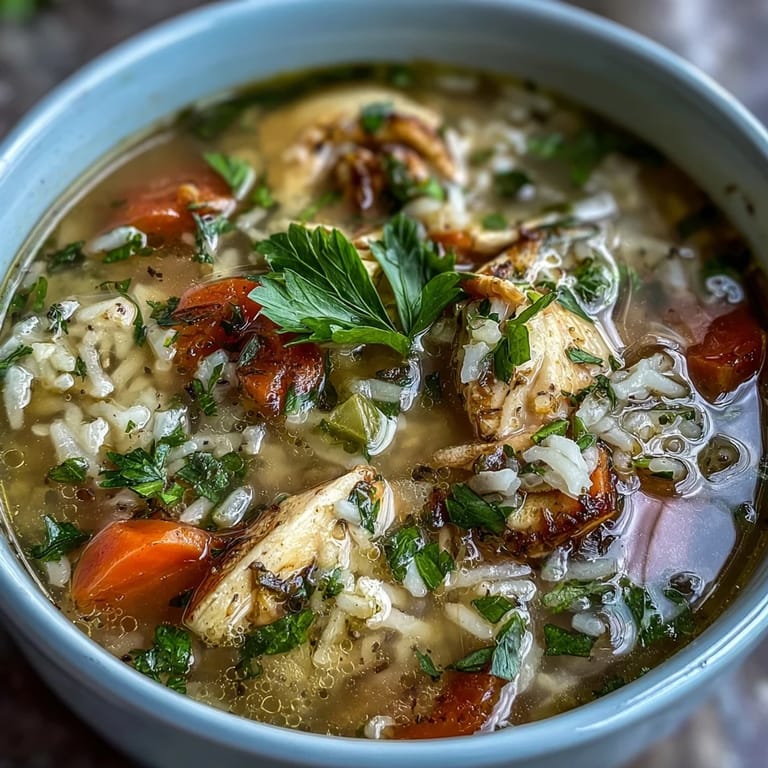
 This soup has become my answer to a thousand different moments—when someone's sick, when you're overwhelmed, when you want to feed people without fuss. Make it, taste it, and let it become your own.
Questions & Answers
- → Can I use brown rice instead of white rice?
Yes, brown rice can be used but requires a longer simmer time (35–40 minutes) to become tender.
- → How can I make this dish vegetarian?
Omit chicken and substitute vegetable broth; adding drained chickpeas provides extra protein.
- → What vegetables are best for this dish?
Onion, carrots, celery, garlic, and leafy greens like spinach or kale work well to add flavor and nutrition.
- → How do I prevent the dish from thickening too much when reheated?
Add extra broth or water when reheating to maintain desired consistency, as the rice absorbs liquid over time.
- → Can I add additional herbs or seasonings?
Thyme, oregano, parsley, and bay leaf are classic choices, but feel free to experiment with fresh herbs to suit your taste.