 Save to Pinterest
 There's something almost magical about the smell of chicken soup simmering on the stove on a gray afternoon. I stumbled upon this recipe during one of those weeks where everything felt rushed, and I needed something that didn't demand hours in the kitchen but still felt like real comfort food. The first time I made it, my kitchen filled with the aroma of softened carrots and garlic within minutes, and I realized how many childhood sick days and cozy dinners were wrapped up in that single pot.
I made this soup for my roommate during her first winter in the city, and watching her face light up after that first spoonful reminded me why simple food matters so much. She'd been feeling homesick, and somehow this humble bowl of soup became a small bridge back to comfort, even if it wasn't her mother's version. Since then, it's become my go-to recipe whenever someone needs a little warmth and attention.
Ingredients
- Boneless, skinless chicken breasts (2, about 350 g, diced): The neutral canvas for everything else—dicing them ensures they cook quickly and distribute throughout the soup so everyone gets protein in each bite.
- Medium onion (1, diced): This is where the flavor foundation begins; the sweet undertones develop as it softens and mingle with the broth.
- Medium carrots (2, peeled and sliced): They add natural sweetness and a satisfying texture that doesn't disappear into mush if you time things right.
- Celery stalks (2, sliced): Celery brings a subtle earthiness that makes the broth taste more intentional and complex than you'd expect.
- Garlic cloves (2, minced): Just enough to add depth without overwhelming; mince it finely so it melts into the broth rather than sitting as distinct pieces.
- Low-sodium chicken broth (1.5 liters or 6 cups): The quality of your broth becomes the quality of your soup, so taste it first and choose one you'd actually drink.
- Egg noodles (120 g or 4 oz): They absorb the broth's flavor while staying tender, and their slight richness complements the simplicity of everything else.
- Bay leaf (1): This small leaf does quiet, important work, adding an aromatic note that ties the whole pot together.
- Dried thyme (1/2 teaspoon): Thyme tastes like home cooking, herbaceous and warm without being bossy.
- Dried parsley (1/2 teaspoon, plus extra for garnish): It brightens the broth during cooking and adds a fresh finish when sprinkled on top at the end.
- Salt and freshly ground black pepper (to taste): Taste as you go; the seasoning should enhance rather than announce itself.
- Olive oil (2 tablespoons): This gets the vegetables started and carries their flavors into the pot.
Tired of Takeout? 🥡
Get 10 meals you can make faster than delivery arrives. Seriously.
One email. No spam. Unsubscribe anytime.
Instructions
- Warm your oil and soften the base:
- Heat the olive oil in your pot over medium heat, then add the onion, carrots, and celery all at once. Let them sit for a minute before stirring, so they start to caramelize slightly at the edges. Cook for 4 to 5 minutes, stirring occasionally, until they're soft and the onion turns translucent—you'll notice the kitchen smelling sweeter as they cook down.
- Wake up the garlic:
- Stir in the minced garlic and let it cook for about a minute, just until it becomes fragrant and stops being sharp. This brief moment prevents the garlic from burning while allowing its flavor to release into the oil.
- Sear the chicken:
- Add the diced chicken to the pot and stir it around for 3 to 4 minutes, breaking up any pieces that stick together. You're looking for the outside to turn opaque white; the inside doesn't need to be fully cooked yet since the broth will finish the job.
- Pour in the broth and seasonings:
- Add the chicken broth to the pot along with the bay leaf, thyme, parsley, and a pinch of salt and pepper. Bring everything to a gentle boil, watching as the broth takes on a warmer color and the aromas deepen.
- Let it simmer and meld:
- Reduce the heat and let the soup simmer quietly for 10 minutes, allowing the flavors to become friends with each other. The chicken will finish cooking through, and the vegetables will soften further.
- Add the noodles:
- Stir in the egg noodles and let them cook for 8 to 10 minutes, following the package directions but checking them a minute or two early. The noodles will soften and absorb the broth, thickening it slightly.
- Taste and adjust:
- Fish out the bay leaf and take a spoonful to taste. Add more salt, pepper, or a squeeze of lemon juice if it needs brightening—trust your palate here.
- Serve with intention:
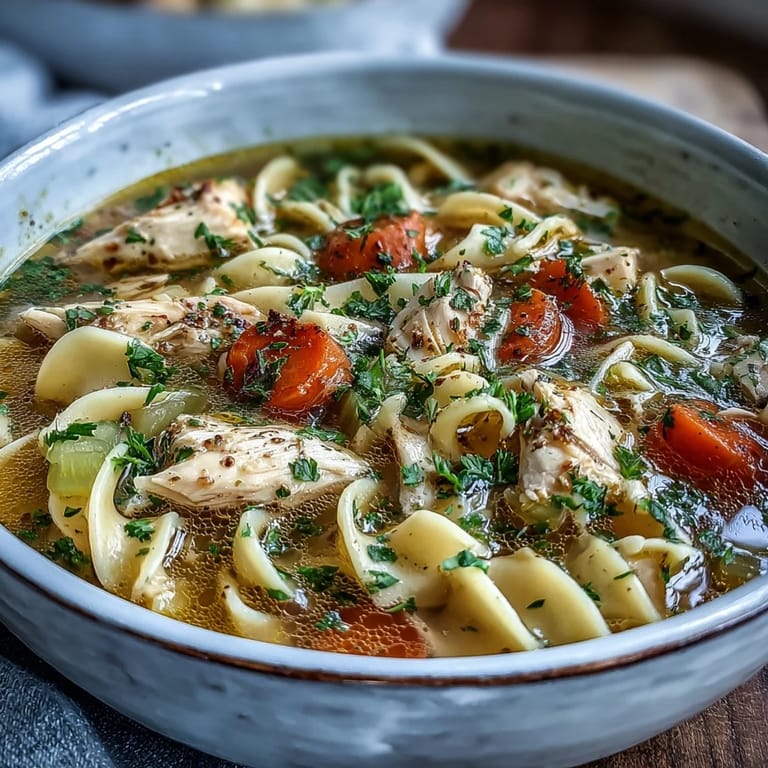
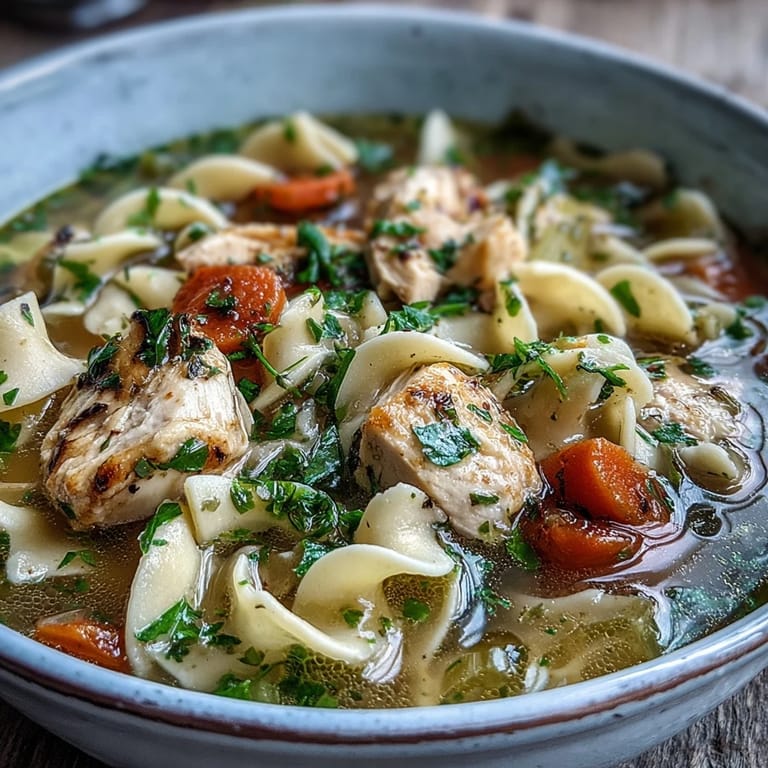
- Ladle the soup into bowls and garnish each one with a pinch of fresh parsley. The green fleck adds visual warmth and a fresh note against the golden broth.
 Save to Pinterest
 My favorite memory tied to this soup happened on a Sunday evening when my partner and I sat on the kitchen counter with steaming bowls, neither of us saying much, just letting the warmth and the quiet do the talking. It's one of those dishes that doesn't need to be fancy or impressive to matter—it just needs to be present.
When Bone-In Chicken Makes a Difference
If you have time and want an even deeper, more luxurious broth, use bone-in chicken thighs instead of breasts. Let them simmer for the full 10 minutes before adding noodles, then carefully shred the meat off the bones and return it to the pot. The bones release collagen and create a silkier, richer broth that tastes like it took much longer to make than it actually did.
Brightness and Balance
There's a moment in late fall when chicken soup starts feeling too heavy, and that's when a squeeze of fresh lemon juice becomes your secret weapon. Just half a lemon, added at the very end, lifts the entire dish and makes it feel lighter and more alive without requiring any other changes. Some people add it tableside so everyone can adjust to their taste—a small gesture that makes the soup feel collaborative instead of fixed.
Stretching and Storing This Soup
This soup stores beautifully in the refrigerator for up to four days, and it actually tastes better the next day as flavors settle and mellow. If you're planning ahead or want to have comfort on hand, the key is storing the noodles separately from the broth—this keeps them from absorbing all the liquid and turning to mush. You can also freeze the broth and chicken for up to three months, then cook fresh noodles when you're ready to eat it.
- Reheat gently on the stovetop rather than the microwave, which can make the noodles rubbery.
- Add a splash of fresh broth or water when reheating to account for any liquid the noodles absorbed during storage.
- Make it your own by stirring in spinach, peas, or mushrooms during the final minutes of cooking for more vegetables and texture.
 Save to Pinterest
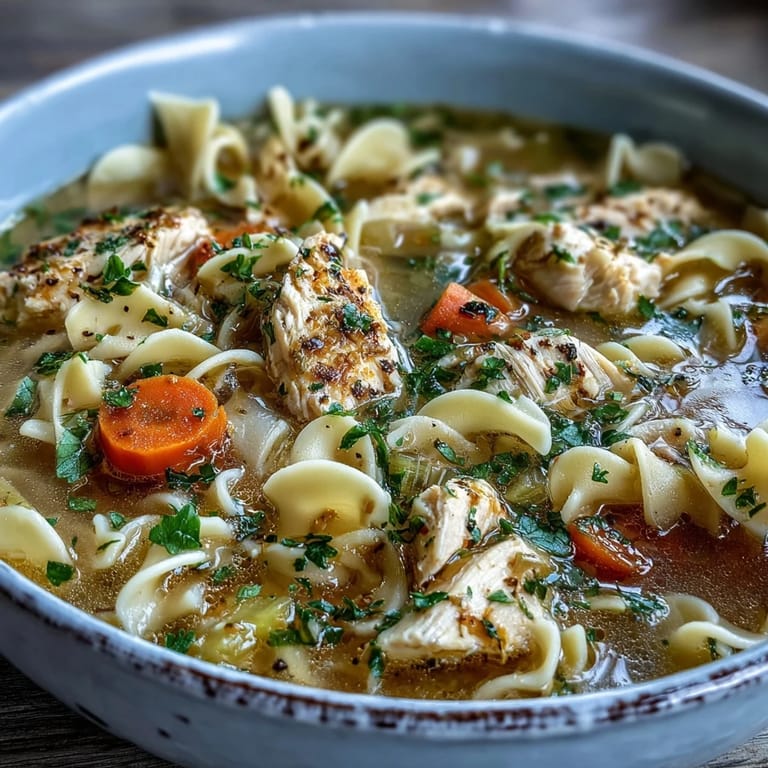
 This soup is a reminder that the simplest meals often carry the most meaning. Serve it with crusty bread, a quiet evening, and the knowledge that you've made something that nourishes both body and spirit.
Questions & Answers
- → How do I store leftover soup?
Store cooled soup in an airtight container in the refrigerator for up to 4 days. The noodles may absorb some broth, so add a splash of water or broth when reheating.
- → Can I freeze this?
Freeze without the noodles for best results, as they can become mushy. Add fresh noodles when reheating. Properly stored, it keeps in the freezer for 2-3 months.
- → What can I use instead of egg noodles?
Try rice, orzo, pasta shells, or gluten-free noodles. For a lighter version, skip the pasta entirely and add more vegetables.
- → How do I make it more flavorful?
Use bone-in chicken and shred it after cooking, add a splash of lemon juice before serving, or stir in fresh herbs like thyme or rosemary at the end.
- → Can I use rotisserie chicken?
Yes, add shredded rotisserie chicken during the last 5 minutes of simmering just to heat through. This reduces total time to about 25 minutes.