 Save to Pinterest
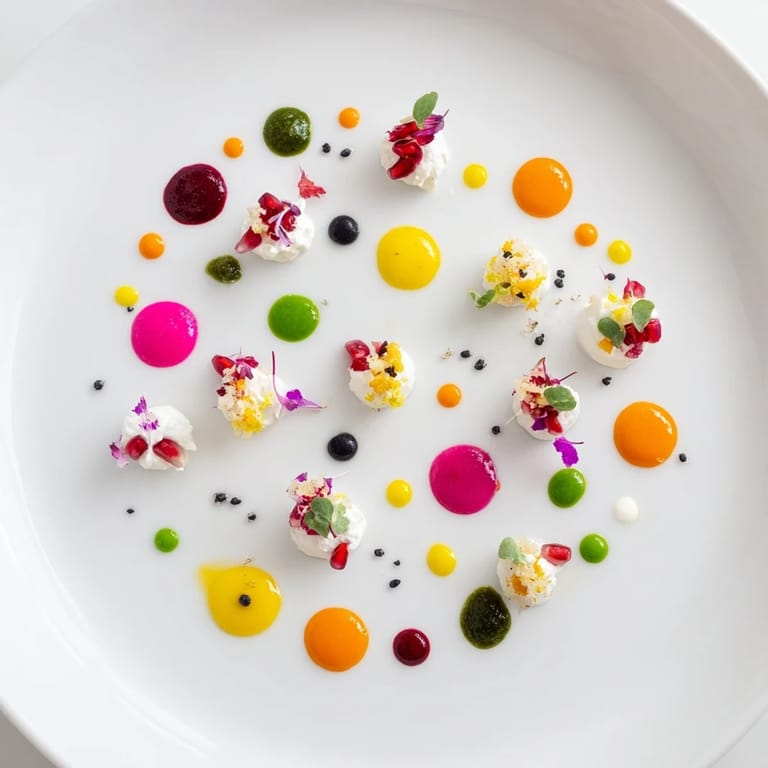
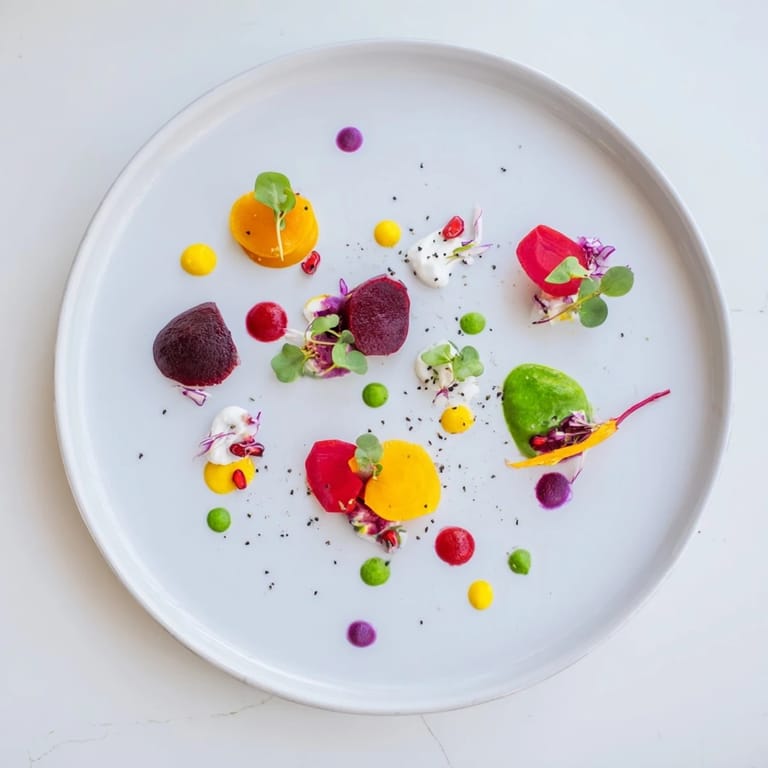
 I discovered this dish during a late-night conversation with a painter friend who couldn't stop talking about Pointillism. Watching her describe how tiny dots of color created something magical on canvas, I thought: why not do that on a plate? The first time I attempted it, my kitchen became a studio, and instead of brushes, I wielded piping bags. Each dot was deliberate, each color carefully placed. What emerged was less like a typical appetizer and more like an edible painting that made everyone pause before tasting—which, honestly, is the highest compliment a chef can receive.
I'll never forget plating this for my partner's birthday dinner. They walked into the kitchen and immediately grabbed their phone, and I pretended to be annoyed but secretly loved it. By the time they tasted their first spoonful—a combination of beet, basil pesto, and pomegranate—their eyes widened. They said it tasted like what it looked like, if that makes sense. That's when I knew this wasn't just about presentation; it was about orchestrating flavor through visual choice.
Ingredients
- Beetroot, cooked and pureed (80 g): The deepest, most dramatic color on your palette—it's earthy and slightly sweet, grounding the lighter elements. I always cook it with a splash of vinegar to brighten its flavor and prevent it from staining everything else during prep.
- Carrot, cooked and pureed (80 g): Sunshine in puree form. Its natural sweetness balances the sharper notes, and it's forgiving to work with. I roast mine slightly to deepen the flavor before pureeing.
- Green pea, cooked and pureed (80 g): The gentle voice in this composition. Fresh, almost floral in its way, it ties the vegetable dots together with a delicate touch. Don't skip the salt when pureeing—it completely transforms the flavor.
- Yellow bell pepper, roasted and pureed (80 g): Sweetness meets smokiness here. Roasting beforehand is non-negotiable; it concentrates the flavor and adds complexity that raw peppers simply can't deliver.
- Greek yogurt (60 g): The creamy anchor that lets your dots shine. I use full-fat because it's richer and more visually striking on the plate. The tanginess matters too—it's a flavor counterpoint.
- Crème fraîche (40 g): Where yogurt is bright, crème fraîche is luxurious. It stays pure white, which is important for your pointillist palette. If you can't find it, sour cream works but lacks the elegance.
- Basil pesto (1 tbsp): Make this fresh if you can. That grassy, fragrant quality is what transforms these vegetable purees from simple to something memorable. A squeeze bottle keeps it controlled during plating.
- Red pepper coulis (1 tbsp): A silky, concentrated pepper sauce that adds visual drama and subtle depth. Store-bought works, but homemade tastes infinitely better. A smooth consistency matters—strain it if you need to.
- Balsamic reduction (1 tbsp): The deepest note, almost chocolate-like in its richness. A few dots of this ties the whole composition together. If it's too thin, simmer it gently until it coats the back of a spoon.
- Pickled red onions, finely diced (20 g): The surprise element. Their sharp, vinegary bite wakes up every other flavor and adds a crucial textural contrast to the creamy purees.
- Microgreens (20 g): These aren't just garnish—they're the brushstrokes that add air and sophistication. Choose colors that complement your palette: purple radish, spicy mustard, or delicate pea shoots all work beautifully.
- Toasted black sesame seeds (1 tbsp): Toasting them yourself makes all the difference. The nutty warmth they bring is subtle but essential. They're also tiny points of texture that echo the pointillist theme.
- Pomegranate seeds (1 tbsp): Jewel-like bursts of tart sweetness. I add these last so they don't weep. They're as much about the jewel-tone visual as they are about flavor.
- Edible flower petals (optional): Nasturtiums, pansies, or violas all work. They're the final artistic flourish, adding color and an almost peppery note depending on the variety.
- Sea salt flakes and freshly ground black pepper: Never underestimate these. Finishing with quality salt and pepper elevates everything, and it's your final chance to adjust the flavor balance as you plate.
Tired of Takeout? 🥡
Get 10 meals you can make faster than delivery arrives. Seriously.
One email. No spam. Unsubscribe anytime.
Instructions
- Create Your Puree Palette:
- Blend each vegetable separately with just a pinch of salt and a few drops of olive oil until completely smooth. This is where patience matters—lumpy purees won't pipe cleanly. Transfer each to its own piping bag or squeeze bottle. I label mine with tape so I don't mix them up mid-plate. The vegetable purees are your base colors, and they need to be flawless.
- Prepare Your Sauces and Creams:
- Put the yogurt and crème fraîche in separate piping bags. The pesto, coulis, and balsamic reduction go into squeeze bottles with finer tips if you have them. Everything should be at room temperature so it flows smoothly. This is also where you taste everything and adjust seasoning—these elements are your flavor anchors.
- Design Your Composition:
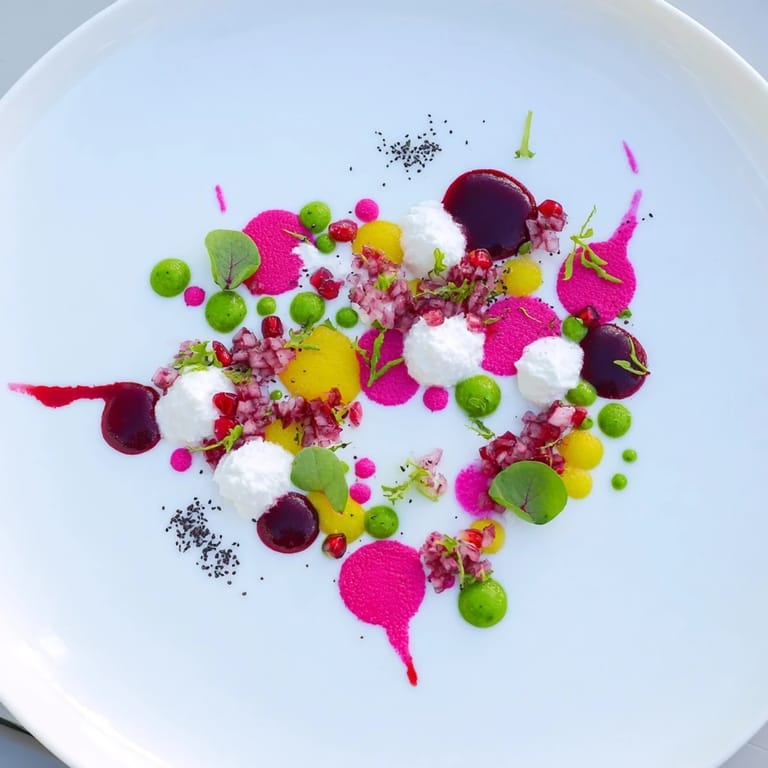
- Start with a clean, dry plate. Using your piping bags and squeeze bottles, create dots and tiny mounds of each puree, sauce, and cream across the entire surface. Think of the plate as a canvas and vary the sizes deliberately—some dots small as pearls, others slightly larger. Leave space between dots so they don't touch. This is the meditative part. Step back frequently and look at it from above. You're building visual rhythm, not just placing dots randomly.
- Add Textural Accents:
- Now comes the delicate work. Sprinkle diced pickled onions strategically—maybe three or four tiny clusters. Scatter microgreens so they balance with empty space. Add sesame seeds and pomegranate seeds in a way that feels intentional. If using edible flowers, place them as final flourishes where they'll catch the light. Use tweezers if you have them; your fingers will thank you for the control.
- Final Flourish and Service:
- Finish with a pinch of sea salt flakes and a few grinds of fresh black pepper. Serve immediately—and I mean immediately. This is a dish where the visual moment matters. The colors are liveliest in the first few minutes, and the purees maintain their shine before they begin to separate. Serve with crisp crackers or sourdough if you like, but honestly, I think this is perfect as is.
 Save to Pinterest
 There was a moment during a dinner party when someone asked if this was actually meant to be eaten or if I'd hung it on the wall instead. We all laughed, but that question captured exactly what I'd been trying to achieve. Food that makes you reconsider what's possible on a plate. Food that reminds you that taste and sight are inseparable.
The Art of Vegetable Pureeing
The quality of your purees determines everything. I learned this the hard way after my first attempt, where I under-processed the beet and ended up with a grainy texture that wouldn't pipe. Now I blend longer than feels necessary, adding just enough olive oil to help everything move smoothly. A food processor gives you more control than a blender for small batches, but a blender creates a silkier finish. The key is getting to that point where the puree is almost glossy and moves as one unified mass. If your puree is too thick, add liquid by the teaspoon—water, stock, or the cooking liquid from the vegetables themselves. If it's too thin, strain it through a fine sieve for a few minutes. Your squeeze bottle should release the puree with gentle pressure, not require squeezing with all your might.
Building Flavor Through Contrast
One of the most satisfying aspects of this dish is that every diner creates their own flavor journey based on which dots they choose to combine. The earthiness of beet paired with sharp pickled onion and creamy yogurt tells a different story than beet with balsamic reduction and basil pesto. I encourage people to taste around the plate rather than in a grid pattern. The first time someone discovers that basil pesto plus carrot puree plus pomegranate is basically a flavor revelation, you'll see it in their face. This is intentional design—nothing is random, but everything feels like it could be discovered rather than served.
Plating as Performance
Here's something that surprised me: this dish is more enjoyable to make than many dishes are to eat. There's a focus required, a presence. You can't multitask while plating this, and honestly, that's a gift in a world of distraction. If you're cooking for guests, consider doing the final plating in front of them—not in a showy way, but as part of the dinner experience. They'll appreciate the intentionality, and you might find yourself explaining your design choices in a way that deepens the whole meal. Some of my favorite dinner conversations have happened while someone watched me plate, asking questions about why I chose these colors or why certain elements are positioned where they are.
- Use a lazy Susan or turntable if you have one—it lets you rotate the plate as you work instead of reaching across and disrupting your design
- Have a damp cloth nearby to clean the rim if you make mistakes; a clean plate edge elevates everything instantly
- If you're nervous, practice plating on a smaller plate first or sketch your design on paper—this isn't a race, and planning makes the actual plating smoother
 Save to Pinterest
 This dish taught me that presentation and flavor aren't separate pursuits—they're two expressions of the same care. Every plate is a small masterpiece, and everyone who eats it becomes part of the art. That's the real magic here.
Questions & Answers
- → How do I create the dot effect on the plate?
Use piping bags or squeeze bottles to carefully place small dots and mounds of purees and sauces evenly spaced for a pointillist visual impact.
- → Can I substitute any vegetables in the purees?
Yes, variations like purple sweet potato or avocado can add different hues and flavors while maintaining the vibrant appearance.
- → What are good garnishes to enhance texture and color?
Pickled red onions, microgreens, toasted sesame seeds, pomegranate seeds, and edible flower petals add distinct textures and visual contrast.
- → How to keep the colors bright and fresh?
Prepare purees shortly before plating and use fresh vegetables. Serving immediately preserves their vivid hues and textures.
- → Is this suitable for a vegetarian diet?
Yes, the dish is vegetarian-friendly and can be adapted for vegan preferences by swapping dairy with plant-based alternatives.