 Save to Pinterest
 The first time I made pierogi from scratch, my grandmother stood in my kitchen with her arms crossed, watching me fumble with the dough. She didn't say much—just observed—until I got frustrated trying to seal the edges. Then she took over, her hands moving with such practiced ease that I understood what years of repetition really meant. Now when I make them, I can almost feel her presence in the rhythm of the work, and that creamy potato filling reminds me why she never needed a recipe written down.
I remember bringing a batch to a Polish neighbor's potluck years ago, nervously watching to see if they'd pass judgment. She took a bite, closed her eyes, and said nothing for a moment—which terrified me until she asked for the recipe. That small nod of approval meant more than any compliment because these dumplings carry the weight of generations, and making them right feels like honoring something sacred.
Ingredients
- All-purpose flour (3 cups): The foundation of tender dough; all-purpose works better here than bread flour because you want them delicate, not chewy.
- Egg (1 large): Binds the dough and adds richness that makes the pierogi feel silky when you bite into them.
- Lukewarm water (¾ cup): Temperature matters more than you'd think; cold water makes dough tough, hot water kills the texture.
- Sour cream (2 tbsp): This is the secret that makes the dough tender and gives it a subtle tang that deepens the flavor.
- Salt (1 tsp for dough): Seasoning the dough itself ensures every layer tastes intentional.
- Unsalted butter (2 tbsp melted, plus 3 tbsp for onions): Melted butter in the dough creates richness; the rest goes toward those life-changing caramelized onions.
- Russet potatoes (1 ½ lbs): They're starchy and fluffy when cooked, making the filling cloud-like and perfect for soaking up the sour cream you'll add on top.
- Farmers cheese or drained ricotta (1 cup): Farmers cheese is traditional and slightly tangy, but ricotta works if that's what you have—just drain it well or your filling gets watery.
- Sharp cheddar cheese (½ cup grated): The sharpness cuts through the mild potatoes and adds a savory depth that makes people wonder what you did differently.
- Onion for filling (1 small, finely chopped): Sautéed until golden, it adds sweetness and umami that keeps you reaching for another pierogi.
- Large onions for serving (2, thinly sliced): Low and slow caramelization transforms these into something almost syrupy and sweet—this step cannot be rushed.
- Sour cream for serving: A cold dollop against the warm pierogi is where the magic happens; it's textural contrast and cooling relief in one spoonful.
Tired of Takeout? 🥡
Get 10 meals you can make faster than delivery arrives. Seriously.
One email. No spam. Unsubscribe anytime.
Instructions
- Mix and knead the dough:
- Combine flour and salt in a large bowl, then make a well in the center like you're creating a little nest. Add your egg, melted butter, sour cream, and lukewarm water, then stir everything together until shaggy. Knead on a floured surface for 5–7 minutes until smooth and elastic—you'll feel the dough relax under your hands.
- Let dough rest:
- Cover it with a damp towel and step away for 30 minutes. This resting time is when the gluten relaxes and the dough becomes more forgiving to work with.
- Cook the potatoes:
- Boil peeled, cubed russets in salted water for 15–18 minutes until they fall apart easily when pierced. Drain them thoroughly—excess moisture is the enemy of good pierogi filling.
- Build the filling:
- Mash the cooked potatoes until completely smooth, then melt butter in a skillet and sauté your finely chopped onion until golden and sweet. Fold the sautéed onion into the potatoes along with the farmers cheese and sharp cheddar, then season with salt and pepper to taste.
- Roll and cut:
- On a lightly floured surface, roll the dough thin—about ⅛ inch thick—then cut circles using a 3-inch cutter or the rim of a glass. You should get about 36 dumplings depending on how thick you roll.
- Fill and seal:
- Place a heaping teaspoon of cooled filling in the center of each circle, fold in half, and pinch the edges firmly to seal. The seal is what keeps the filling from escaping into the water, so take your time here.
- Boil gently:
- In a large pot of gently boiling salted water, cook pierogi in batches so they have room to move. When they float to the surface, give them 1–2 minutes more, then fish them out with a slotted spoon—they're delicate now.
- Caramelize the onions slowly:
- In a large skillet, melt butter over medium-low heat and add your thinly sliced onions. Stir often and let them cook for 20–25 minutes until they're deeply golden, sweet, and almost jammy—patience here transforms them from sharp to transcendent.
- Pan-fry for crispness:
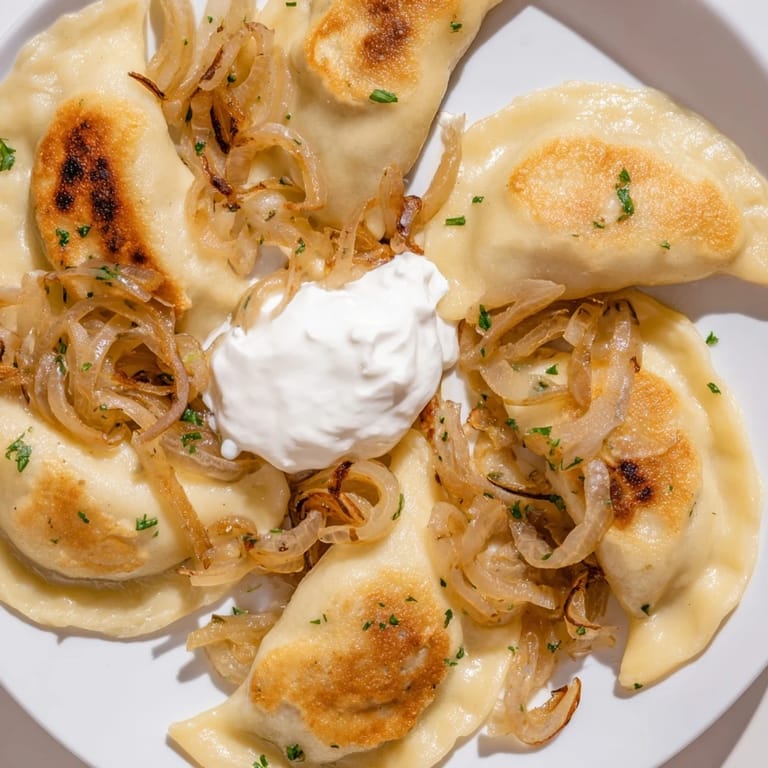
- In the same skillet with residual butter and onions, add boiled pierogi in batches and fry on both sides for 2–3 minutes per side until they're golden and crisp. This step gives them the textural contrast that makes them irresistible.
- Serve with warmth:
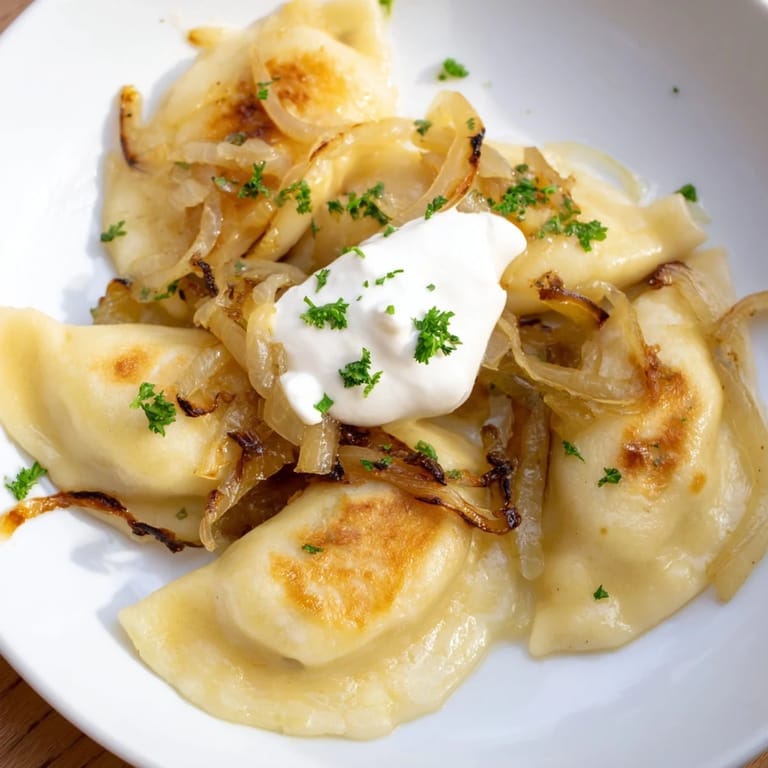
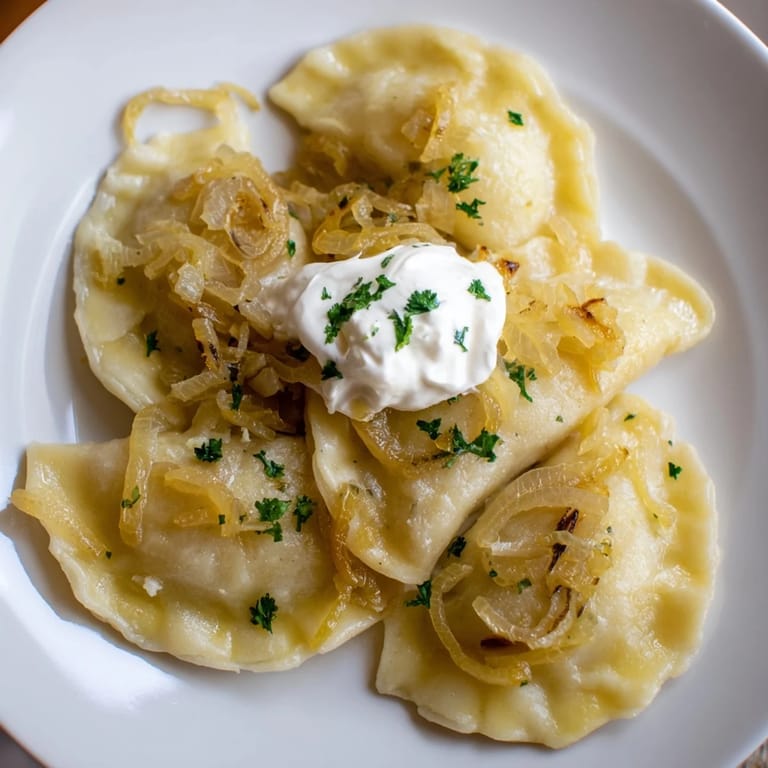
- Plate them hot, top generously with caramelized onions, add a dollop of cold sour cream, and finish with fresh chives or parsley if you have it.
 Save to Pinterest
 There was a winter evening when I made these for a friend going through something hard, and she ate them slowly, not saying much. Sometimes food isn't about flavor alone—it's about someone taking the time to make something with their hands, something that says, I'm thinking of you. That's what pierogi means to me now.
The Dough: Simple But Precise
The dough for pierogi is honestly forgiving once you understand it. The sour cream is the revelation—it makes the dough tender without making it slack, and it adds a subtle tang that echoes the sour cream you'll serve on top. The key is not overworking it; knead until smooth and elastic, then trust that the resting period will do the real work. I've made this dough hundreds of times now, and I still get a little thrill when it comes together under my hands exactly right.
Filling Variations and Swaps
The potato and cheese filling is the classic, but once you understand the ratio—mostly potato, cheese for richness, sautéed onion for depth—you can play around. Some people add caramelized mushrooms, some add sauerkraut, some stick bacon in there for a non-vegetarian version. The filling should taste delicious on its own, seasoned properly, because that's what you're biting into. I've learned the hard way that skimping on seasoning the filling is a common mistake; taste it before you fill a single pierogi and adjust boldly.
Make-Ahead and Freezing
This is the real gift of pierogi: you can make them days or weeks ahead and cook them when you need them. Arrange uncooked pierogi on a tray in a single layer, freeze until solid, then transfer to freezer bags and store for up to two months. When you're ready to cook, don't thaw them—just boil straight from frozen, adding a minute or two to the cooking time. I've built entire weeknight dinners around having a bag of these waiting, and it's changed how I think about entertaining and comfort feeding.
- Freeze them in a single layer first so they don't stick together in one giant block.
- Label your bag with the date and contents so you remember what you made and when.
- Cooking from frozen actually helps them stay intact because the outside seals before the filling gets too hot.
 Save to Pinterest
 These dumplings deserve to be made slowly, without rushing, because that's how you honor the tradition and the people who've made them before you. Serve them hot, and watch people's faces change when they take that first bite.
Questions & Answers
- → How do I achieve a smooth and elastic dough for pierogi?
Mix flour, salt, egg, melted butter, sour cream, and lukewarm water, then knead for 5–7 minutes until smooth. Resting the dough for 30 minutes improves its elasticity.
- → What is the best way to prepare the potato and cheese filling?
Boil peeled potatoes until tender, mash until smooth, then mix with sautéed finely chopped onions, farmers cheese, sharp cheddar, salt, and pepper for a creamy filling.
- → How should I cook pierogi to get the perfect texture?
First boil pierogi until they float, then pan-fry in butter until golden and crisp on both sides for a satisfying contrast of textures.
- → What are tips for caramelizing onions for serving?
Cook thinly sliced onions slowly over medium-low heat in butter, stirring often, for 20–25 minutes until deeply golden and sweet.
- → Can I freeze uncooked pierogi for later use?
Yes, freeze uncooked pierogi on a tray before transferring to bags. They can be stored frozen for up to 2 months without losing quality.
- → Are there any common ingredient substitutions?
You can replace farmers cheese with well-drained cottage cheese, and for a non-vegetarian twist, add bacon lardons to the caramelized onions.