 Save to Pinterest
 I first created The River Delta Flow at a dinner party when I realized I had an abundance of beautiful vegetables but wanted something more visually memorable than the typical veggie platter. As I arranged the colorful strips on my serving platter, watching them branch out like tributaries flowing into a central river of hummus, I felt that magical moment when food becomes art. My guests didn't just eat from it—they gathered around it, marveling at how something so simple could tell a story of flowing rivers meeting the sea.
The first time I made this for my sister's baby shower, I watched a room full of pregnant women and tired new mothers gravitate toward the platter like it was hypnotizing. One guest told me it was the first thing all evening she felt excited to eat, and somehow the beautiful presentation made her enjoy every single bite more. That's when I realized this dish does something special—it invites people to pause and appreciate the moment.
Ingredients
- Hummus or Greek yogurt dip, 1 1/2 cups: This is your river, your anchor, your reason to gather. I've learned that creamy hummus creates beautiful, flowing lines, while Greek yogurt dip gives you a cleaner white canvas. Either way, choose something you love the taste of because people will dip repeatedly
- Cherry tomatoes, 1 cup halved: Those perfect ruby spheres catch the light and draw the eye immediately. Halving them keeps them from rolling, and their slight sweetness becomes the most popular vegetable on the board
- Cucumber, 1 cup sliced into sticks: The cool, refreshing backbone of your arrangement. Cut them thick enough to carry dip without breaking—I learned this the hard way
- Colorful bell peppers, 1 cup sliced into strips: Red, yellow, and orange create the visual magic. They're sturdy, sweet, and somehow elegant in their simplicity
- Carrots, 1 cup peeled and cut into thin sticks: The natural sweetness makes them irresistible, and their orange warmth grounds the entire composition
- Radishes, 1/2 cup thinly sliced: These provide a peppery bite and shocking pink color that catches light beautifully. They're your secret weapon for visual drama
- Snap peas, 1/2 cup trimmed: Fresh, slightly sweet, and the texture people crave when they want something that feels alive and crisp
- Fresh parsley, 2 tablespoons chopped: The gentle garnish that softens the entire presentation and whispers that you cared about the details
- Olive oil, 1 tablespoon for drizzling: This catches the light on your dip and makes everything look professionally finished. It's not optional—it's the shimmer that makes it gallery-worthy
- Smoked paprika or zaatar, 1 teaspoon optional: If you use it, it adds an earthy mystery. If you don't, the vegetables speak for themselves
Tired of Takeout? 🥡
Get 10 meals you can make faster than delivery arrives. Seriously.
One email. No spam. Unsubscribe anytime.
Instructions
- Create Your River:
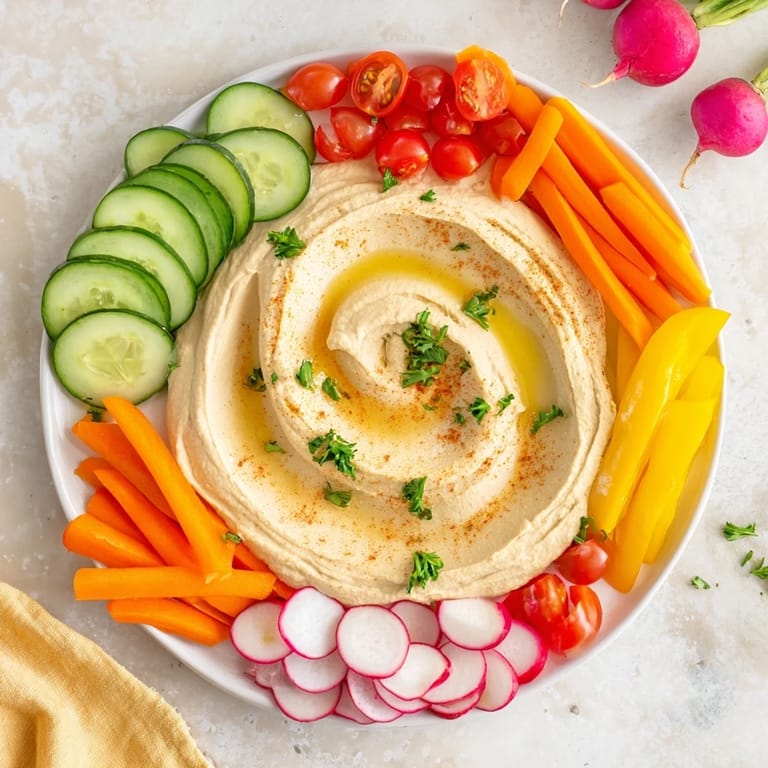
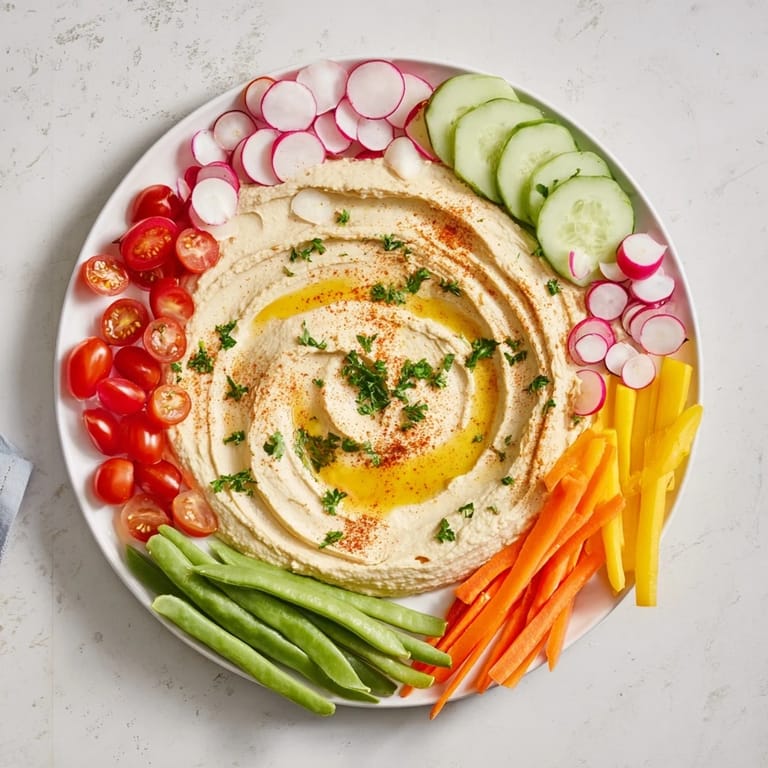
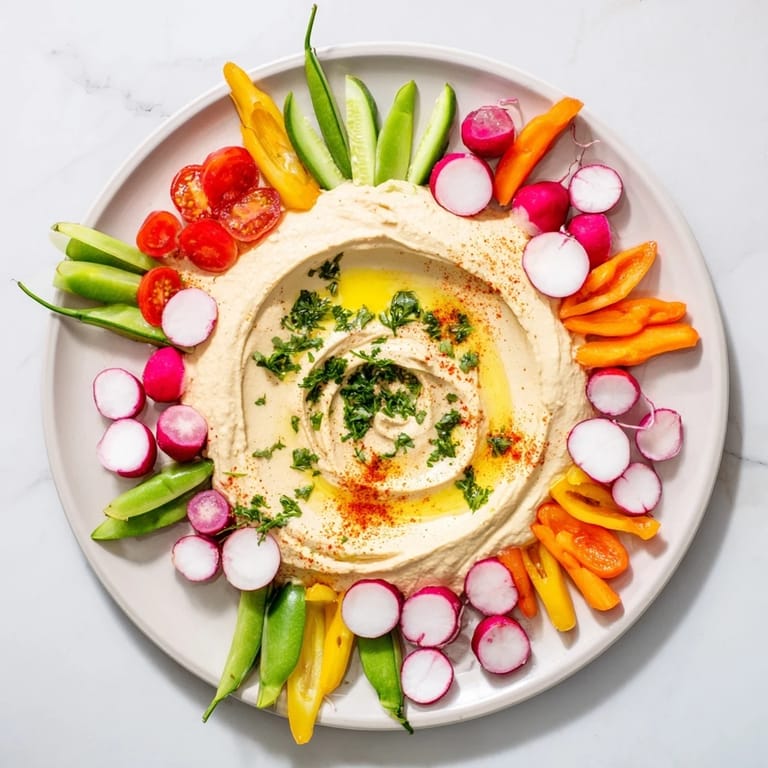
- Pour your hummus or yogurt dip onto the center of your largest serving platter in a generous, winding line. Use the back of a spoon to coax it into smooth curves that flow like water finding its way downhill. Don't overthink it—the imperfections make it look more like nature. This is your canvas, so take a moment to make it feel intentional.
- Build Your Tributaries:
- Now comes the meditative part. Starting from the outer edges of your platter, begin arranging your vegetable sticks in graceful lines that angle toward your central river, as if they're all flowing inward. Alternate your colors rhythmically—a carrot line, then peppers, then cucumbers—so your eye travels around the platter in satisfying waves. This isn't about perfection; it's about creating a pattern that feels organic and inviting.
- Polish Your Masterpiece:
- Drizzle your olive oil across the top of the dip with the kind of care you'd use to paint a canvas. Watch how it catches the light. If you're using smoked paprika or zaatar, sprinkle it across that oiled river now, creating a final layer of visual intrigue.
- Add the Final Touch:
- Scatter your fresh chopped parsley across the vegetables and dip, letting the flecks of green rest naturally where they fall. Step back and look at what you've created. This is when you'll understand why your guests will pause before eating.
- Serve with Intention:
- Bring this to your table while your guests are gathered. The moment of presentation matters. Serve it immediately while everything is at its crispest and most vibrant, offering pita chips or extra vegetables alongside for those who want even more to dip.
 Save to Pinterest
 What moves me most about this dish is how it transforms the simple act of eating into a moment of shared beauty. At one gathering, I watched a five-year-old carefully study the arrangement before eating, and she whispered to her mother, 'It's like a real river.' That child saw what I was trying to create, and in that moment, The River Delta Flow became more than food—it became a story we were telling together.
The Art of Vegetable Selection
The magic of this dish lives entirely in choosing vegetables at the peak of their season and freshness. When you're shopping, look for vegetables that feel firm and look vibrant—the colors should almost glow under the grocery store lights. I've learned to shop just one or two days before serving because vegetables that are too old will start to soften and won't hold their architectural integrity on the platter. Visit your farmer's market if you can; the vegetables are fresher, and you'll feel the difference in every bite your guests takes. A vegetable arranged beautifully but past its prime will disappoint, but the perfect carrot at the perfect moment becomes memorable.
Creating Visual Harmony
This presentation works because it respects the principle of color theory and natural flow. Your eye should travel naturally around the platter, never landing on one color long enough to get bored. I think of it like conducting an orchestra—each vegetable is an instrument, and together they create a visual symphony. The warmer colors like carrots and tomatoes should balance the cooler greens and purples of the radishes. Stand back frequently as you arrange and ask yourself if your eye wants to keep traveling or if it's getting stuck. Adjust until the flow feels effortless and inviting.
Dip Variations That Keep It Fresh
Once you master the basic arrangement, the dip becomes your playground for creativity and seasonal exploration. Beet hummus creates a striking magenta river that makes your platter even more visually stunning. Baba ghanoush brings an earthy sophistication that feels like Mediterranean twilight. Tzatziki offers cool brightness on hot days. I even tried a white bean dip one summer and discovered it had this subtle nuttiness that made people ask for the recipe. The vegetables stay the same, but changing the dip completely transforms the story you're telling. Experiment boldly, and don't be afraid to make a dip that's deeply flavorful—it's the heart of the arrangement and deserves attention.
- Each dip brings its own flavor profile, so taste as you go and adjust seasonings to match your mood and your guests
- Make your dip fresh on the day of serving if possible, so it carries the vibrance of intention
- Keep extra dip in a small bowl on the side for those who want more once they've demolished your presentation
 Save to Pinterest
 The River Delta Flow taught me that the most memorable meals aren't always about complexity—sometimes they're about presence. When you arrange vegetables with intention and care, you're really saying to your guests, 'You matter enough for me to create something beautiful for you today.'
Questions & Answers
- → What types of dips work best for this platter?
Hummus or Greek yogurt dips provide a creamy base, but beet hummus, baba ghanoush, or tzatziki can also complement the fresh vegetables beautifully.
- → How should the vegetables be prepared?
Vegetables should be sliced into sticks or rounds, like cucumber sticks and cherry tomato halves, to create the branching tributaries effect visually.
- → Can this be made ahead of time?
For best presentation, assemble shortly before serving to keep vegetables crisp and dips fresh.
- → Are there any suggested garnishes?
Drizzling olive oil and sprinkling smoked paprika or zaatar adds flavor and visual appeal, while fresh parsley enhances aroma and color.
- → Is this suitable for special diets?
This platter is vegetarian and gluten-free, but check dip ingredients if allergens like sesame or dairy are a concern.