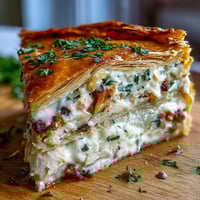
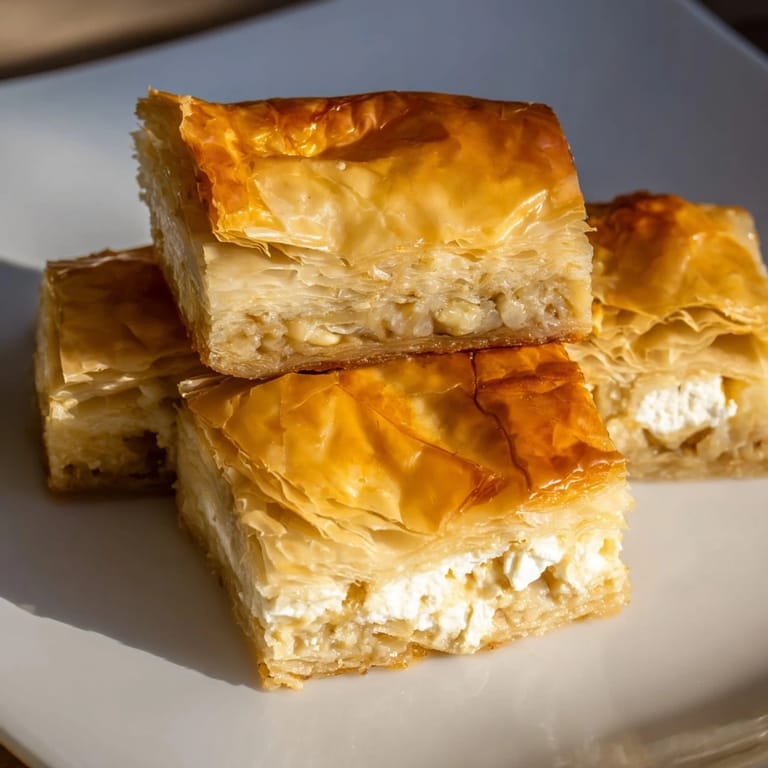
 Save to Pinterest
 My neighbor Mirjana taught me to make gibanica on a Tuesday afternoon when her kitchen smelled like hot butter and something vaguely like home. She'd been living in our building for three years before inviting me over, and somehow this golden, crackling pie was her way of saying we'd become friends. The phyllo sheets crinkled in her weathered hands as she moved them across the baking dish with such confidence that I felt like I was watching a dance rather than cooking. I've made it countless times since, and it never fails to transport me back to that kitchen, to the sound of her humming and the warmth of being welcomed into something she clearly loved.
The first time I brought gibanica to a potluck, it disappeared within twenty minutes—faster than the fancy salad someone spent an hour on. That's when I realized this dish has a quiet power: it tastes like comfort but feels elegant enough for company. It's become my answer to every gathering now, the recipe I make when I want people to feel cared for without making them watch me stress.
Ingredients
- Cottage cheese (300g): This is your base, the part that makes the filling pillowy and mild. Don't skip it for feta alone—the combination is what gives gibanica its signature texture.
- Feta cheese (200g, crumbled): This brings the personality, the salty boldness that makes people taste it and immediately ask for the recipe.
- Eggs (4 large): They bind everything together and add richness; use room temperature eggs if you want them to mix smoothly with the cheese.
- Plain yogurt (100ml): This keeps the filling from being too dense and adds a subtle tang that balances the saltiness.
- Sunflower oil (50ml plus 2 tbsp for brushing): The oil is essential for both the filling's creamy texture and getting those phyllo layers golden and crisp.
- Sparkling water (50ml): A secret that lightens the filling and makes it almost cloud-like; still water works in a pinch, but sparkling creates something special.
- Salt and pepper: Taste as you go because the feta is already salty—you might need less than you'd normally use.
- Phyllo dough (500g, about 12 sheets): Keep it thawed at room temperature and cover unused sheets with a damp towel so they don't dry out while you're building the pie.
Tired of Takeout? 🥡
Get 10 meals you can make faster than delivery arrives. Seriously.
One email. No spam. Unsubscribe anytime.
Instructions
- Set up your space:
- Preheat your oven to 180°C (350°F) and generously oil your 23x33 cm baking dish—not just a light coating, enough that it feels almost slick. This prevents sticking and is why the bottom crust becomes so golden and wonderful.
- Mix the filling:
- In a large bowl, combine the cottage cheese, crumbled feta, eggs, yogurt, oil, and sparkling water, stirring until the texture is smooth and creamy. Season with salt and pepper, tasting as you go because feta's saltiness varies wildly depending on where it comes from.
- Start layering:
- Lay one sheet of phyllo in the baking dish and brush it lightly with oil using a pastry brush or even your fingertips if you don't have a brush. The oil makes each sheet crisp when it bakes, so don't skip this step.
- Build the pie:
- Add two more phyllo sheets on top, brushing each one, then spread 3-4 tablespoons of the cheese filling across the surface. Keep layering this way—2-3 phyllo sheets, brush with oil, then filling—until both the phyllo and filling are used up.
- Finish strong:
- Top with two final phyllo sheets, brush generously with oil, and if you want a restaurant-quality golden shine, beat the egg yolk and brush it on top. Cut the pie into squares or diamonds with a sharp knife before baking so it stays neat when you serve it.
- Bake until golden:
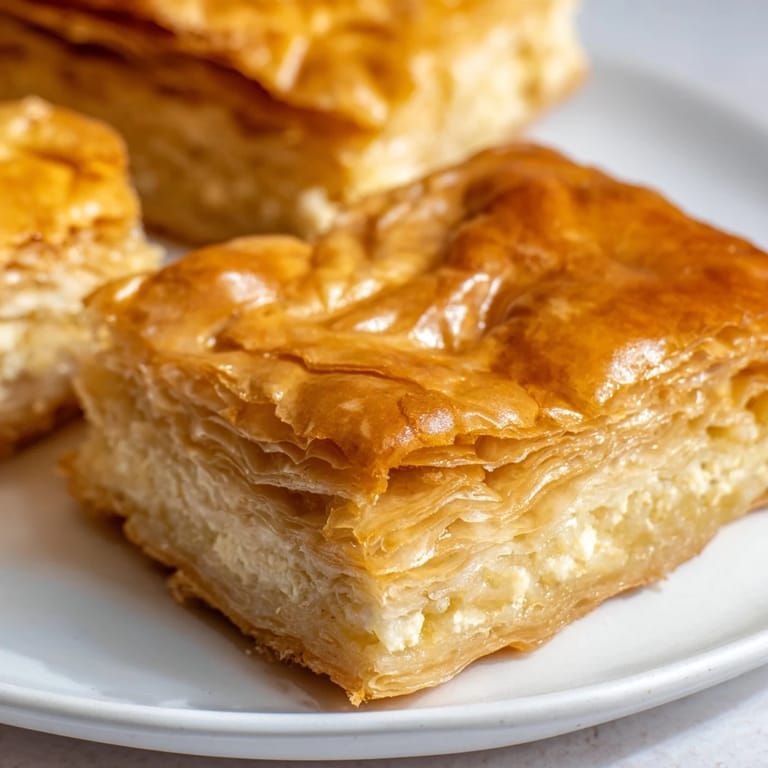
- Slide it into the oven for 35-40 minutes until the top is crackling and deep golden brown. You'll know it's done when you can hear it crackle slightly if you lean in close.
- Rest and serve:
- Let it cool for 10 minutes before serving—this helps it hold together when you cut into it. It's equally delicious warm, room temperature, or even cold the next day straight from the fridge.
 Save to Pinterest
 The moment I realized this dish had become something important to me was when my sister called asking if I'd make it for her birthday dinner. I sat in my kitchen the night before, layering those phyllo sheets, and felt this quiet pride knowing I was carrying forward something Mirjana had shared with me—and soon I'd be sharing it with the people I love most.
Why Phyllo Makes the Difference
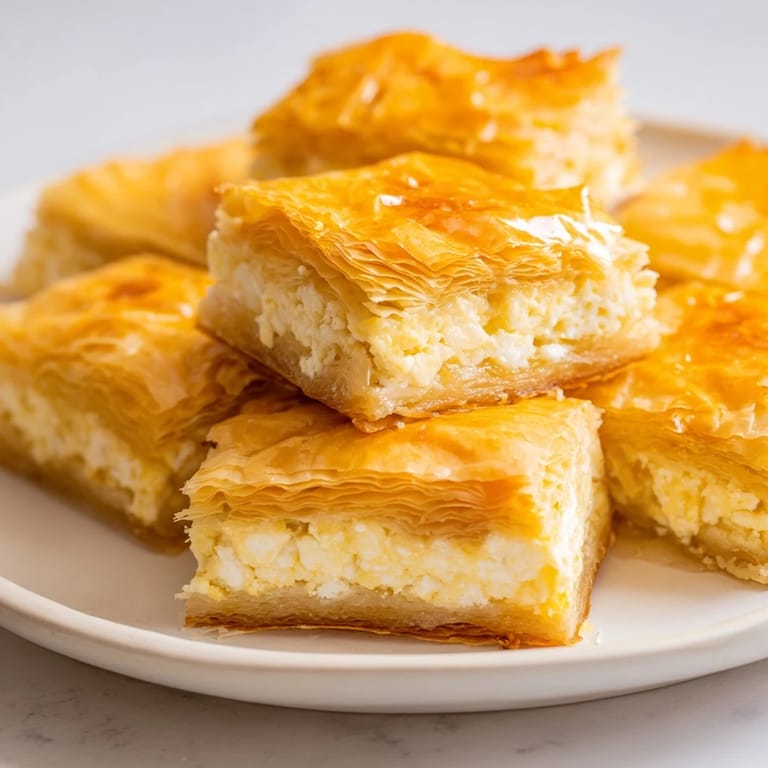
There's something almost meditative about working with phyllo dough if you stop rushing through it. Each sheet is so thin you can see your hand through it, and when you brush it with oil, it becomes translucent and shimmering. The magic happens in the oven—those sheets toast and crisp and layer into something that shatters between your teeth in the most satisfying way. You can't achieve this texture with regular pastry; phyllo is what makes gibanica fundamentally itself.
The Cheese Balance
The combination of cottage cheese and feta is intentional and worth respecting. Cottage cheese alone would be bland; feta alone would be aggressively salty and one-note. Together with the yogurt's slight tang and the eggs' richness, they create something that tastes more complex than its simple ingredient list suggests. The filling becomes creamy but not heavy, salty but not overwhelming, and it lets the crispy phyllo be the real star of the show.
Serving and Storing
Gibanica is at its absolute best within a few hours of baking, while the phyllo is still crackling, but it's also remarkably forgiving and keeps beautifully for days. The filling actually becomes creamier as it sits, and reheating in a 160°C oven for 10 minutes restores much of that crispy exterior.
- Serve it with a simple tomato and cucumber salad on the side to balance the richness with brightness.
- If you're making it ahead for a gathering, bake it in the morning and let people warm it gently before eating if they prefer it hot.
- Store it in an airtight container in the fridge, and it'll keep for up to four days, though it's honestly best eaten within the first two.
 Save to Pinterest
 This recipe has become my answer to the question of how to cook with love for people who matter. It's not complicated, but it's rewarding, and it somehow always tastes like home—whichever home you're building.
Questions & Answers
- → What type of cheese is used in this layered pie?
The filling combines creamy cottage cheese and crumbled feta, creating a rich and tangy flavor balance.
- → How is the phyllo prepared for baking?
Phyllo sheets are layered in the baking dish, each brushed generously with sunflower oil to achieve a crisp and golden texture.
- → Can the pie be served warm or cold?
It is delicious when served warm or at room temperature, allowing the flavors to meld beautifully.
- → Is there an option to enhance the topping's color?
Brushing the top layer with beaten egg yolk before baking adds a richer golden glaze but is optional.
- → Are there gluten-free alternatives for this dish?
Gluten-free phyllo sheets can be used to accommodate gluten sensitivities without compromising texture.