 Save to Pinterest
 There's something about the first warm day of spring that makes you crave something cold and light, and that's when I discovered soba noodles weren't just for winter broths. I was rummaging through my pantry, half-asleep, when I noticed a package of buckwheat noodles tucked behind the rice. Twenty minutes later, I'd tossed them with vegetables and a peanut-sesame sauce that was so good I actually sat down to eat instead of standing at the counter. That salad became my answer to every "I have nothing in the house" moment, and somehow it tastes even better when you're not expecting it to.
I remember bringing this to a potluck where everyone was expecting the usual pasta salad, and watching people go back for seconds of something they'd never heard of before. A friend asked for the recipe right there, and I realized it wasn't fancy or complicated, just honest vegetables and a sauce that actually tastes like something. That's when it stopped being just my lunch and became something I'd make for others.
Ingredients
- Soba noodles (250 g): These buckwheat beauties have a slightly nutty, earthy flavor that sets them apart from regular pasta, and they cook in minutes without turning mushy if you pay attention.
- Carrot: A julienne cut means thin, delicate strips that stay crisp and sweet, the kind of prep that makes everything feel more refined than it is.
- Cucumber: Slice it thin so it stays refreshing rather than watery, and it acts as a cool counterpoint to the rich dressing.
- Red bell pepper: The sweetness balances the umami of the soy sauce, and the color makes the whole bowl look alive.
- Spring onions: A thin slice gives you that sharp, fresh bite without overwhelming anything else.
- Red cabbage: Shredded finely, it stays crunchy and adds an almost peppery note that keeps things interesting.
- Smooth peanut butter: Use the good stuff—no sugar added if you can find it—because it's the whole foundation here.
- Soy sauce: The umami backbone, though tamari works if you need gluten-free.
- Rice vinegar: A gentle acidity that brightens without overwhelming, the way it should be.
- Toasted sesame oil: Just a splash goes a long way; it's pure flavor concentration.
- Maple syrup or honey: A touch of sweetness to balance the savory, but don't overdo it or you'll lose the sophistication.
- Fresh ginger and garlic: These two together create the quiet hum beneath everything, grounding all the flavors.
- Sesame seeds: Toast them yourself if you have time; the difference is worth it.
- Fresh cilantro: A generous handful at the end ties everything together and adds brightness.
Tired of Takeout? 🥡
Get 10 meals you can make faster than delivery arrives. Seriously.
One email. No spam. Unsubscribe anytime.
Instructions
- Boil and cool the noodles:
- Get your water to a rolling boil and cook the soba until it's tender but still has a little bite—usually five to seven minutes depending on the package. The moment they're done, drain them in a colander and rinse under cold running water until they stop steaming, which stops them from cooking further and rinses away that starchy coating that makes them gluey.
- Whisk together the magic:
- In your bowl, start with the peanut butter and whisk it together with soy sauce, rice vinegar, sesame oil, maple syrup, ginger, and garlic until it looks smooth and shiny. Add water one tablespoon at a time, whisking constantly, until it reaches that perfect pourable consistency—thick enough to cling to the noodles but not so thick it clumps.
- Toss everything together:
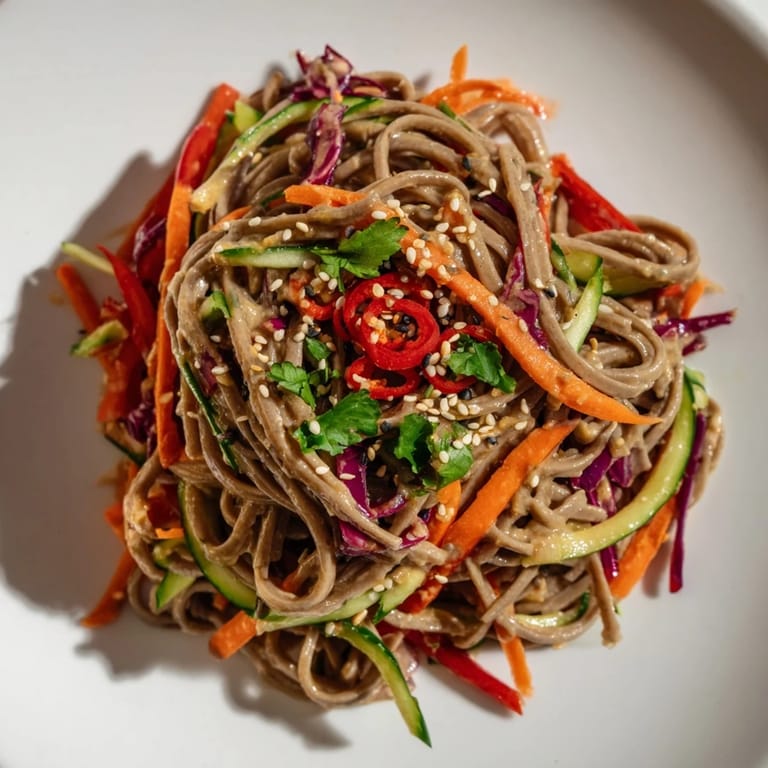
- Add the cooled noodles and all your vegetables to the dressing and toss with confidence, getting your hands in there if you need to, until every strand of noodle and every vegetable strip is coated. This is where your salad stops being a list of ingredients and becomes something cohesive.
- Plate and garnish:
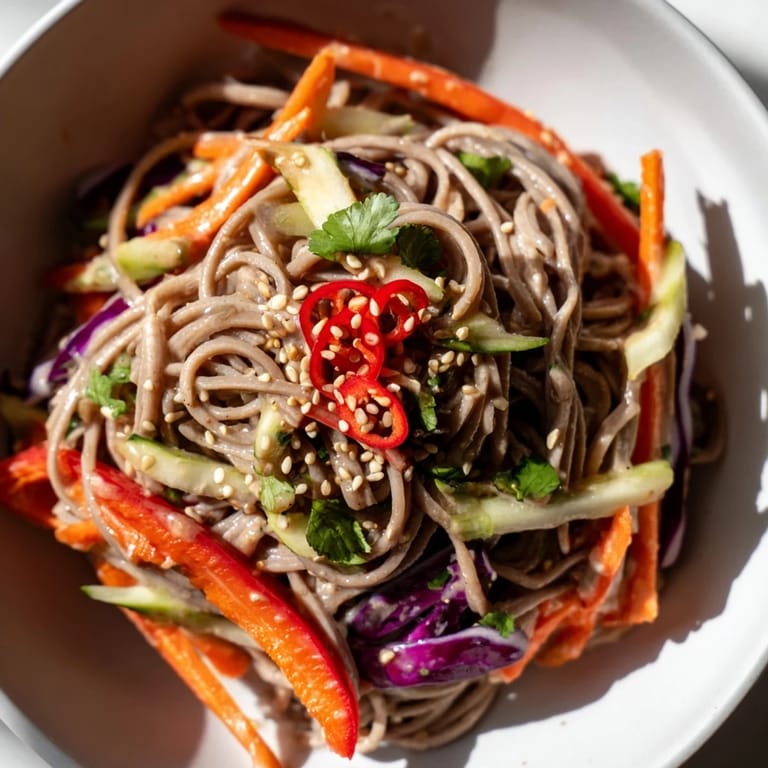
- Divide among bowls and top with a shower of toasted sesame seeds, a handful of cilantro, and thin slices of red chili if you want heat. Serve with lime wedges on the side so everyone can squeeze in as much brightness as they want.
 Save to Pinterest
 There was an evening when I made this salad and a friend showed up unexpectedly just as I was plating it. We ended up sitting on the kitchen counter, feet dangling, eating straight from the bowls and talking until the light outside turned golden. That's when this dish transformed from something efficient into something that feels like connection.
Making It Your Own
The beauty of this salad is how it bends to what you have and what you're craving. I've made it with tahini when someone had a peanut allergy and honestly couldn't tell the difference—it just tastes more sesame-forward and equally delicious. Some days I add grilled tofu or shredded chicken because I want protein, and other times I keep it purely vegetable because that's what feels right. The dressing is flexible enough to welcome additions without losing itself, which is the mark of a truly good base.
Dressing Variations That Actually Work
I've learned that a good dressing can make or break the whole experience, and this one is forgiving enough to experiment with. If you want it more savory, use less maple syrup and add an extra teaspoon of ginger. If you're in the mood for heat, a dash of sriracha or a pinch of white pepper changes everything without taking over. The sesame oil is precious, so don't skip it, but you can adjust the ratio of peanut butter to tahini depending on which flavor you want to lead.
Storage and Serving Ideas
This salad is one of those rare dishes that tastes good fresh and even better the next day once the flavors have gotten to know each other. Keep it in the fridge in an airtight container for up to two days, and if it tightens up a bit, just loosen it with a splash of water and a squeeze of lime before serving. It's perfect as a standalone lunch, a side dish at a dinner party, or even a light dinner when you want something that doesn't weigh you down.
- Make it gluten-free by using 100 percent buckwheat soba noodles and tamari instead of soy sauce.
- For a nut-free version, rely entirely on tahini and trust that sesame flavor will carry the day.
- Pack it in a mason jar with the dressing on the bottom and greens on top if you're taking it to work, then shake it up when you're ready to eat.
 Save to Pinterest
 This is the kind of recipe that earns its place in your regular rotation not because it's complicated, but because it delivers every single time. Make it once and it becomes yours, the way all the best dishes do.
Questions & Answers
- → How do I prevent soba noodles from sticking?
Rinse them thoroughly under cold running water immediately after cooking to remove excess starch and cool them, which prevents sticking.
- → Can I substitute peanut butter in the dressing?
Yes, tahini works well for a sesame flavor and is a great nut-free alternative in the dressing.
- → What vegetables work best in this salad?
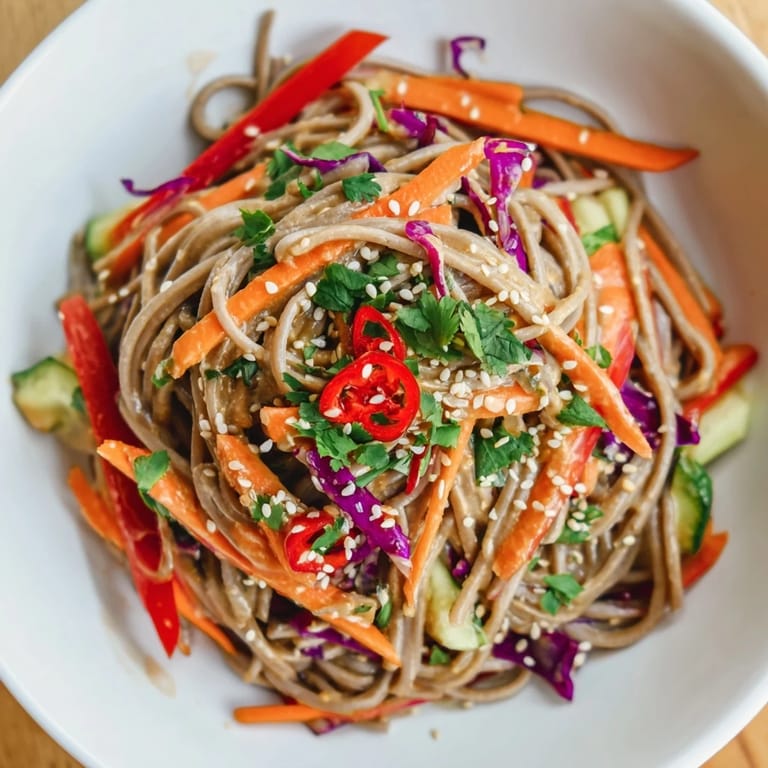
Crunchy, fresh vegetables like julienned carrots, thin cucumber strips, bell peppers, spring onions, and shredded cabbage provide texture and color.
- → How can I make this dish gluten-free?
Use 100% buckwheat soba noodles and substitute soy sauce with tamari for a gluten-free version.
- → What are good protein additions for this dish?
Grilled tofu, edamame, or shredded chicken can add extra protein without altering the fresh flavor profile.