 Save to Pinterest
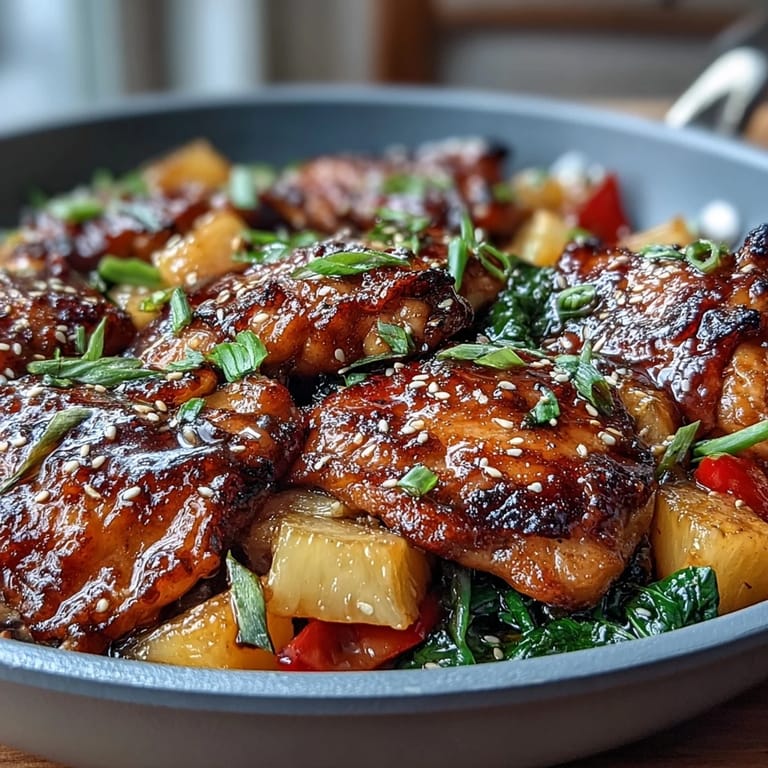
 There's something about the sizzle of chicken hitting hot oil that makes you feel like you're cooking something special, even on a random Tuesday night. I discovered this sticky honey garlic chicken skillet when I was craving that perfect balance of sweet and savory, the kind of dish that tastes like you spent hours in the kitchen but somehow comes together in under 45 minutes. The pineapple chunks were almost an afterthought—I had them sitting in the fridge and thought, why not?—but they became the magic ingredient that transformed a simple pan of chicken into something genuinely craveable. Now it's one of those recipes I return to when I want to feel like I'm cooking something impressive without the stress.
I made this for my sister's last-minute dinner party when she called me in a panic because her original plans fell through, and I watched her face when the sweet-savory aroma hit her kitchen—that moment when people walk in and immediately ask what smells so good. The pineapple caramelizes just enough to hint at those tropical flavors without being too adventurous, and everyone at the table kept talking about how they could actually taste the garlic and ginger working together. That's when I realized this wasn't just dinner; it was the kind of meal that makes people feel like you genuinely wanted to cook for them.
Ingredients
- Boneless, skinless chicken thighs: Thighs are your secret weapon here because they have just enough fat to stay juicy through cooking, and they actually benefit from a slightly longer simmer time.
- Honey: This isn't just sweetness—it creates that glossy caramelized coating that makes the whole dish shine, especially when combined with the acid from the vinegar.
- Low-sodium soy sauce: Low-sodium matters because you'll be reducing the sauce and concentrating the flavors, so regular soy sauce would tip it too salty.
- Rice vinegar: The acidity cuts through the richness and brightens everything, which is why it shouldn't be skipped even though it's easy to overlook.
- Fresh garlic and ginger: Minced and grated respectively keeps them from overpowering the dish while still building that complex aromatic base that makes people wonder what your secret is.
- Fresh pineapple chunks: Fresh is better than canned for texture, but honestly canned works in a pinch—just drain it well so you're not adding extra liquid to the pan.
- Bell peppers: Both red and green add sweetness and texture, and their natural sugars caramelize beautifully alongside the sauce.
- Cornstarch: A light dusting on the chicken helps create that golden crust and also helps thicken the sauce at the end.
- Vegetable oil: You need a high smoke point oil for searing the chicken properly without burning the aromatics.
- Green onions and sesame seeds: These feel like finishing touches, but they add freshness and a subtle nuttiness that elevates the whole plate.
Tired of Takeout? 🥡
Get 10 meals you can make faster than delivery arrives. Seriously.
One email. No spam. Unsubscribe anytime.
Instructions
- Prep your chicken properly:
- Pat those thighs completely dry—moisture is the enemy of a good sear, and you want that golden-brown crust that indicates the cooking has begun. A light dusting of cornstarch, with the excess shaken off, gives you that texture without making it feel breaded.
- Whisk the sauce:
- Combine honey, soy sauce, rice vinegar, minced garlic, grated ginger, and sriracha if you want heat. This step takes two minutes and makes the rest of the cooking effortless because everything is ready to go.
- Get that perfect sear:
- Heat your oil until it shimmers and almost smokes, then add the chicken thighs skin-side down if they still have skin, or just sear them aggressively for 3 to 4 minutes per side. You're building flavor here, not rushing through, so resist the urge to move them around. The golden-brown crust is worth the patience.
- Caramelize the vegetables:
- Once the chicken is out, throw the bell peppers and pineapple into the same hot skillet for 3 to 4 minutes. You want them to pick up some color and sweetness, not stay raw and pale. This is where the dish starts to look restaurant-quality.
- Bring it together:
- Return the chicken to the skillet, pour that glossy sauce over everything, and let it simmer covered for 10 to 12 minutes. The cover keeps everything moist while the sauce reduces and thickens around the chicken. Turn the chicken once so the sauce coats it evenly.
- Reduce to sticky perfection:
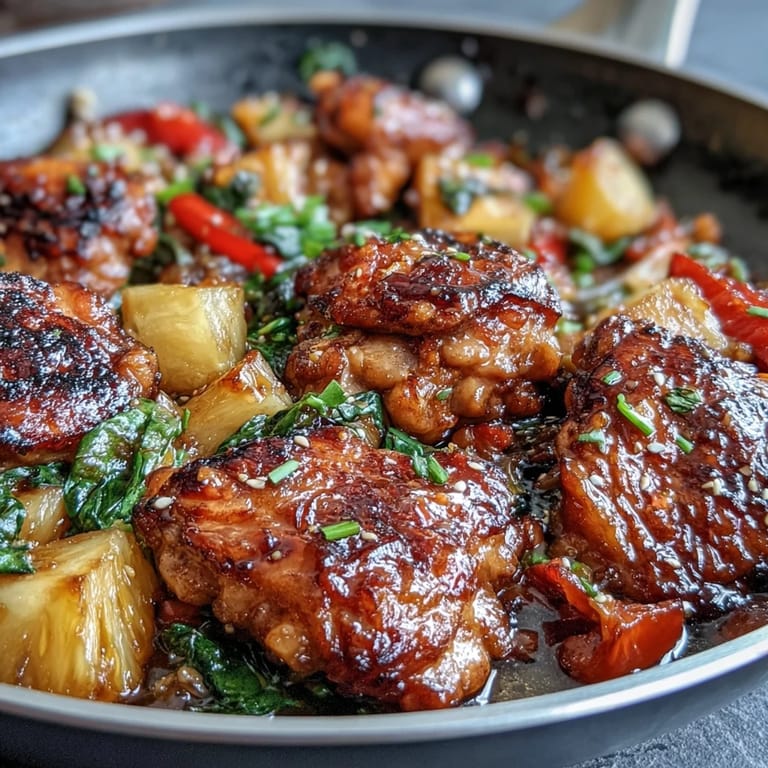
- Uncover it for the last 2 to 3 minutes and watch the sauce cling to everything, becoming that sticky glaze that makes people lean in for another bite. You'll see it coating the chicken and vegetables, shiny and dark.
- Finish with brightness:
- Scatter green onions and sesame seeds right before serving, which adds a fresh pop against the deep, savory sauce.
 Save to Pinterest
 There was this moment when my dad, who's usually skeptical about anything fusion or trendy in the kitchen, took a bite and got quiet, the way people do when they're genuinely surprised by how good something tastes. He asked for seconds without asking, which in his world might as well be a standing ovation. That's when food stops being just about following instructions and becomes about creating a moment where everyone at the table is honestly happy.
Why Chicken Thighs Are the Right Choice
Chicken breasts get all the attention, but thighs are where the real flavor lives, and they're infinitely more forgiving in a skillet. They have enough fat that they can simmer in that sauce for 10 to 12 minutes without drying out or turning stringy, and they actually absorb the sweet and savory flavors better than the leaner white meat. If you do swap them for breasts, watch the cooking time carefully because they'll be done faster and can turn dry in the blink of an eye.
The Sauce Is Everything
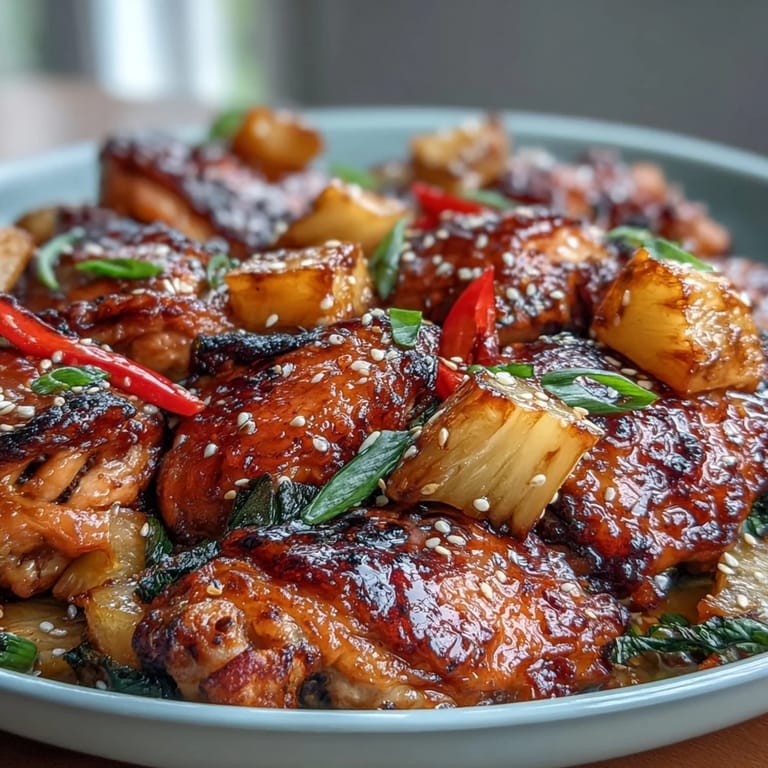
This is one of those recipes where the sauce isn't an afterthought—it's the entire reason people will ask you for the recipe. The combination of honey's sweetness, soy sauce's umami, rice vinegar's acid, and the garlic-ginger base creates a flavor profile that's simultaneously simple and complex. When you reduce it in the final minutes, it becomes glossy and clingy, coating every piece of chicken and vegetable in that sticky caramel that makes you want to mop it up with rice.
Make It Your Own
This recipe is genuinely flexible once you understand the basic framework of sweet, savory, and acidic balance. You can swap the pineapple for mango chunks or even canned peaches if that's what's in your kitchen, and the dish will shift slightly but remain delicious. The vegetables don't have to be just bell peppers—snap peas, broccoli, or even thinly sliced carrots would work beautifully.
- If you want heat, add more sriracha or fresh sliced chilis to the sauce, tasting as you go.
- For a gluten-free version, tamari replaces soy sauce without any fuss or sacrifice.
- Serve it over jasmine rice, quinoa, or even cauliflower rice depending on what you're in the mood for.
 Save to Pinterest
 This is the kind of recipe that sits in your back pocket for those moments when you want to cook something that tastes like you really tried, without the stress that usually comes with it. It's proof that simple ingredients and a good skillet can create something genuinely craveable.
Questions & Answers
- → Can chicken breasts be used instead of thighs?
Yes, chicken breasts can be substituted; just adjust the cooking time to ensure they remain juicy and cooked through.
- → What is the role of cornstarch in this dish?
Cornstarch helps create a crispy exterior on the chicken and thickens the sticky sauce for the perfect glaze.
- → How do I achieve the caramelized pineapple and bell peppers?
Sauté the pineapple chunks and bell pepper pieces over medium-high heat until they develop golden edges and their natural sweetness intensifies.
- → Is it possible to make this dish gluten-free?
Absolutely; replace regular soy sauce with tamari or a gluten-free soy sauce alternative without compromising flavor.
- → What are good side options to serve with this meal?
This skillet pairs beautifully with steamed jasmine rice, quinoa, or a fresh green salad for a complete meal.
- → Can heat be adjusted in the sauce?
Yes, the optional sriracha or chili garlic sauce can be added to taste, allowing control over the spice level.