 Save to Pinterest
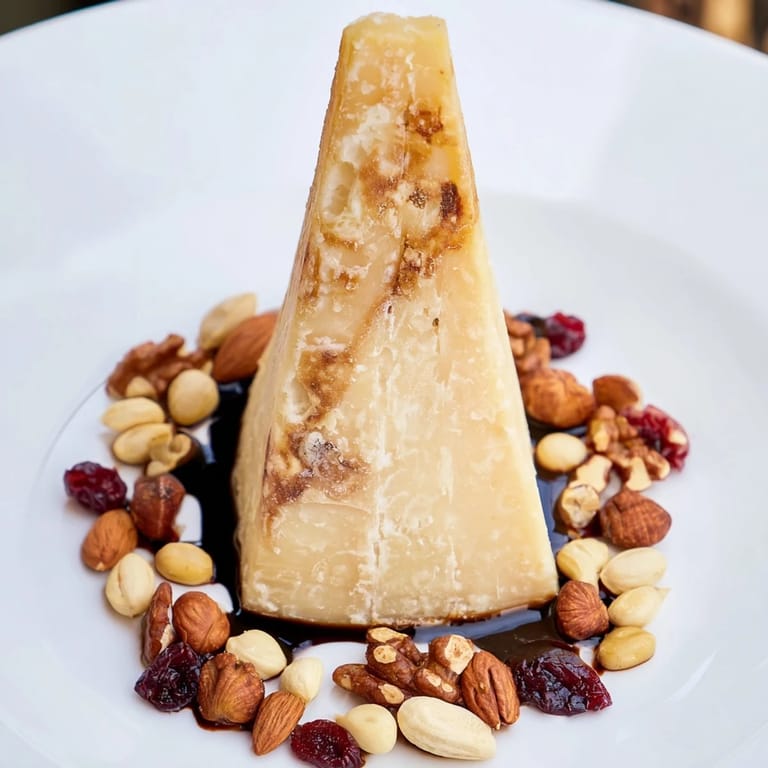
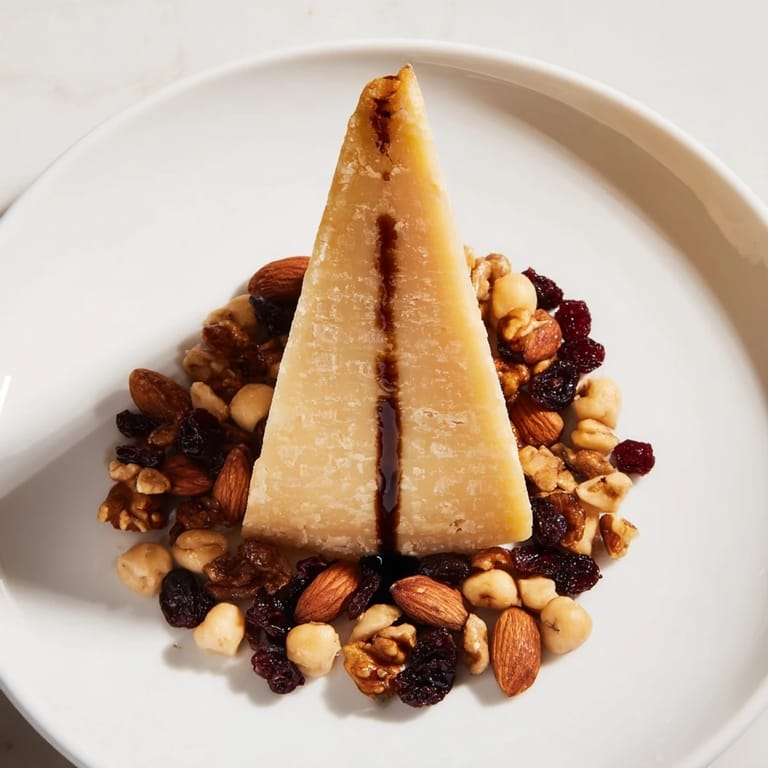
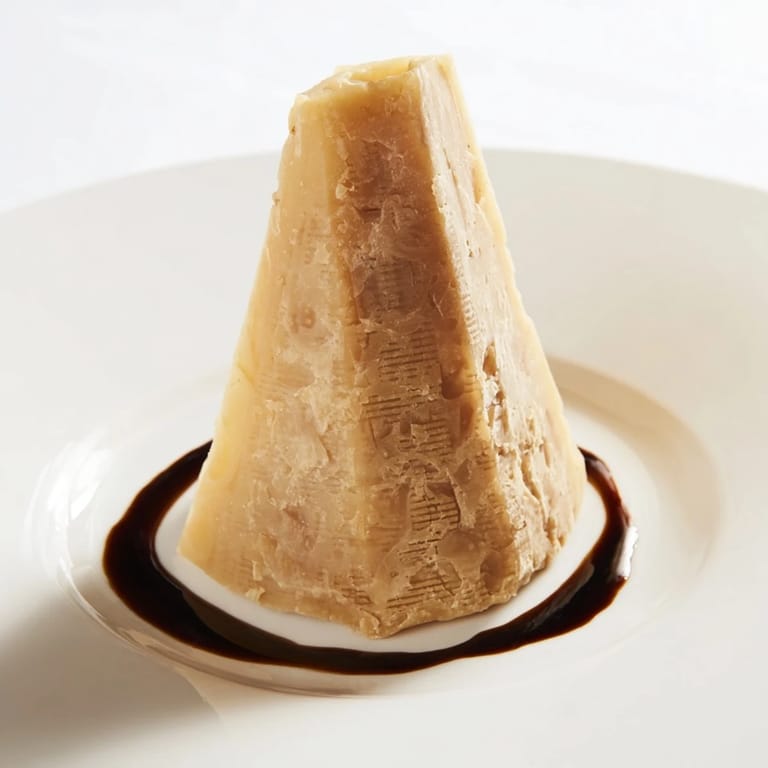
 The first time I set a cheese platter in the center of a dinner table, I realized it didn't have to be practical—it could be art. I was playing around with a wedge of aged Parmigiano-Reggiano one evening, turning it this way and that, when the light caught it just right and I thought: this looks like the gnomon of a sundial. That's when The Sundial was born, a platter that makes guests lean in before they even reach for a bite, and somehow tastes even better because it arrived as a conversation starter.
I remember serving this at a birthday dinner where my friend Sarah is the type who photographs everything. She spent more time capturing The Sundial from different angles than actually eating it, and I secretly loved that—knowing something I assembled in my kitchen had become the evening's quiet centerpiece, the thing everyone gathered around before moving on to the next course.
Ingredients
- Aged hard cheese: A 150g wedge of Parmigiano-Reggiano, aged Gouda, or Manchego becomes the visual anchor—choose one with visible crystallization if you can, as it catches light beautifully and tastes more complex.
- High-quality balsamic glaze: This is where the shadow comes from; don't skimp here, as thin or overly sweet balsamic will muddy the presentation and the flavor.
- Roasted almonds, walnuts, pecans, and hazelnuts: Equal parts (about 1/3 cup each) create visual balance and flavor variety—each nut cluster represents an hour on an imaginary clock face.
- Dried cranberries: Optional but they catch the eye and add a tart note that cuts through the richness of the cheese and nuts.
- Fresh grapes, figs, and edible flowers: Gentle garnishes that add color and elegance without competing for attention.
Tired of Takeout? 🥡
Get 10 meals you can make faster than delivery arrives. Seriously.
One email. No spam. Unsubscribe anytime.
Instructions
- Set the gnomon:
- Place the wedge of hard cheese upright in the center of your largest round platter, pointed end facing outward like the shadow-casting pin of a sundial. Stand back and squint—does it look intentional?
- Draw the shadow:
- Using a small spoon, carefully drizzle a thick, slow line of balsamic glaze extending outward from the cheese wedge, as if the cheese is casting a shadow across the platter. Let it pool slightly at the edges for depth.
- Mark the hours:
- Arrange 12 small clusters of mixed nuts evenly around the cheese in a circle, spacing them like numbers on a clock face—roughly every 30 degrees works beautifully. Tuck dried cranberries into some clusters for flashes of color.
- Finish with grace:
- If you're using them, tuck fresh grapes or figs into gaps and scatter edible flowers or microgreens over the platter for final polish. This step takes 30 seconds and changes everything.
- Set out for sharing:
- Place small cocktail picks or forks nearby so guests can help themselves without disrupting the design—or at least, not too much.
 Save to Pinterest
 What I didn't expect was how this platter would become a ritual. Now whenever I'm hosting, someone asks, 'Will you make The Sundial?' It's become shorthand for a gathering where the food itself is part of the welcome, where beauty and taste arrive together on the table.
Choosing Your Cheese
The cheese is the hero, so spend a moment choosing one that excites you. Parmigiano-Reggiano brings nutty depth and natural crystallization that sparkles under light. Aged Gouda is sweeter and more buttery, with a creamier bite. Manchego has a sharper, more mineral edge that some guests will find intriguing. Stand in front of the cheese counter and let yourself be curious—your choice will shape the entire platter's personality.
The Nut Arrangement
Mixing roasted nuts together creates flavor complexity, but keeping them in separate clusters during assembly gives the platter visual rhythm and lets each nut shine. If you have access to spiced nuts—smoked almonds, or honey-roasted pecans—lean into them; they add personality and make people wonder what they're eating. The cranberries aren't just decoration; their tartness is the surprise that keeps people reaching back for one more bite.
Serving Moments and Pairings
Pour a crisp white wine—Pinot Grigio or Vermentino—or a light Italian red like Chianti alongside the platter, and watch how the acidity wakes up the cheese and nuts. This platter lives best at the start of an evening, when people are still standing, still discovering the room. It's also brilliant for outdoor gatherings where sunlight actually touches the balsamic shadow, making the whole thing glow. If you're packing it for a picnic, skip the glaze until you arrive; instead, drizzle it fresh on the platter just before people gather.
- Set it on a table where people will naturally gather rather than tucking it away on a side board.
- Make the balsamic line dramatic and unafraid—tentative drizzles fade into the background.
- If guests eat from the platter and mess up the design, resist the urge to fix it; the real beauty is in the sharing and the eating.
 Save to Pinterest
 There's something deeply satisfying about feeding people with something that's as much about the eye as the palate—and The Sundial delivers both. It whispers that you've thought about their experience, that you care enough to play a little.
Questions & Answers
- → What kinds of cheese work best for the sundial centerpiece?
Aged hard cheeses like Parmigiano-Reggiano, aged Gouda, or Manchego hold their shape well and develop rich flavors ideal for this presentation.
- → Can I customize the nut clusters for different flavors?
Yes, you can use various roasted or spiced nuts depending on your taste preferences or availability.
- → How do I create the balsamic shadow effect?
Use a spoon to carefully drizzle balsamic glaze in a thick line radiating outward from the upright cheese wedge, resembling a sundial's shadow.
- → Are there suggested accompaniments for this cheese and nut platter?
This platter pairs nicely with dry white wines or light Italian reds such as Chianti, enhancing the savory and nutty flavors.
- → What garnishes can enhance the visual appeal?
Fresh grapes, figs, edible flowers, or microgreens add pops of color and elegance to the presentation.
- → Is there a vegan alternative to the hard cheese in this arrangement?
Plant-based hard cheeses can be used to create a similar texture and appearance for vegan-friendly variations.