 Save to Pinterest
 There's something about summer that makes you want to eat bread with barely anything on it—just the best ingredients you can find, arranged with intention. I stumbled onto burrata toast one humid Saturday morning when my farmers market haul included these perfect tomatoes that smelled like pure sunshine, and all I had in my bread box was a good sourdough. What started as avoiding a full breakfast turned into the kind of simple meal that made everyone at the table pause mid-conversation to appreciate it.
I made this for a friend who showed up unannounced on a Tuesday, and she ate two slices standing at my kitchen counter, getting basil in her hair and olive oil on her sleeve, not caring one bit. It became our thing after that—whenever she needed breakfast or I needed an excuse to use good tomatoes, out came the sourdough. Those mornings turned into lazy conversations that ran past noon, and somehow this toast became the backdrop for some of my favorite kitchen memories.
Ingredients
- Sourdough bread: Two thick slices that can stand up to toasting without crumbling; thinner bread gets too crispy and shatters when you bite it.
- Fresh burrata cheese: This is the star, so seek out the kind that feels slightly heavy for its size and comes in liquid, not pre-packaged; the difference is real.
- Ripe tomatoes: Choose ones that give slightly when you squeeze them gently; mealy tomatoes ruin the whole thing, so taste one at the market if you can.
- Extra virgin olive oil: Use something you actually like tasting on its own, since it's doing most of the flavor work here.
- Garlic clove: Just half, used as a flavor brush rather than eaten whole; it perfumes the toast without overwhelming it.
- Sea salt and black pepper: Don't skip the flaky salt—it adds texture and brightness that table salt can't match.
- Fresh basil: Tear it by hand rather than cutting it; bruised edges turn dark and bitter quickly.
- Balsamic glaze: Optional but worth it—the sweetness plays beautifully against the acidity of the tomato.
Tired of Takeout? 🥡
Get 10 meals you can make faster than delivery arrives. Seriously.
One email. No spam. Unsubscribe anytime.
Instructions
- Get Your Toast Golden:
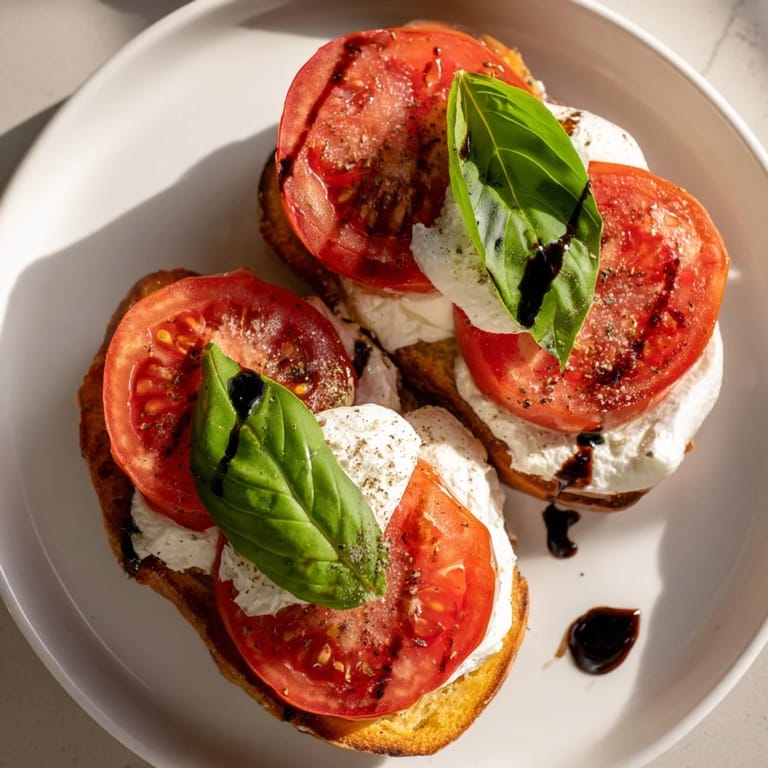
- Toast the bread until it's deep golden and makes a satisfying crunch when you bite it, whether in a toaster or on a hot grill pan. The bread should still be warm when you move to the next step, so work quickly.
- Scent the Warmth:
- Rub the warm toast with the cut side of the garlic clove while it's still hot—the warmth releases the garlic oils and distributes them evenly without any sharp, raw bite.
- Layer In the Richness:
- Drizzle each toast with olive oil while still warm so it soaks in slightly rather than just sitting on top. Don't be shy; this toast needs fat to sing.
- Arrange the Tomato:
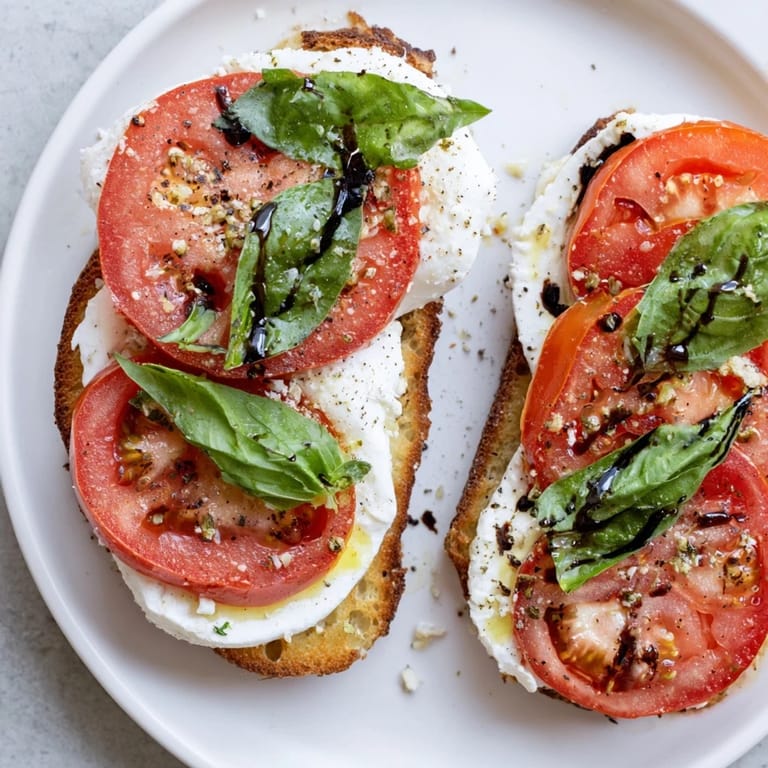
- Overlap your tomato slices in a way that looks casual but intentional, then hit them with a pinch of flaky salt and a crack of pepper. The salt draws out a little of the tomato juice, which mingles with the olive oil to create a natural sauce.
- Crown with Burrata:
- Gently tear the burrata into rough pieces—don't spread it like soft cheese, just let the creamy interior ooze onto the warm toast. Spoon a little of the liquid center over each piece.
- Finish and Serve:
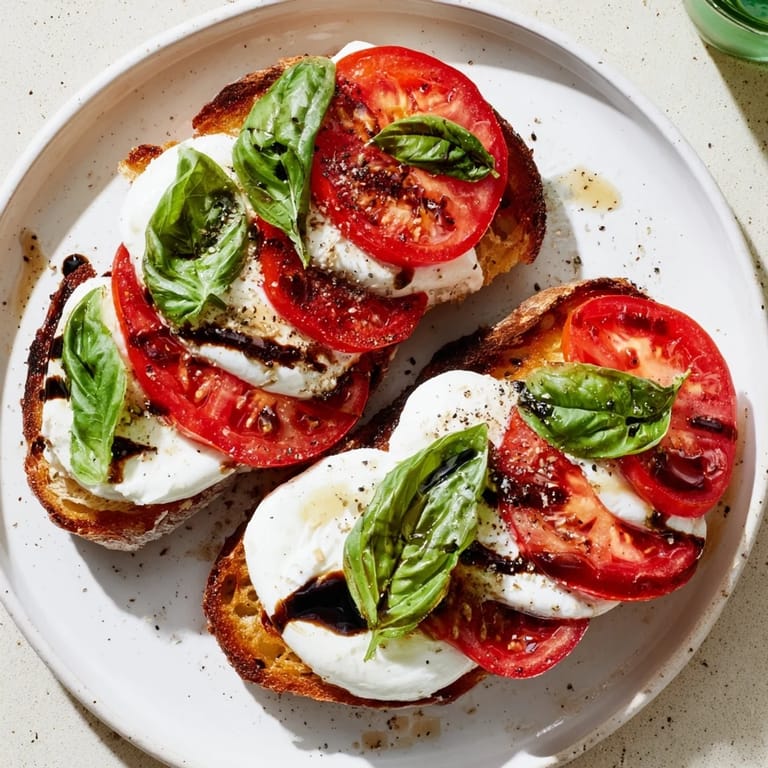
- Scatter basil over everything, add a drizzle of balsamic if you're using it, and get it to the table immediately while the toast is still warm and the burrata hasn't started to stiffen.
 Save to Pinterest
 I once brought this to a crowded brunch party thinking it was too simple to impress anyone, and I watched it disappear before the pastries even came out of the oven. That's when it clicked for me that the best meals are often the ones built on confidence and good ingredients, not complexity. It's become my go-to when I want to feed people something that tastes like you know what you're doing, without having to actually work.
Choosing Your Tomatoes
The success of this toast lives or dies by tomato quality, which is frustrating in winter and glorious in summer. I've learned to seek out heirloom varieties when they're available—they tend to have more flavor complexity and fewer seeds than standard red ones. If you're making this outside of peak tomato season, honestly, use sun-dried tomatoes packed in oil or roasted cherry tomatoes instead of forcing pale, flavorless ones into service.
The Burrata Moment
Burrata is technically mozzarella, but it's mozzarella that's been given a second life as something creamier and more indulgent. The outside is a thin, delicate shell, and the inside is soft, almost liquid curds suspended in cream—which is why you have to treat it gently. If you can't find burrata, fresh mozzarella works, but the toast loses that luxurious, melting quality that makes people close their eyes when they eat it.
Making It Your Own
Once you've made this a few times, you start seeing variations everywhere. I've added everything from crispy prosciutto to pickled red onions to a soft egg yolk to a scatter of crispy breadcrumbs for texture. The base is so strong that it welcomes additions without losing its identity, which is another reason this has become such a trusted kitchen formula.
- A pinch of red pepper flakes adds gentle heat that cuts through the richness perfectly.
- Aged balsamic vinegar can substitute for the glaze if that's what you have on hand.
- This pairs beautifully with a light Pinot Grigio or a crisp Prosecco if you're having it for brunch rather than breakfast.
 Save to Pinterest
 This is the kind of meal that teaches you something important: sometimes the simplest things, made with care and attention, become the moments you remember. Make this when you have ten minutes and good ingredients, and it'll remind you why you love cooking in the first place.
Questions & Answers
- → What bread works best for this toast?
Sourdough bread provides the ideal crispy base with its slightly tangy flavor that complements burrata and tomatoes well.
- → Can I substitute burrata cheese?
Fresh mozzarella can be used as an alternative if burrata isn’t available, though it provides a less creamy texture.
- → How should tomatoes be prepared for this dish?
Use ripe, medium tomatoes and slice them evenly to layer neatly on top of the bread for balanced flavor and texture.
- → What is the purpose of rubbing garlic on the toast?
Rubbing garlic on warm toast infuses subtle savory notes that enhance the overall taste without overpowering the freshness of other ingredients.
- → Is balsamic glaze necessary?
Balsamic glaze is optional but adds a pleasant sweet acidity that complements the creamy burrata and juicy tomatoes beautifully.