 Save to Pinterest
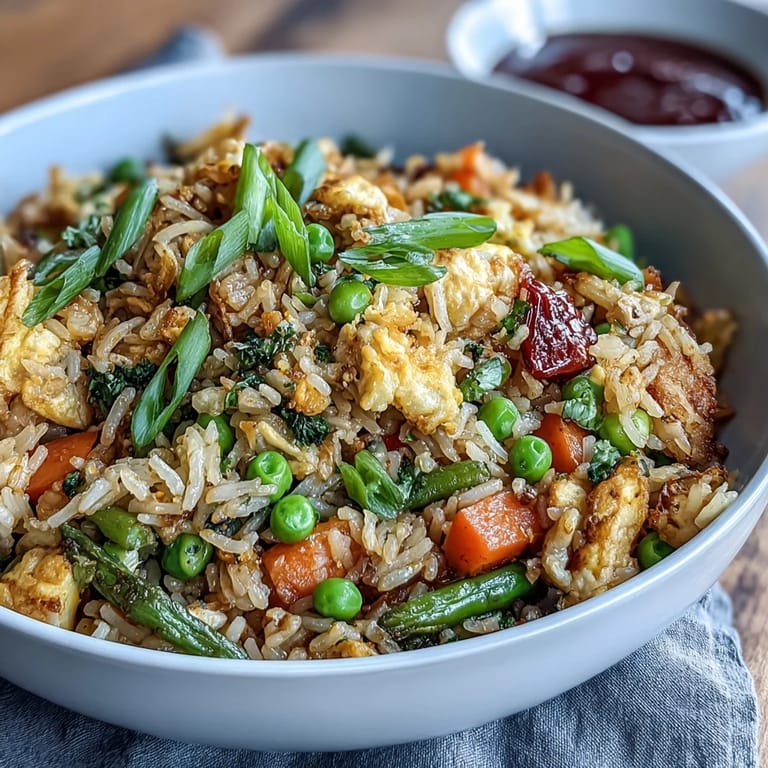
 Last summer, I stood in my kitchen staring at three cups of leftover jasmine rice and wondering what could save it from the trash. My neighbor had just dropped off a basket of spring peas from her garden, and suddenly the answer was obvious: fried rice. That first batch taught me that the best dishes often come from working with what you have on hand, not following some rigid plan. The aroma of garlic and ginger hitting hot oil, the satisfying sizzle when the rice hits the pan—it all clicked. Now whenever I have cold rice lingering in my fridge, this is my go-to move.
I made this for my partner on a Wednesday night when we were both exhausted and craving takeout but broke, and honestly, it tasted better than the actual takeout place down the street. The way their face lit up when they realized this came from our own kitchen instead of a delivery bag made the 30 minutes feel worth it. It's become our unofficial "nothing fancy, just good" meal, the kind we make without thinking twice.
Ingredients
- Jasmine or long-grain rice (3 cups, day-old and cold): Day-old rice is non-negotiable here—fresh rice will turn into a mushy mess because it still holds too much moisture, so plan ahead or stick it in the fridge for at least a few hours.
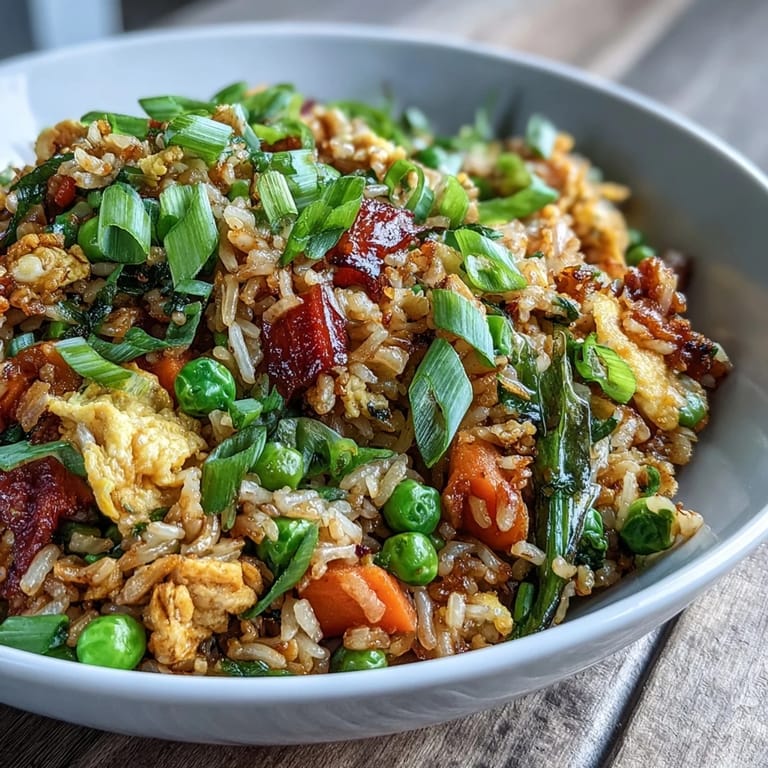
- Spring peas (1 cup, fresh or frozen): These stay bright green and slightly sweet, which balances the savory soy sauce beautifully; frozen work perfectly and save you the shelling time.
- Carrots, finely diced (1 cup): The small dice matters because they soften evenly and distribute throughout instead of hiding in chunks.
- Red bell pepper, diced (1): Adds sweetness and color, but the real magic happens when the edges char slightly from the heat of the pan.
- Green onions, sliced (1/2 cup plus garnish): Save some for the end—the fresh ones sprinkled on top taste completely different from the ones cooked into everything.
- Corn kernels (1/2 cup, optional): If you're using this, it's because you like that pop of sweetness, and there's nothing wrong with that.
- Garlic and ginger (2 cloves minced, 1-inch piece minced): Mince them fine so they distribute evenly and flavor the entire pan instead of becoming little chewy surprises.
- Eggs, lightly beaten (2 large): These scramble into ribbons that coat everything; skip them entirely if you're vegan or just don't want them.
- Soy sauce or tamari (3 tbsp): Go with tamari if you need gluten-free, but honestly it tastes a bit cleaner anyway.
- Toasted sesame oil (1 tbsp): This is the secret move that makes it taste like you actually know what you're doing—use the good stuff, not the cheap bottle gathering dust.
- Black pepper, freshly ground (1/2 tsp): Freshly ground makes a noticeable difference in brightness.
- Sriracha or chili sauce (1 tsp, optional): Only if you want it spicy; it's easy to add more but impossible to take back.
- Vegetable oil (2 tbsp, canola or peanut): Use something with a high smoke point so it doesn't burn when things get hot.
Tired of Takeout? 🥡
Get 10 meals you can make faster than delivery arrives. Seriously.
One email. No spam. Unsubscribe anytime.
Instructions
- Get everything prepped and ready:
- Dice your vegetables into small, even pieces, mince your garlic and ginger fine, beat your eggs, and make sure your rice is actually cold—this is where most people mess up. Have everything sitting in bowls near your stove because once the pan gets hot, things move fast.
- Start with the longer-cooking vegetables:
- Heat 1 tablespoon of oil in a wok or large skillet over medium-high heat until it shimmers slightly, then add your carrots and bell pepper. The sizzle should be immediate and satisfying, and you want them to soften a bit but still have some bite, about 2 to 3 minutes.
- Layer in the aromatics and greens:
- Add your garlic, ginger, and spring peas (plus corn if you're using it) and keep stirring constantly for about 2 minutes until the garlic stops smelling sharp and starts smelling sweet. This is the smell that makes your entire kitchen feel like a restaurant.
- Scramble the eggs if you're using them:
- Push everything to the side of the pan, add the remaining oil, pour in your beaten eggs, and let them cook undisturbed for just a few seconds before scrambling them with a spatula. Fold them gently into the vegetables instead of aggressively mixing—you want soft ribbons, not tiny broken bits.
- Introduce the rice:
- Add all your cold rice to the pan and break up any clumps with the edge of your spatula as you toss everything together. This takes a bit of elbow grease but it's satisfying work, and you'll watch the rice gradually lose its clumpiness and become individual grains.
- Season and finish:
- Drizzle in your soy sauce, sesame oil, sriracha if you want heat, and black pepper, then keep tossing everything over high heat for 3 to 4 minutes until it's steaming and the sauce has coated every grain evenly. Taste it now and add more soy sauce if it tastes flat.
- The final touch:
- Remove from heat, stir in your fresh green onions, and serve immediately while it's still hot and the flavors are sharp. The green onions stay bright and slightly crisp this way instead of becoming soft and muted.
 Save to Pinterest
 There's something deeply satisfying about transforming a pile of random ingredients into something that tastes intentional and delicious in less than half an hour. My sister calls this recipe my "kitchen magic trick" because it works every single time and somehow tastes different depending on which vegetables end up in the pan.
Making It Your Own
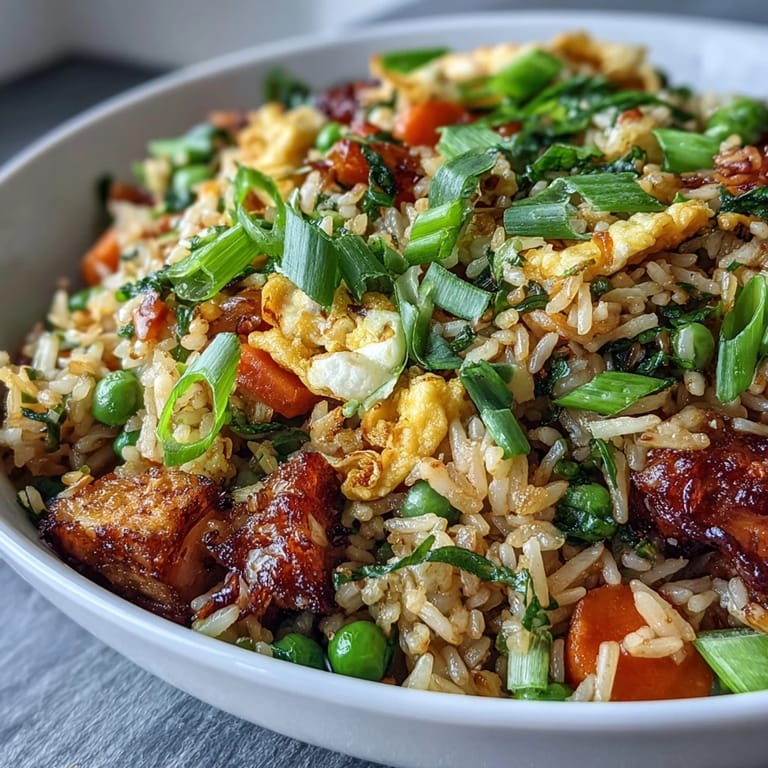
The beautiful thing about fried rice is that it's genuinely flexible without becoming chaotic. I've thrown in broccoli florets, snap peas, zucchini, even leftover roasted brussels sprouts, and it all works as long as you respect the cooking times—things that take longer to soften go in earlier. One winter I added cubed tofu that I'd pan-fried until the edges were golden, and it added a texture that made the whole dish feel more substantial. The point is to work with what you have and what you're craving instead of stressing about following the recipe exactly.
The Protein Question
The eggs technically count as protein, but they're subtle, and sometimes you want something more substantial. Cubed tofu or tempeh works beautifully if you sauté them separately with a little oil and soy sauce until the edges brown, then mix them in at the end. Chickpeas are honestly underrated here too—they add protein and a slight nuttiness that plays well with the sesame oil. Even leftover roasted chickpeas from a completely different meal integrate seamlessly and make you feel like you're being responsible about your dinner.
Secrets and Small Moves That Matter
The difference between fried rice that tastes like something and fried rice that tastes like nothing often comes down to small choices that seem insignificant. Using fresh-ground pepper instead of the dusty stuff from a can makes a difference you'll taste. Letting each ingredient have its moment in the pan instead of throwing everything together at once builds layers of flavor. Finally, tasting as you go instead of just trusting the recipe means you can adjust the salt and heat to your mood that day.
- Toast your sesame oil in a separate small dish first if your pan isn't screaming hot—it burns instantly and tastes terrible when it burns.
- If you notice the rice sticking or browning too much, your heat is too high; back it off and your rice will stay fluffy instead of crispy and burnt.
- Leftover fried rice keeps beautifully in the fridge for three days, so make extra and eat it cold straight from the container like I do.
 Save to Pinterest
 This recipe is proof that some of the best meals come from using what you have and not overthinking it. Make it tonight and tomorrow you'll be craving it again.
Questions & Answers
- → What type of rice works best?
Day-old jasmine or long-grain rice is ideal to ensure a firm texture and prevent mushiness.
- → Can I make this without eggs?
Yes, omit eggs or substitute with scrambled tofu for a vegan-friendly version.
- → What vegetables can I add or substitute?
Broccoli, zucchini, snap peas, or corn kernels work well to customize the mix.
- → How do I keep the vegetables crisp?
Stir-fry the vegetables briefly on medium-high heat, just until slightly softened but still crisp.
- → Is there a gluten-free option for this dish?
Use tamari instead of soy sauce and verify all seasonings are gluten-free to accommodate gluten sensitivities.