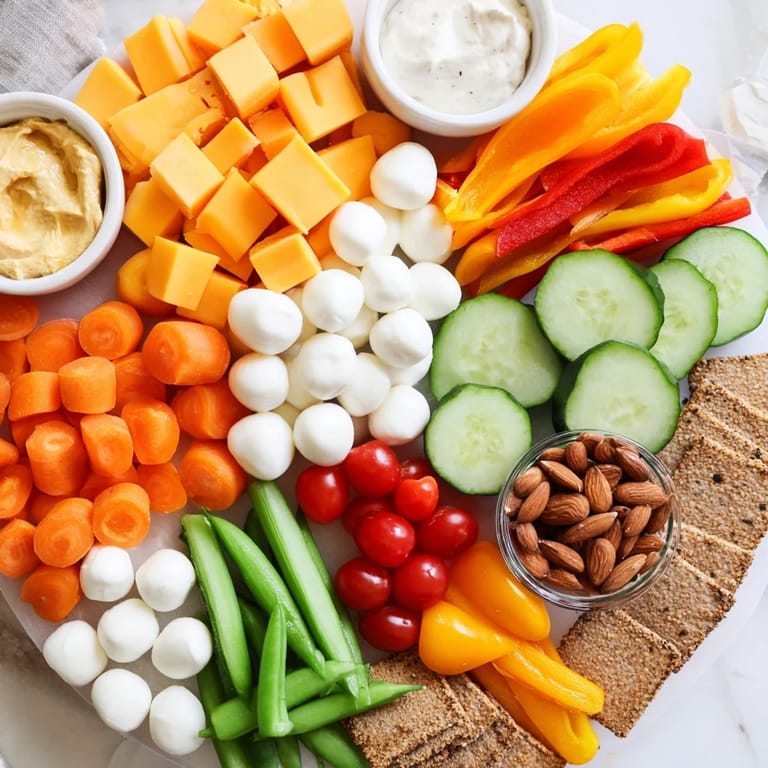
 Save to Pinterest
 Last summer, a friend showed me a TikTok video of these gorgeous veggie boards and mentioned how much easier they were than packing actual lunches. I was skeptical at first—how could just throwing vegetables on a board be exciting?—but the moment I made my first one, I understood the magic. There's something about the freedom of mixing and matching, the colors, the textures, and honestly, the fact that zero cooking is involved. Now I make these constantly, and everyone who sees them wants to know how I manage to make something so simple look intentional.
I brought one of these boards to a work potluck, and honestly, it disappeared faster than the casseroles people spent all morning on. That's when I realized this wasn't just a lunch hack—it was a social game-changer. My coworker Sarah kept coming back for more cheese, someone else went straight for the nuts, and the person who claims they don't eat vegetables filled their plate with sugar snaps. It became clear that the magic isn't in any single ingredient; it's in giving people control over what lands on their plate.
Ingredients
- Baby carrots: Sweet and already the right size, these need no prep and stay crisp all day.
- Cucumber slices: Refreshing and hydrating, slice them about a quarter-inch thick so they hold their crunch.
- Cherry tomatoes: The burst of brightness in every bite—I learned to leave them whole so they don't make the board wet.
- Bell pepper strips: Use mixed colors because it genuinely affects how appealing the whole thing looks, not just how it tastes.
- Sugar snap peas: These feel fancy but taste like candy, and they're the first thing to vanish.
- Hummus: Creamy, filling, and adds protein without any effort on your part.
- Ranch or Greek yogurt dip: Classic for a reason—it pairs with literally everything on this board.
- Cheddar cheese, cubed: Familiar and comforting, the anchor cheese that makes the board feel substantial.
- Mozzarella balls: These are the delicate, elegant player—they add a soft texture contrast.
- Gouda or Swiss cheese, sliced: Rich flavor that makes people slow down and actually taste the cheese.
- Whole grain crackers: Sturdy enough to hold dips without breaking, and they actually taste like something.
- Roasted nuts: The crunch factor that makes you feel like you're eating something substantial.
- Olives: Salty and sophisticated, they're the flavor depth the board needs.
- Dried fruit: The sweet note that surprises people—it bridges the gap between savory and just sweet enough.
Tired of Takeout? 🥡
Get 10 meals you can make faster than delivery arrives. Seriously.
One email. No spam. Unsubscribe anytime.
Instructions
- Prep with intention:
- Wash and thoroughly dry your vegetables because any extra moisture will make things soggy by the time people eat them. Slice cucumbers and peppers, but keep everything else whole if possible—less surface area exposed means things stay fresher longer.
- Create zones:
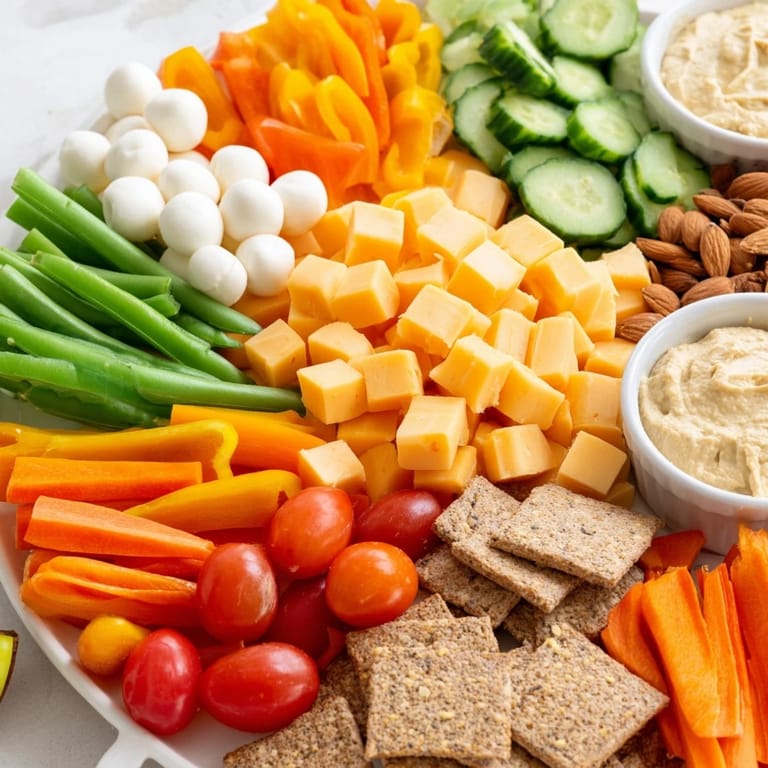
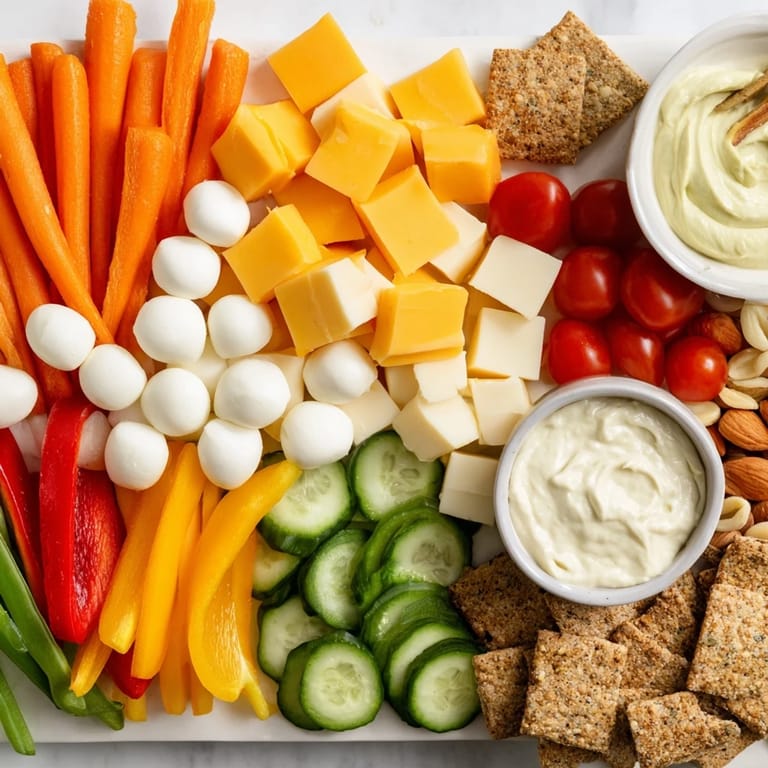
- Arrange vegetables in clusters by color and type, leaving visual breathing room between sections. This isn't arbitrary—it makes the board easier to navigate and actually more appetizing to look at.
- Position the dips strategically:
- Small bowls or ramekins work best, and I place them where they won't tip over but are easy to reach. Leave a little space around them so people can dip without bumping elbows.
- Build the cheese landscape:
- Scatter cheese pieces across the board in small groups rather than one massive pile. This way, the flavors stay somewhat isolated instead of all melting together, and there's cheese distributed across every quadrant.
- Fill the gaps:
- Crackers, nuts, olives, and dried fruit go in the remaining spaces, but avoid clustering them all in one corner. I like to scatter them so you get a mix in every handful.
- Serve or hold:
- These are best enjoyed fresh, but if you need to prep ahead, cover it loosely with plastic wrap and refrigerate for up to 4 hours. The vegetables will stay crisp, and the whole thing is ready to impress the moment you uncover it.
 Save to Pinterest
 The moment I realized this was more than just food was when my nephew, who is usually suspicious of vegetables, spent 20 minutes picking through the board with genuine curiosity. He felt like he was choosing an adventure instead of being told to eat his vegetables. It shifted something in how I think about feeding people—sometimes the presentation and the permission to customize matter more than the ingredients themselves.
Making It Your Own
The beauty of this board is that it's genuinely a blank canvas for whatever you have on hand or whatever sounds good that day. I've made versions with roasted chickpeas instead of nuts, added fresh herbs like basil and dill scattered across the vegetables, and even thrown on some crispy chickpea snacks for extra crunch. The framework stays the same—vegetables, dips, cheese, crunch—but the specific ingredients shift with the season and my mood. There's no wrong way to do this as long as you're thinking about balancing flavors and textures.
Presentation That Makes People Pause
I won't pretend that how something looks doesn't affect how it tastes, because it absolutely does. Mixing colors instead of grouping by ingredient, leaving intentional white space on the board, and stacking or arranging items thoughtfully makes the difference between a board that looks thrown together and one that looks like you actually care. Odd numbers work better than even numbers for some reason—three olives in a group feels intentional in a way two never does. Your eyes and your stomach are connected, and taking 30 extra seconds to make things look purposeful is time well spent.
Variations and Protein Options
If you want this to feel more like a full meal, add hard-boiled eggs sliced in half, thin slices of deli turkey or prosciutto, or even some chickpeas tossed in a bit of olive oil and seasoning. For a fully vegan version, swap the cheeses for cashew cheese or store-bought dairy-free options, use a tahini or hummus-based dip, and load up on nuts and seeds. The board doesn't care what you put on it—it just wants balance and a little bit of thought. The only rules are the ones you decide matter.
- Hard-boiled eggs add richness and make it substantial enough for a full lunch.
- Vegan swaps work beautifully if you pick high-quality replacements that are flavorful on their own.
- Don't skip the mix of temperatures and textures—that's what actually makes every bite interesting.
 Save to Pinterest
 This board has become my answer to so many occasions—unexpected guests, work lunches, afternoon snacks, dinner party starters. It's proof that the most impressive things you can make sometimes involve zero cooking and all intention.
Questions & Answers
- → What vegetables work best on the board?
Fresh, crunchy vegetables such as baby carrots, cucumbers, cherry tomatoes, bell peppers, and sugar snap peas provide great color and texture.
- → Which cheeses complement the vegetables well?
Cheddar cubes, mozzarella balls, and sliced gouda or Swiss cheese balance creamy and sharp flavors, enhancing the board’s appeal.
- → How can I make the board gluten-free?
Use gluten-free crackers and check all ingredient labels to ensure they meet gluten-free standards.
- → What dips pair nicely with this snack board?
Hummus and ranch or Greek yogurt-based dips add creamy, savory notes that complement the fresh vegetables.
- → Can I add protein options to the board?
Yes, hard-boiled eggs or sliced deli meats can be included for extra protein while maintaining flavor variety.