 Save to Pinterest
 There's something about October afternoons that makes me crave butternut squash soup—that moment when the kitchen fills with the smell of roasting squash and you know autumn has officially arrived. I discovered this particular version while experimenting with what felt like too many root vegetables in my crisper drawer, and somewhere between the golden roasted pieces and the first silky spoonful, it became the soup I make whenever someone needs comfort in a bowl. The coconut milk was an accident at first, a last-minute substitution that turned out to be exactly right.
I made this for a dinner party where someone casually mentioned they couldn't eat gluten, and instead of panicking, I realized this soup was already perfectly safe for them—no modifications needed. Watching people's faces light up when they tasted how vibrant and warming it was, without any of the heaviness they'd braced themselves for, reminded me that the best meals are the ones that just work for everyone at the table.
Ingredients
- 1 medium butternut squash (about 1.2 kg), peeled, seeded, and diced: Roasting brings out its natural sweetness and deepens the flavor profile—this is where the magic happens, so don't skip this step or rush it.
- 1 large onion, chopped: The foundation of flavor; chopping it fine helps it soften quickly and disappear into the soup's velvety texture.
- 2 medium carrots, peeled and chopped: They add subtle sweetness and body—I learned to cut them roughly the same size as the onion so everything cooks evenly.
- 2 cloves garlic, minced: Just enough to whisper in the background without overpowering the squash's delicate taste.
- 800 ml vegetable stock: Use good quality if you can; it makes a noticeable difference in the final depth of flavor.
- 200 ml coconut milk (or heavy cream for a richer version): This is where you choose your own adventure—coconut milk keeps it lighter and slightly exotic, while cream gives you an indulgent finish.
- 2 tbsp olive oil: Divide it between roasting the squash and sautéing the vegetables so each component develops properly.
- 1/2 tsp ground cumin: The secret warmth that makes people ask what spice you used, even though it's subtle.
- 1/4 tsp ground nutmeg: A tiny pinch goes a long way; too much and it tastes medicinal, so measure carefully.
- Salt and black pepper, to taste: Season in stages rather than all at once—your palate will thank you.
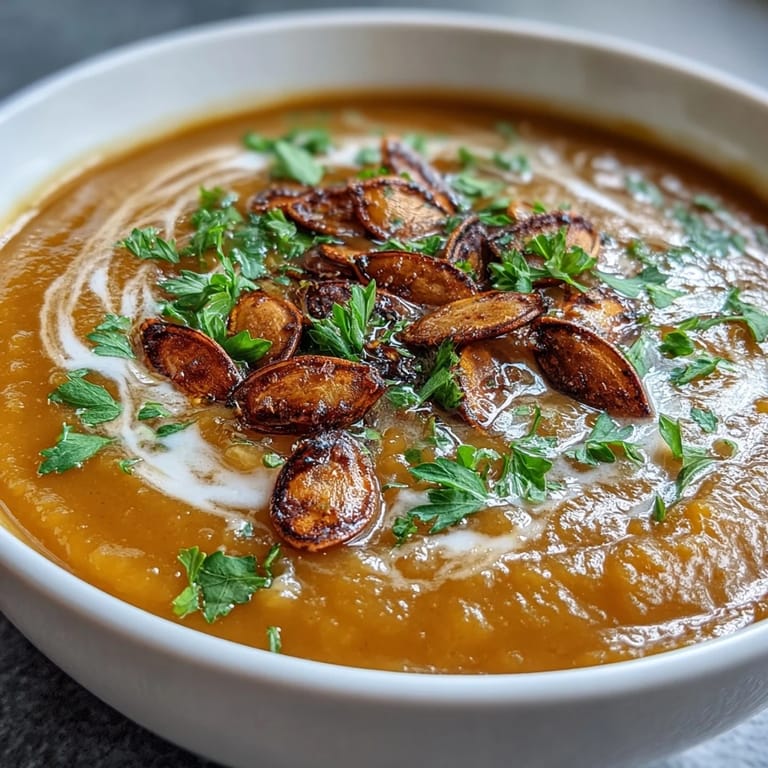
- Fresh parsley or coriander, chopped: A bright garnish that cuts through the richness and adds visual life to each bowl.
- Toasted pumpkin seeds: They add a nutty crunch and feel like you've put real thought into plating.
- A swirl of coconut milk or cream: This final flourish is not just pretty; it adds a silky richness that makes the first spoonful feel luxurious.
Tired of Takeout? 🥡
Get 10 meals you can make faster than delivery arrives. Seriously.
One email. No spam. Unsubscribe anytime.
Instructions
- Set your oven and prepare the squash:
- Preheat to 200°C (400°F). Toss your diced butternut squash with 1 tablespoon olive oil, salt, and pepper until each piece is lightly coated. Spread on a baking tray in a single layer—crowding it will cause steaming instead of roasting, and you want that caramelized, golden edge.
- Roast until golden and tender:
- Slide the tray into the oven for 25 minutes, stirring halfway through if you remember. You're looking for pieces that are soft enough to break with a fork and have taken on a deeper, richer color.
- Build the flavor base:
- While the squash roasts, heat the remaining olive oil in a large pot over medium heat. Add your chopped onion and carrots, stirring occasionally for 5–7 minutes until the onion becomes translucent and the carrots begin to soften—you want them yielding but not mushy.
- Toast the aromatics:
- Add your minced garlic, ground cumin, and nutmeg to the pot and let them cook for exactly 1 minute, stirring constantly so the spices bloom and release their warmth without burning. This is when your kitchen will smell absolutely incredible.
- Combine and simmer:
- Add the roasted squash to the pot along with your vegetable stock. Bring everything to a boil, then reduce the heat and let it simmer gently for 10 minutes so the flavors marry and deepen.
- Blend to silky smoothness:
- Remove from heat and use an immersion blender to purée the soup right in the pot, working in sections if needed to avoid splashing hot liquid everywhere. If using a regular blender, work in batches and never fill it more than halfway, letting steam escape carefully between pulses.
- Finish with creaminess:
- Stir in your coconut milk (or cream), gently heating through without boiling. Taste and adjust your seasoning with salt and pepper until it tastes exactly right to you.
- Serve with intention:
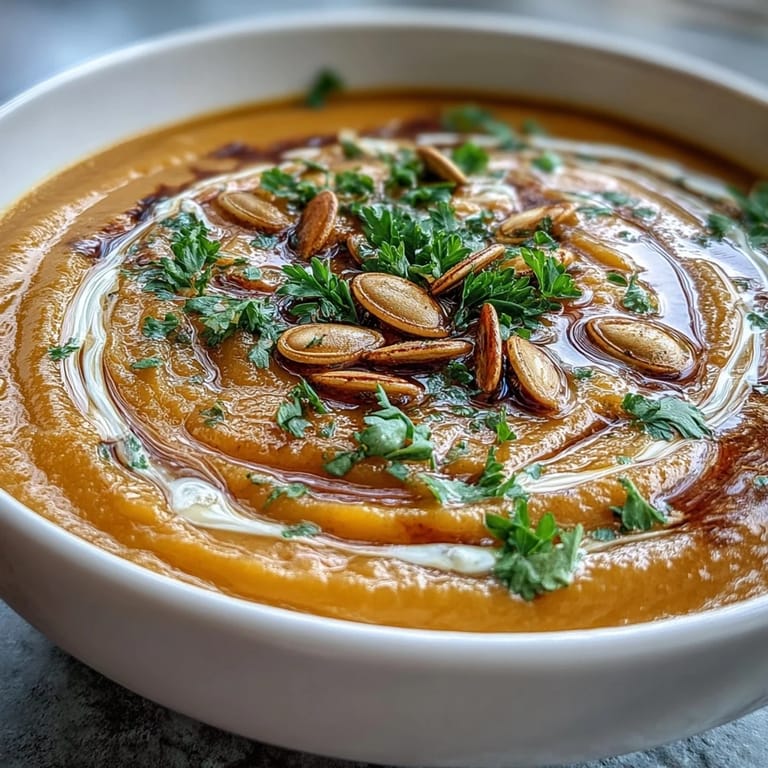
- Ladle into bowls and crown each one with fresh herbs, a scatter of toasted pumpkin seeds, and a elegant swirl of coconut milk or cream for both flavor and visual appeal.
 Save to Pinterest
 My grandmother tasted this soup last winter and asked for the recipe, which I wrote out for her even though I knew she'd make it her own way and add things I'd never think of. That's the moment I realized this soup belongs to everyone now, not just me—it's the kind of dish that invites improvisation and personal touches while still being fundamentally itself.
Why Roasting Changes Everything
I spent years making squash soup with boiled squash until a cooking friend suggested roasting it, and the difference was so stark I almost felt foolish for not thinking of it sooner. Roasting caramelizes the natural sugars, deepens the color, and creates a richness that boiling simply cannot replicate—it's the difference between a good soup and one people remember.
The Spice Question
Cumin and nutmeg might seem like an odd pairing, but they're the reason people ask what's in this soup and why it tastes more complex than the ingredient list suggests. The cumin adds warmth and earthiness while the nutmeg brings something almost sweet and nostalgic—together they're subtle enough not to announce themselves, but bold enough to make the soup sing.
Customizing Your Bowl
The beauty of this soup is how it transforms based on what you have on hand and what mood you're in. One evening I added a pinch of chili flakes and suddenly it became something spicy and grounding; another time I had only heavy cream instead of coconut milk and the entire character shifted to something more autumnal and traditional. The recipe is flexible enough to be your own while staying true to its comforting core.
- For extra warmth and complexity, sprinkle a tiny pinch of chili flakes or cayenne pepper into the pot while sautéing the aromatics.
- If you want more texture, stir in a handful of crispy croutons or toasted bread cubes right before serving rather than blending everything completely smooth.
- Make a double batch and freeze it in portions—it reheats beautifully and becomes a weeknight lifesaver when energy is low.
 Save to Pinterest
 This soup has become my default gift during cold months, the thing I make when someone's had a rough day or needs a gentle reminder that good food doesn't have to be complicated. It's proof that sometimes the most nourishing meals come from paying attention to the basics done right.
Questions & Answers
- → Why roast the squash first?
Roasting butternut squash caramelizes its natural sugars, creating deeper sweetness and more complex flavor than boiling alone.
- → Can I make this soup ahead?
Absolutely. This soup keeps well for 3-4 days refrigerated and actually tastes better the next day as flavors meld together.
- → What can I substitute for coconut milk?
Heavy cream works beautifully for richness, or use more vegetable stock for a lighter version. Both options maintain the velvety texture.
- → How do I get the smoothest texture?
Use an immersion blender directly in the pot, or carefully purée in batches with a regular blender. Blending hot soup requires caution.
- → What toppings work best?
Fresh parsley or coriander adds brightness, toasted pumpkin seeds provide crunch, and an extra swirl of coconut milk creates lovely presentation.
- → Can I freeze this soup?
Yes, freeze for up to 3 months. Thaw overnight in the refrigerator and reheat gently, adding a splash of liquid if needed.