 Save to Pinterest
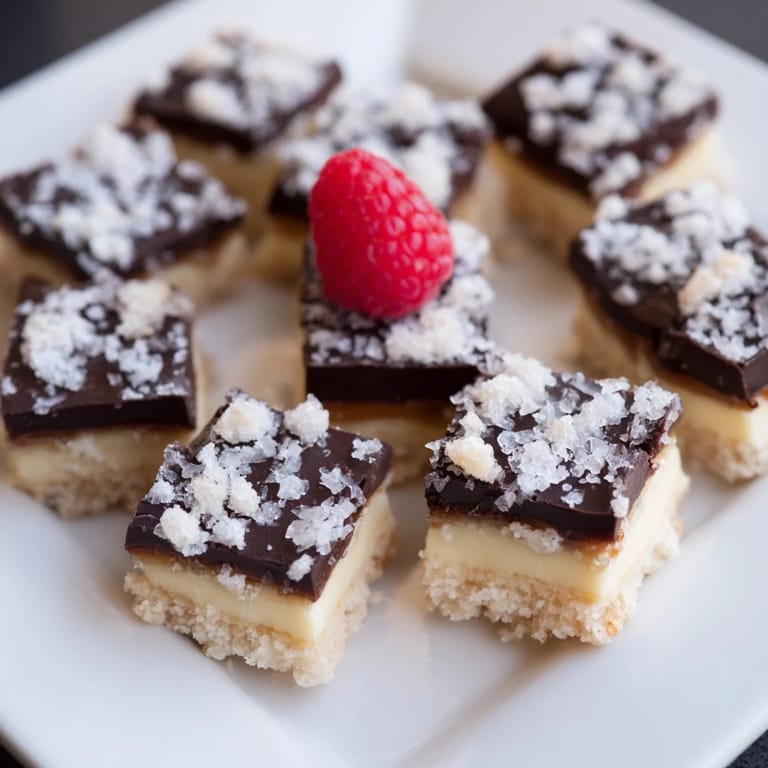
 I discovered the magic of texture contrast while standing in my friend's kitchen on a rainy afternoon, watching her arrange tiny forkfuls of different things on a plate—suddenly it clicked that the real pleasure of dessert isn't always about one perfect flavor, but about the conversation between different sensations. That memory sparked this checkerboard, a dessert that refuses to be boring by giving you four completely different experiences in one elegant little square.
The first time I served this to my book club, someone asked if I'd bought it from a fancy patisserie, and I'll admit I let that moment linger just a little too long before confessing it was homemade. What really got me was watching everyone's faces shift as they experienced that crunch, then the soft cream cheese, the silky chocolate, and finally that salty caramel punch—it was like they were tasting dessert for the first time.
Ingredients
- Crisp shortbread cookies or graham crackers, crushed (80 g): The foundation of everything—you want them crunchy enough to hold their texture even after chilling, so don't over-process them into powder.
- Unsalted butter, melted (30 g): This binds the crumbs into a cohesive base that won't crumble when you cut into it.
- Cream cheese, softened (80 g): Room temperature is non-negotiable here, or you'll end up with lumps that mock your efforts.
- Powdered sugar (30 g): Sifting it first saves you from grainy texture and the disappointment that follows.
- Vanilla extract (1 tsp): A quiet backbone that makes everything taste more like itself.
- Dark chocolate, chopped (100 g): Don't use chocolate chips—the larger pieces melt more evenly and create a silkier ganache.
- Heavy cream (60 ml): Just barely simmering is the sweet spot; too hot and you'll scald the chocolate, too cool and it won't emulsify properly.
- Salted caramel sauce (80 g): Store-bought is perfectly respectable here, or make your own if you're the type who enjoys controlled chaos on the stovetop.
- Flaky sea salt: The finishing touch that makes people pause and say they can taste something special happening.
- Fresh raspberries, optional (16 small ones): They add a pop of tartness and color, though the dessert stands beautifully without them.
Tired of Takeout? 🥡
Get 10 meals you can make faster than delivery arrives. Seriously.
One email. No spam. Unsubscribe anytime.
Instructions
- Build your crunchy foundation:
- Mix the crushed cookies with melted butter until it feels like wet sand, then press it firmly and evenly into your parchment-lined baking dish. The key is using even pressure so it compacts without becoming dense.
- Chill the base:
- Fifteen minutes in the fridge gives it just enough time to set so it won't shift when you're adding layers on top.
- Create the soft layer:
- Beat the softened cream cheese with powdered sugar until completely smooth, then add vanilla. If you see any lumps, strain the mixture through a fine sieve—this takes thirty seconds and elevates everything.
- Make silky chocolate ganache:
- Heat the cream until just steaming, pour it over the chopped chocolate, wait two minutes (patience matters), then stir in slow, deliberate circles until glossy and pourable. Let it cool for five minutes so it won't melt the cream cheese layer.
- Mark your grid:
- Remove the chilled base and use a ruler and sharp knife to lightly score a 4x4 grid into the surface, creating 16 equal squares. Light pressure is enough—you're just creating a map to follow.
- Fill with intention:
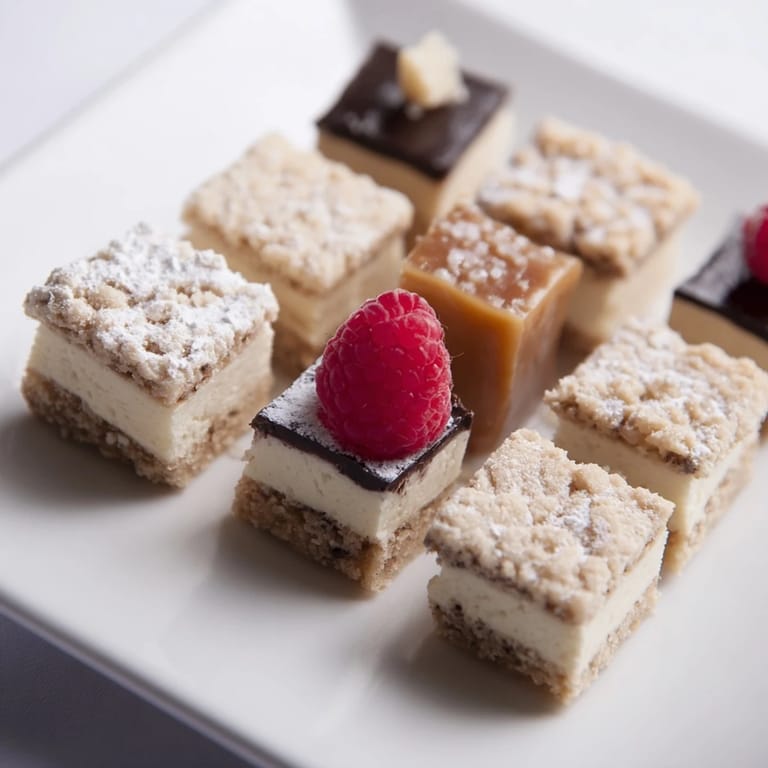
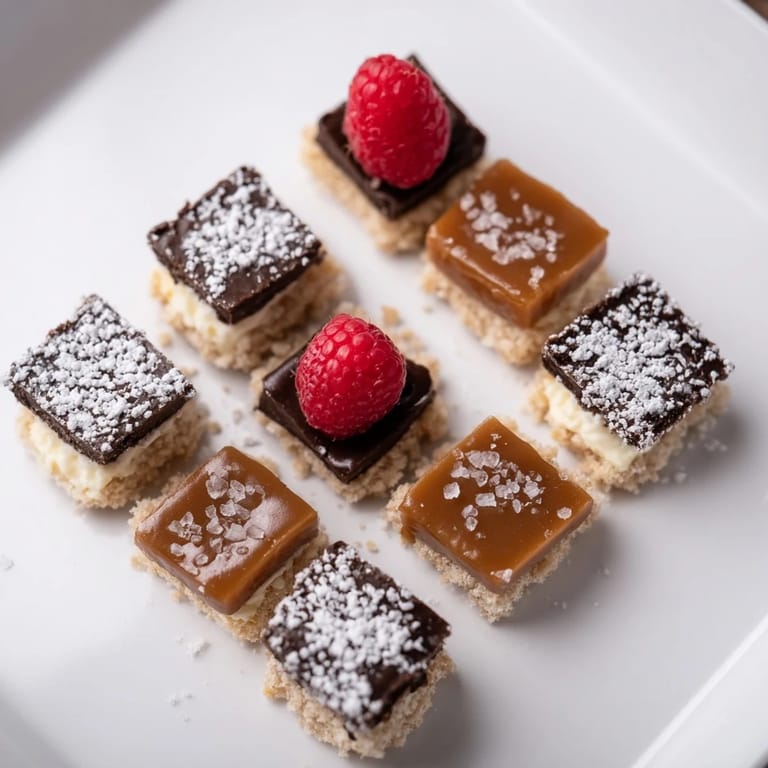
- Using a small offset spatula or the back of a spoon, fill four alternating squares with cream cheese, four with ganache, four with caramel sauce topped with sea salt, and leave four as the original crunchy base. The key is arranging them so no two identical textures sit next to each other diagonally or horizontally.
- Chill to set:
- Give it thirty minutes in the fridge so all the layers firm up and hold their shapes when sliced.
- Slice and serve:
- Use a hot, wet knife (wipe and heat it between each cut) to slice along the grid lines with steady pressure, not sawing. Serve chilled or at room temperature, depending on whether you want the chocolate to be glossy or just starting to soften.
 Save to Pinterest
 What struck me most about this dessert is how it turned a quiet Tuesday evening into something special simply because everyone had to slow down and actually taste each square separately. It became less about eating and more about noticing, which maybe is what entertaining is really about anyway.
Why Texture Matters More Than You Think
Most desserts ask you to taste one thing, but this one insists you experience four at once, and that's where the real pleasure happens. The crunch preps your mouth, the soft layer gives you something comforting, the chocolate feels luxurious, and the salty caramel reminds you that sweetness alone gets boring. It's like a conversation between different flavors instead of a monologue.
Timing and Temperature Strategies
The reason this dessert feels impressive is actually because of careful temperature management at every stage. Cold biscuit base + warm ganache + cool cream cheese creates an intentional contrast that keeps each layer distinct. If you combine everything at the same temperature, the textures start blending together and you lose that crisp separation.
Making It Your Own
The checkerboard is genuinely flexible once you understand the logic—you're really just organizing four different textures into an alternating pattern. Swap the dark chocolate for white or milk chocolate, replace caramel with raspberry coulis, use mascarpone instead of cream cheese for richness, or add toasted nuts to half the crunchy base for nuttiness. The framework stays the same; the personality changes with your preferences.
- Keep at least one layer crunchy and one smooth so the textural contrast actually registers on your palate.
- Make sure your alternating layers create actual visual contrast so it reads as intentional rather than random.
- Prep all four components before you start assembling so you're not frantically beating cream cheese while the ganache hardens.
 Save to Pinterest
 This checkerboard taught me that sometimes the most memorable meals aren't about complicated techniques or exotic ingredients, but about taking time to layer flavors and textures intentionally. Serve it slightly chilled, watch people's faces as they taste, and know that you've created something genuinely special.
Questions & Answers
- → What ingredients create the crunchy layer?
The crunchy layer is made from crushed shortbread cookies mixed with melted unsalted butter, pressed into a base.
- → How is the soft layer prepared?
The soft layer combines cream cheese, powdered sugar, and vanilla extract whipped until smooth.
- → Can the sweet layer be customized?
Yes, the sweet layer is a chocolate ganache made by melting dark chocolate with warm heavy cream; white chocolate can be used for variation.
- → What adds the salty component?
Salted caramel sauce forms the salty layer, topped with flaky sea salt for extra flavor contrast.
- → How should the layers be assembled?
The layers are arranged in a 4x4 checkerboard pattern, alternating crunchy, soft, sweet, and salty squares to avoid adjacent similar textures.
- → Are there any garnish suggestions?
Small raspberries can be placed on the crunchy squares for a fresh, colorful garnish.