 Save to Pinterest
 The first time I attempted chicken katsu, I made the rookie mistake of pressing the panko too hard onto the meat. Instead of that signature airy crunch I'd been dreaming about, I ended up with dense, soggy cutlets that had more in common with a bad cafeteria patty than the Japanese classic. My roommate just smiled and asked if I'd forgotten the most important rule about panko: it needs room to breathe. That night changed everything about how I approach breading, and now my katsu game is something I'm actually proud to serve.
Last winter during a particularly brutal week, I made a double batch of chicken katsu for my sister who was going through a rough breakup. We sat at my tiny kitchen table with steaming plates of rice, cabbage, and these golden cutlets, and for the first time in days she actually smiled. There is something about comfort food that speaks louder than words ever could.
Ingredients
- 4 boneless skinless chicken breasts (about 150 g each): Pounding them to an even thickness ensures they cook at the same rate, which is the difference between perfectly juicy meat and dry disappointment
- 1/2 teaspoon salt and 1/4 teaspoon black pepper: Simple seasoning goes a long way since you will build so much flavor in the breading and sauce
- 1/2 cup (65 g) all-purpose flour: This first layer creates the dry surface that helps the egg stick and creates a stable base for everything else
- 2 large eggs and 1 tablespoon water: Beating the eggs with a splash of water makes them thinner and more willing to coat the chicken evenly
- 1 1/2 cups (90 g) panko breadcrumbs: These Japanese breadcrumbs are larger and lighter than regular ones, which is exactly what produces that incredible crunch
- 1 cup (240 ml) vegetable oil: You want enough oil to come about halfway up the cutlets for that perfect shallow-fry situation
- 1/4 cup (60 ml) ketchup: Forms the sweet and tangy backbone of your homemade tonkatsu sauce
- 2 tablespoons Worcestershire sauce: Adds that deep, fermented complexity you cannot get from ketchup alone
- 1 tablespoon soy sauce: Brings the necessary salt and umami to balance all the sweetness
- 1 tablespoon mirin: A touch of sweetness and gloss, though honey works if you are in a pinch
- 1 teaspoon Dijon mustard: Just enough subtle heat and sharpness to cut through the rich fried chicken
- 1 teaspoon sugar: Rounds out all the acidic and salty elements into something harmonious
Tired of Takeout? 🥡
Get 10 meals you can make faster than delivery arrives. Seriously.
One email. No spam. Unsubscribe anytime.
Instructions
- Pound the chicken to even thickness:
- Place each breast between plastic wrap and use a meat mallet or heavy pan to gently pound until about 1/2 inch thick, then season both sides generously with salt and pepper.
- Set up your breading station:
- Arrange three shallow dishes in order: one with flour, one with beaten eggs and water whisked together, and one with panko breadcrumbs.
- Coat the cutlets in layers:
- Dredge each piece of chicken in flour first, shake off the excess, dip in the egg mixture, then press gently into the panko to coat without compacting the crumbs.
- Heat the oil until shimmering:
- Pour oil into a large skillet and heat over medium until it reaches about 170°C (340°F) or until you see ripples across the surface.
- Fry to golden perfection:
- Carefully place chicken in the hot oil and cook for 3 to 4 minutes per side until deep golden brown and cooked through, then transfer to a wire rack to drain.
- Whisk together the tonkatsu sauce:
- Combine ketchup, Worcestershire sauce, soy sauce, mirin, mustard, and sugar in a small bowl and whisk until completely smooth.
- Slice and serve immediately:
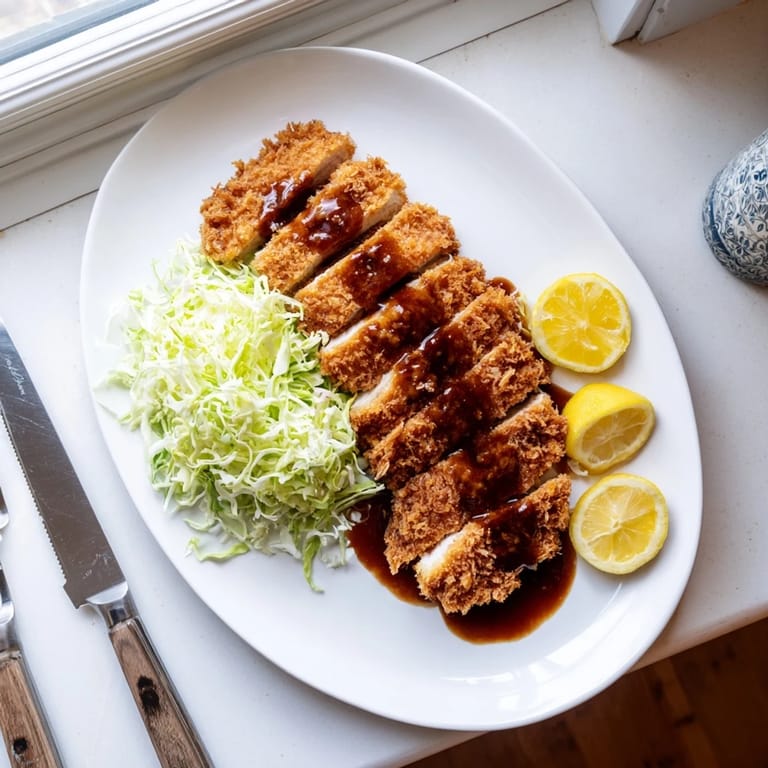
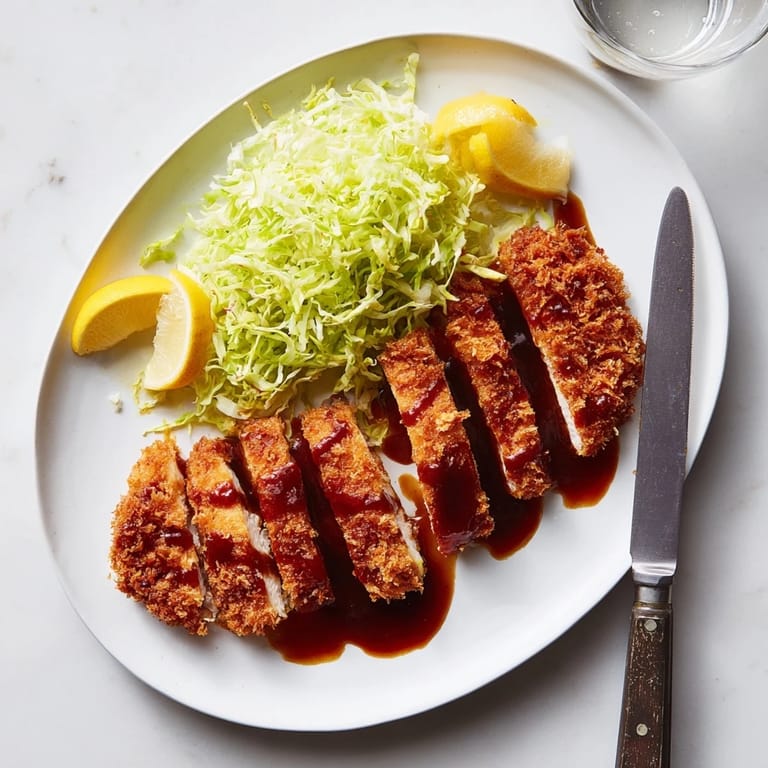
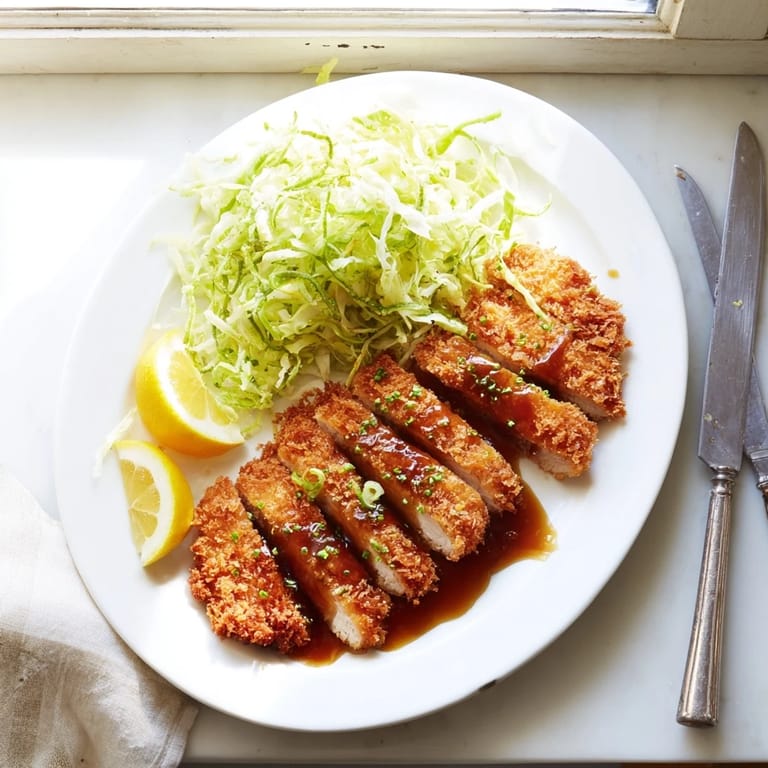
- Cut the katsu into strips and serve with the sauce drizzled on top or on the side, plus shredded cabbage, lemon wedges, and steamed rice if you like.
 Save to Pinterest
 This recipe became my go-to dinner party dish after I served it at a small gathering and my friend announced he would trade his homemade pizza for my katsu any day. There is something universally satisfying about that combination of textures and flavors.
Getting the Perfect Crisp
The secret to restaurant-style katsu is handling the panko with a light touch. When you press the crumbs onto the chicken, use just enough pressure to make them stick without crushing the airy texture. Think of it as creating a loose blanket rather than a tight coat of armor.
The Sauce Makes It Special
Homemade tonkatsu sauce is infinitely better than store-bought and takes literally two minutes. The ratios here strike that perfect balance between sweet, tangy, and savory, but feel free to adjust to your taste once you have made it a few times.
Make It Your Own
Once you have mastered the basic technique, you can play around with the breading by adding spices to the flour or mixing sesame seeds into the panko. The same method works beautifully for pork cutlets or even vegetables like eggplant and sweet potato.
- Try swapping in panko seasoned with nori or shichimi for extra Japanese flair
- A splash of rice vinegar in the sauce adds brightness that cuts through the fried richness
- Double the sauce recipe and keep it in the fridge for up to two weeks
 Save to Pinterest
 I hope this recipe brings you as many happy dinners and moments of connection as it has brought me over the years. Sometimes the simplest comfort foods are the ones we remember most.
Questions & Answers
- → What makes chicken katsu different from regular fried chicken?
Chicken katsu uses light, airy panko breadcrumbs instead of traditional breading, creating an exceptionally crispy and delicate texture. The cutlets are pounded thin for even cooking and served with a tangy homemade sauce rather than gravy.
- → Can I bake chicken katsu instead of frying?
Yes, though the texture will differ. Bake at 425°F for 20-25 minutes, flipping halfway. For better crispiness, spray generously with oil and use a wire rack on the baking sheet. The crunch won't match shallow frying but remains satisfying.
- → How do I keep the breading from falling off?
Ensure chicken is patted dry before seasoning. Press panko firmly onto the egg-coated cutlets. Let breaded chicken rest 10 minutes before frying to help coating adhere. Don't overcrowd the pan and avoid moving cutlets during the first few minutes of cooking.
- → What can I substitute for panko breadcrumbs?
While panko creates the authentic texture, you can use crushed cornflakes, regular breadcrumbs mixed with crushed crackers, or even crushed pretzels. Each alternative provides a slightly different crunch and flavor profile.
- → How long does leftover chicken katsu stay crispy?
Best enjoyed immediately. Reheating in an air fryer at 375°F for 5-7 minutes helps restore some crispiness. Avoid microwaving as it makes the coating soggy. Store in the refrigerator for up to 3 days in an airtight container.
- → Is tonkatsu sauce the same as barbecue sauce?
No, tonkatsu sauce is distinctively Japanese, combining ketchup, Worcestershire, soy sauce, and mirin for a sweet-tangy-umami flavor. It's thinner and more complex than American barbecue sauce, specifically designed to complement fried cutlets.