 Save to Pinterest
 I'll never forget the afternoon I discovered this dish at a gallery opening in the city. Standing before a wall of abstract paintings, I watched a server glide past with a platter that looked like edible modern art. Each ingredient carved into unexpected shapes, arranged like a geometric puzzle. I was so mesmerized that I almost missed tasting it. That first bite—the cool crunch of cucumber meeting the earthiness of beet, the brightness of mango against creamy avocado—felt like the painter's vision had somehow translated into flavor. I spent the rest of the evening trying to recreate what I'd experienced, and after several attempts with various cookie cutters and a very patient knife, this became my favorite way to welcome guests into the kitchen.
I made this for my sister's engagement dinner, and watching her face light up when I set the platter down made every careful cut worth it. She called it "kitchen jewelry," and suddenly my guests were pulling out their phones not to check messages, but to photograph their food. That's when I realized this wasn't just about impressing people—it was about creating a moment where eating became an experience, where the visual beauty made the flavors taste even more vibrant.
Ingredients
- 1 small cucumber, peeled: The neutral canvas that lets other flavors pop. Choose one that's firm and uniform in color for clean geometric cuts.
- 1 medium golden beet, cooked and peeled: That earthy sweetness grounds the plate. I always cook mine with a bit of salt in the water—it brings out the natural sugars and deepens the color.
- 1 medium watermelon radish, peeled: The surprise element that catches the light. Those hidden pink stripes inside create visual drama when you cut it into shapes.
- 1 ripe avocado: The butter of the plate, adding richness and a silky texture. Don't prep this until the last moment or it'll oxidize and dull your beautiful mosaic.
- 100 g feta cheese in block form: This is non-negotiable—use a block, not crumbles. Crumbles won't hold their geometric integrity and you'll lose half the visual impact.
- 1 ripe mango, peeled: Brings tropical warmth and a juicy sweetness that contrasts with the denser vegetables. The golden color anchors one corner of your composition.
- 2 tbsp extra virgin olive oil: Use one you actually taste and enjoy—this is the final seasoning, not just a drizzle. Good oil transforms the whole dish.
- 1 tbsp lemon juice: Prevents the avocado from browning while adding brightness that makes every other flavor sing.
- Flaky sea salt and fresh cracked black pepper: These aren't afterthoughts. The salt should catch the light and the pepper should be coarse enough to see.
- Microgreens or fresh herbs like basil or cilantro: The final punctuation mark. Choose something delicate that adds both color and a whisper of fresh flavor.
Tired of Takeout? 🥡
Get 10 meals you can make faster than delivery arrives. Seriously.
One email. No spam. Unsubscribe anytime.
Instructions
- Gather Your Tools and Prepare Your Workspace:
- Get your sharpest chef's knife ready—this is crucial because dull blades will bruise your vegetables and ruin the clean lines you're creating. If you have small cookie cutters in geometric shapes, lay them out like you're about to start an art project. Have your large, flat platter ready and clear some counter space. This is more like mise en place for an art installation than a typical cooking prep.
- Cut Vegetables and Fruits Into Geometric Shapes:
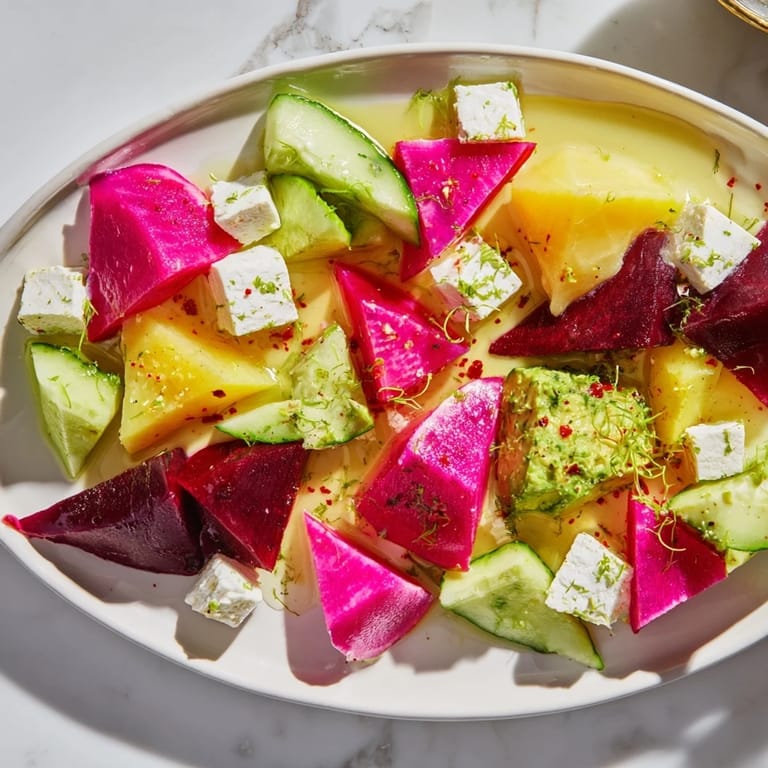
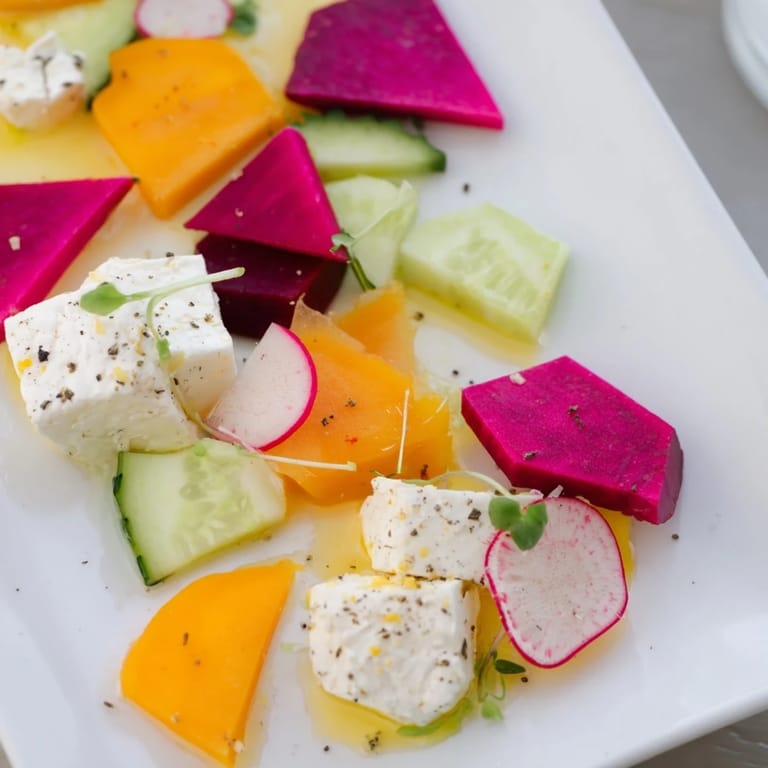
- Here's where it gets fun and a little meditative. Slice your cucumber into triangles, parallelograms, or hexagons—think about how light will catch each shape. The watermelon radish should be cut into pieces about 1 cm thick so you reveal those gorgeous pink interiors. For the beet, aim for cubes or thin wedges. The avocado can be sliced into fan shapes or irregular polygons. The mango should be cut into shapes that contrast with the others—maybe long rectangles or diamond shapes. If you're using cookie cutters, press them firmly through softer ingredients like the avocado and mango. Don't overthink the precision—slight imperfections make it feel handmade, not mass-produced.
- Prepare the Feta:
- Cut your block of feta into cubes or prisms that echo the shapes you've created elsewhere. These white pieces will become your highlights, like light hitting a sculpture. Make them about the same size as your vegetable pieces so they feel intentional and balanced.
- Compose Your Mosaic on the Platter:
- This is where your artistic eye comes into play. Arrange all your pieces close together without overlapping, like you're creating a geometric painting. Think about color distribution—don't cluster all the golden pieces together. Distribute the white feta throughout so it acts as a visual rest point. Step back frequently and look at it from different angles. The arrangement should feel balanced and intentional, like someone who understands composition created it. There's no single right way; trust your instincts.
- Add Your Liquids and Seasonings:
- Drizzle the olive oil in thin streams across the entire composition, letting it pool slightly around the vegetables. This adds shine and brings everything into conversation. Squeeze the lemon juice gently and evenly—you want a subtle brightness, not puddles.
- Season and Finish:
- Sprinkle the flaky sea salt across the board so it catches light and adds visual texture. Crack fresh black pepper over everything. Finally, scatter your microgreens or fresh herbs strategically—these soft elements soften the hard geometry and add that final breath of freshness.
- Serve Immediately:
- Get this to the table right away. The beauty is in the presentation while everything is still perfectly arranged and the colors are at their brightest. The vegetables will start to soften and the avocado will begin to darken once exposed to air, so timing matters.
 Save to Pinterest
 I learned the true magic of this dish when I served it at a dinner party where everyone was stressed about a life transition. As we all sat down, no one talked about their problems—instead, we talked about the colors, the shapes, the contrasts we were experiencing with each bite. Food became a bridge back to joy and presence. That's when I realized this dish does something special: it demands that you actually taste it, notice it, engage with it instead of absentmindedly eating while scrolling through your phone.
The Art of Geometric Cutting
The most satisfying part of making this dish is the geometry itself. When you pause to consider how light will hit a triangle versus a square, how colors will balance across the platter, you're no longer just cooking—you're creating. I've found that even imperfect cuts feel intentional if you're thoughtful about placement. The slightly wonky hexagon sits happily next to the too-long rectangle because they're in conversation with each other, not competing. This teaches a valuable kitchen lesson: precision matters less than intention.
Pairing and Presentation
The elegance of this appetizer is enhanced when you think beyond just the platter. A crisp Sauvignon Blanc cuts through the richness of the feta and avocado while echoing the freshness of the lemon juice. I also love serving this with small cocktail picks so guests can select individual pieces—it adds an interactive element and makes people slow down to truly taste each combination. The geometric presentation gives you permission to serve a smaller portion with greater impact. One generous serving platter serves four as a meaningful appetizer, rather than trying to pile food high on small plates.
Variations and Substitutions
Once you understand this dish's philosophy—beautiful shapes, contrasting colors and textures, carefully arranged—you can play within it forever. I swap in purple carrots when I find them, or yellow bell peppers for brightness. In summer, I sometimes add thin slices of heirloom tomato in various shapes. The only rule is that your ingredients should be colorful, have firm enough texture to hold a clean cut, and bring something different to the flavor conversation. For a vegan version, firm tofu pressed and cut into geometric shapes replaces the feta beautifully, providing that creamy element while maintaining the visual theme.
- Purple carrots, golden beets, and watermelon radish create a stunning color palette—keep your additions in the jewel tone family for maximum impact
- If mango isn't in season, use fresh pineapple or crisp apple slices cut into unexpected shapes
- Firm tofu cut into prisms works as well as feta and keeps the dish vegan and dairy-free
 Save to Pinterest
 Every time I make this dish, I'm reminded that food is more than fuel—it's a love letter to the people sitting at your table and an act of courage to create something beautiful just to share it. This recipe gives you that gift.
Questions & Answers
- → What shapes should the vegetables and fruits be cut into?
Slice them into varied geometric forms such as triangles, parallelograms, hexagons, or irregular polygons about 1 cm thick for visual impact.
- → Can I replace feta cheese with a vegan option?
Yes, firm tofu cut into similar geometric shapes works well as a dairy-free alternative.
- → How should I arrange the pieces on the platter?
Place all pieces closely together without overlapping, creating a colorful cubist mosaic for an artistic presentation.
- → What seasonings enhance the flavor in this dish?
Drizzle extra virgin olive oil and lemon juice evenly, then sprinkle flaky sea salt and freshly cracked black pepper for balanced seasoning.
- → What garnishes are recommended for this appetizer?
Microgreens or fresh herbs like basil or cilantro add bright color and freshness to the final presentation.