 Save to Pinterest
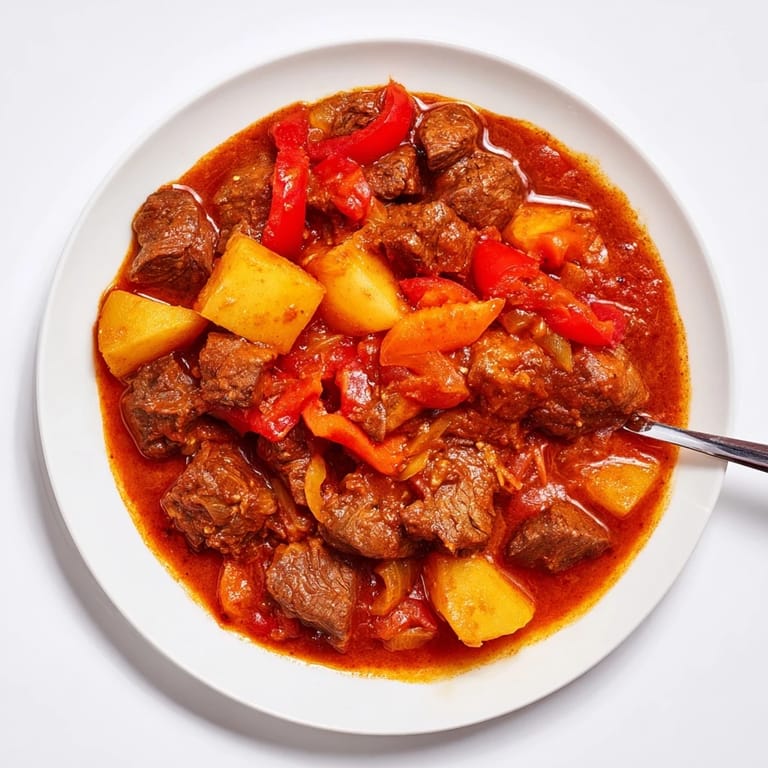
 There's something about the smell of paprika hitting hot oil that takes me straight back to a Budapest kitchen I visited years ago, where an elderly woman stirred a massive pot without measuring anything, just tasting and adjusting with the confidence of someone who'd made the same stew a thousand times. When I came home and tried to recreate it, I realized that Hungarian goulash isn't just about throwing ingredients together—it's about patience, good paprika, and letting the flavors have time to marry into something deeply satisfying. This version captures that same spirit, with tender beef that practically melts on your tongue and a sauce so rich it needs nothing but bread to soak it up.
I made this for friends on a cold November evening, and watching their faces light up when they tasted it reminded me why slow-cooked food matters—there's something about a stew that's been simmering for two hours that feels like an act of care. Someone asked for the recipe before they'd even finished their bowl, and that's when I knew I'd nailed it.
Ingredients
- Beef chuck (2 lbs, cut into 1-inch cubes): This cut has just enough marbling to stay juicy through long cooking, and it breaks down into that tender texture you're after.
- Hungarian sweet paprika (3 tbsp): Don't skimp here or use regular paprika—the Hungarian kind has a sweetness and depth that's doing most of the heavy lifting in this dish.
- Onions (2 large, finely chopped): They're your flavor foundation, so take time to caramelize them until they're soft and golden before anything else happens.
- Garlic (2 cloves, minced): A small amount goes a long way, especially after it's had two hours to mellow into the stew.
- Carrots (2 medium, sliced) and red bell pepper (1 large, diced): These add sweetness and body without overpowering the paprika's starring role.
- Potatoes (2 medium, peeled and cubed, optional): Add them if you want something heartier; they'll absorb the sauce beautifully.
- Caraway seeds (1 tsp), dried marjoram (1 tsp), and bay leaf: These are the quiet supporting cast that makes the dish taste authentically Hungarian.
- Beef broth (4 cups) and tomato paste (2 tbsp): Together they create the liquid base that becomes a silky sauce by the end of cooking.
- Vegetable oil or lard (2 tbsp): Lard is more traditional and adds a subtle richness, but oil works if that's what you have.
Tired of Takeout? 🥡
Get 10 meals you can make faster than delivery arrives. Seriously.
One email. No spam. Unsubscribe anytime.
Instructions
- Build your flavor base:
- Heat your oil in a heavy-bottomed pot and add the chopped onions, letting them soften and turn golden over about 8 minutes—you'll know they're ready when they're translucent and starting to caramelize at the edges. Stir in the garlic and give it a minute until the smell fills your kitchen, then it's time to move on.
- Brown the beef:
- Add your beef cubes and resist the urge to stir constantly; let them sit in the hot oil long enough to develop a golden crust on each side, about 5 minutes total. This crust is flavor, so don't skip it.
- Coat with paprika:
- Sprinkle the sweet paprika over everything and stir immediately and constantly for about a minute—this prevents it from burning while allowing it to bloom and release its warmth into the oil. You'll notice the whole pot suddenly smells like something special.
- Layer in the rest:
- Stir in the tomato paste, caraway seeds, marjoram, black pepper, and salt, coating everything evenly. Then add the carrots, bell pepper, and bay leaf, mixing until everything is distributed throughout.
- Add liquid and simmer:
- Pour in the beef broth, scraping the bottom of the pot with your wooden spoon to loosen any browned bits—that's concentrated flavor you don't want to waste. Bring it to a simmer, then cover and reduce the heat to low.
- Let time do the work:
- Cook covered for 1 hour, stirring occasionally so nothing sticks to the bottom and everything cooks evenly. The beef will start to soften, and the sauce will deepen in color and flavor.
- Add potatoes and finish:
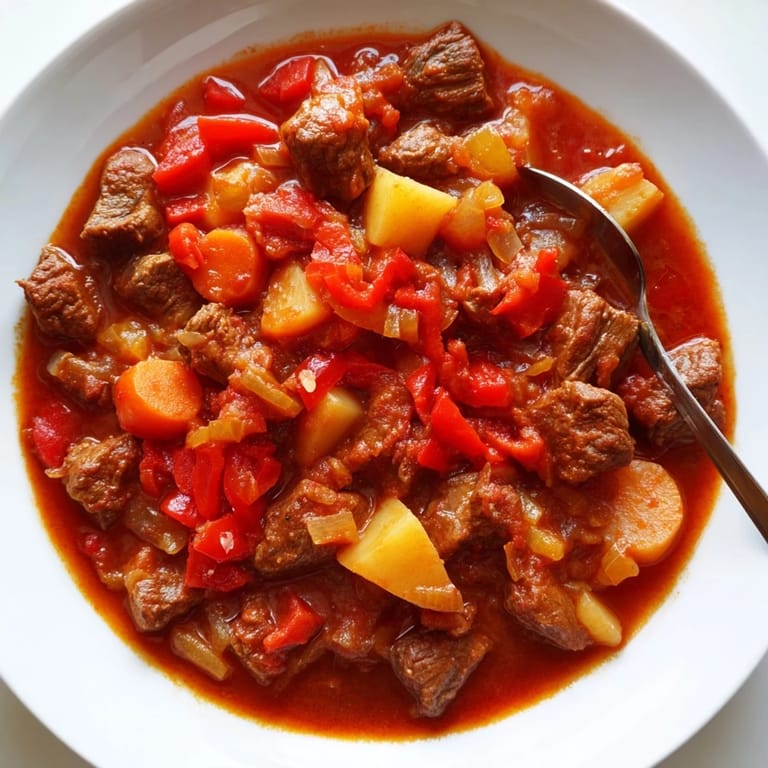
- If using potatoes, add them now and continue cooking uncovered for 45 to 60 minutes, until the beef is so tender it falls apart when you look at it and the potatoes are soft. The uncovered cooking also lets some liquid evaporate, creating a slightly thicker sauce.
- Taste and adjust:
- Remove the bay leaf, taste the stew, and add more salt and pepper if needed—every broth tastes slightly different, so trust your palate here.
 Save to Pinterest
 The best goulash moment I ever had was realizing leftovers were actually better the next day, after the flavors had settled and everything had become even more tender. It taught me that some dishes reward you for making them ahead, and this is absolutely one of them.
Why This Stew Feels Different
Hungarian goulash occupies a special place between a stew and a soup, but it leans toward the thick and hearty. The paprika isn't just a seasoning here—it's the voice of the entire dish, providing warmth, sweetness, and a color so rich it looks like it's been simmering in a castle kitchen for hours. There's no cream, no flour to thicken it, just beef, vegetables, and time, creating something that feels both rustic and refined.
Serving and Pairing Ideas
I've served this stew with crusty bread, with egg noodles, and with Hungarian csipetke dumplings, and each pairing creates a slightly different meal. Bread is perfect for soaking up every last drop of sauce, while noodles turn it into something closer to a composed main dish, and if you're feeling adventurous, those little pinched dumplings are absolutely worth seeking out.
Making It Your Own
Once you've made this version, you'll find yourself tinkering with it based on what's in your pantry and your mood that day. Some people add a pinch of hot paprika or fresh chili for heat, while others swear by a splash of red wine or a spoonful of sour cream stirred in at the end.
- For extra depth, try adding a tablespoon of red wine vinegar right at the end to brighten all the flavors.
- If you're out of fresh garlic, garlic powder works in a pinch, but use about a third of the amount.
- Make a double batch on Sunday and you'll thank yourself by Wednesday when dinner is already waiting in the freezer.
 Save to Pinterest
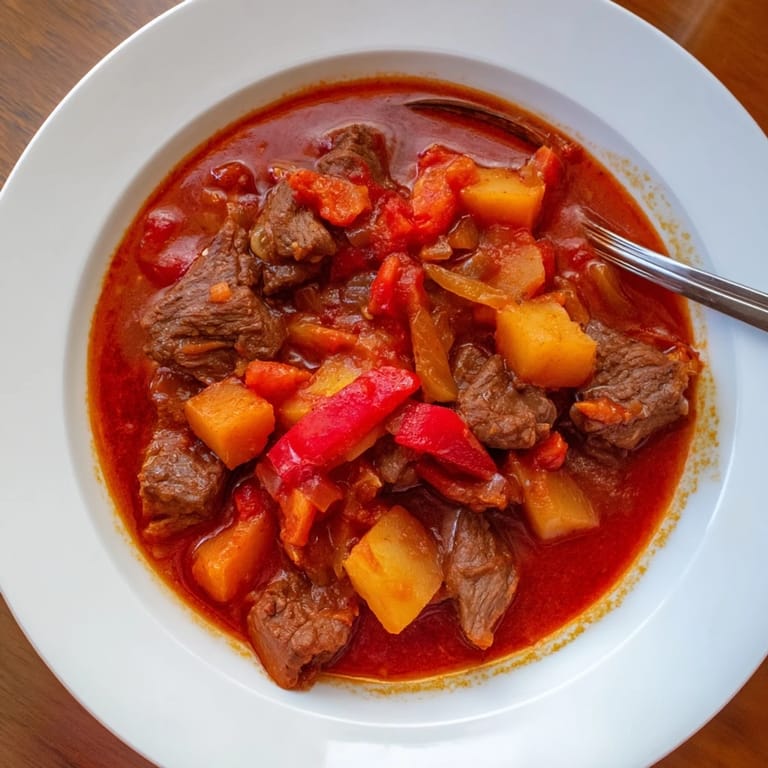
 There's comfort in a stew that asks for nothing but time and a little attention, and this Hungarian classic delivers exactly that. Make it when you want something warming, something that fills your kitchen with gorgeous aromas, and something that tastes like home, even if you're just discovering it for the first time.
Questions & Answers
- → What cut of beef works best for this stew?
Beef chuck is ideal for slow cooking as it becomes tender and flavorful over time.
- → Can I adjust the spice level?
Yes, adding a pinch of hot paprika or chopped chili will increase the heat according to your preference.
- → Are potatoes necessary in this dish?
Potatoes are optional but add extra texture and heartiness; you can omit them if desired.
- → What sides pair well with this stew?
Rustic bread, egg noodles, or Hungarian csipetke dumplings complement the rich flavors beautifully.
- → How long should the stew simmer?
Simmer on low heat for about 2 hours to ensure the beef is tender and the flavors meld fully.