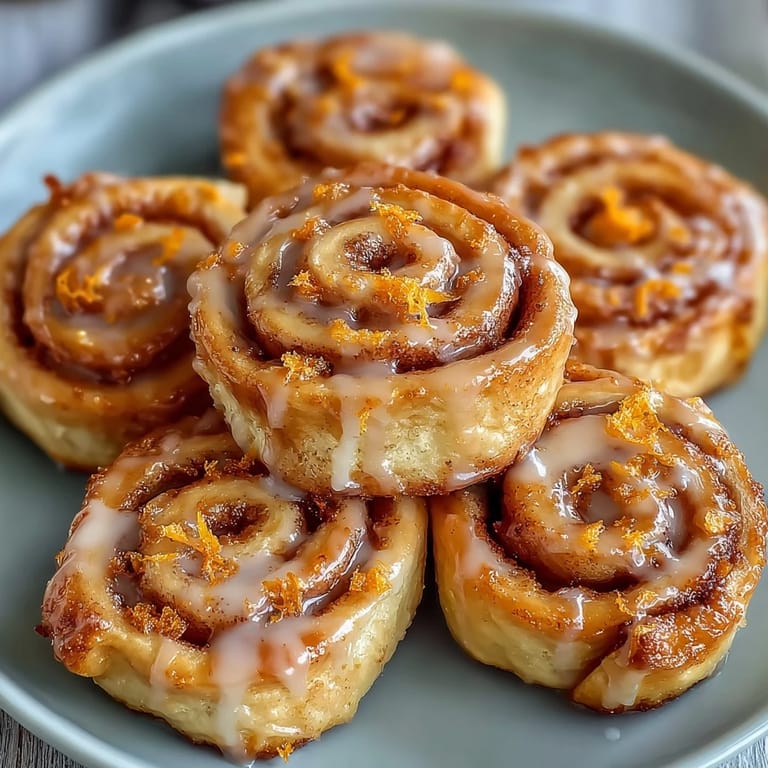
 Save to Pinterest
 My kitchen smelled like a Sicilian market when I first zested that orange over softened butter—bright, almost sharp, cutting through the quiet of an early morning. I'd grabbed a can of crescent dough out of habit, thinking I'd make something ordinary, but then that citrus scent changed everything. Twenty-five minutes later, golden rolls with sticky glaze were cooling on the counter, and my neighbor's knock on the door came before I could even plate them. Sometimes the best breakfast ideas aren't about planning; they're about following your nose.
I made these one Sunday while someone I care about sat at my kitchen island, telling me about a terrible week. Halfway through rolling and slicing, they stopped talking and just watched, and then they asked if they could help glaze them. We drizzled that citrus glaze together in comfortable silence, and somehow warm rolls with orange juice pooling on top felt like the only right response to everything they'd said. Food does that sometimes—it listens better than words.
Ingredients
- Refrigerated crescent roll dough (1 can, 8 oz): This is your foundation, and it's already perfect—don't overthink it or add extra flour.
- Unsalted butter (2 tbsp, softened): Let it sit on the counter for 10 minutes so it blends smoothly with the sugar and zest without any lumps.
- Granulated sugar (1/4 cup): This balances the tartness of the orange and creates that crucial sweetness in the filling.
- Orange zest (from 1 large orange, about 1 tbsp): Use a microplane if you have one—it catches all those tiny flavor oils and keeps out the bitter white pith.
- Pure vanilla extract (1/2 tsp): A small amount that deepens the filling without making it taste like vanilla; it's a background player that matters.
- Powdered sugar (1/2 cup): This creates the silky glaze that clings to every roll without being too thick or runny.
- Fresh orange juice (1-2 tbsp): Add it slowly to the powdered sugar so you control the consistency; too much and you'll have soup, too little and it won't drizzle.
Tired of Takeout? 🥡
Get 10 meals you can make faster than delivery arrives. Seriously.
One email. No spam. Unsubscribe anytime.
Instructions
- Get your workspace ready:
- Preheat to 375°F and line your baking sheet with parchment—it's the smallest step that saves you 10 minutes of cleanup later.
- Seal that crescent dough:
- Unroll it gently and press all those perforations together with your fingers until it forms one large, unbroken rectangle; you're looking for it to stop looking like 8 separate triangles.
- Make the filling paste:
- Stir the softened butter, sugar, orange zest, and vanilla in a bowl until everything is evenly combined and smells absolutely incredible.
- Spread and roll:
- Use a spoon or offset spatula to spread the filling evenly across the dough rectangle, starting from one long edge and rolling tightly toward the other end—think cinnamon roll, not burrito.
- Slice into rounds:
- Use a sharp knife and cut the log into 12 equal pieces; a bench scraper helps here if you have one, but a regular knife works fine.
- Arrange in pan:
- Place the rolls cut-side up on parchment or in a mini muffin tin so the spiral face shows and will caramelize beautifully.
- Bake until golden:
- Watch around the 13-minute mark—you want the edges to turn a light caramel brown, not deep tan.
- Whisk the glaze while they bake:
- Mix powdered sugar and orange juice slowly, stirring until it's thin enough to drizzle but thick enough to coat; add the optional zest for extra brightness.
- Cool and finish:
- Let the rolls rest for 5 minutes—this keeps the glaze from running off completely—then drizzle and serve while everything is still warm.
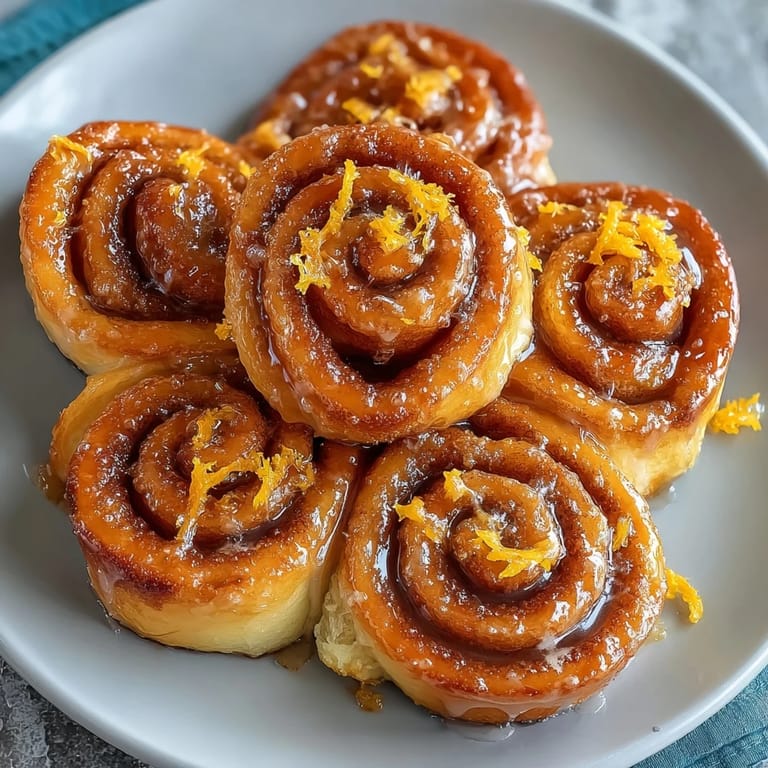 Save to Pinterest
 There was one morning when I made these rolls and forgot to let them cool for those 5 minutes—I poured the glaze on straight out of the oven and watched it slide off like translucent sugar water. The rolls were still delicious, but the glaze pooled on the plate instead of clinging to the top, and I learned that small moments of patience actually matter. Now I set a timer, and those 5 minutes feel like part of the magic.
Why Fresh Orange Juice Matters
Store-bought orange juice is fine in a pinch, but fresh-squeezed juice has a brightness that bottled versions can't match—the glaze becomes noticeably more alive and less one-dimensional. If you're using bottled juice, let it sit at room temperature for a minute or two so the glaze doesn't get too thick too quickly. I learned this the annoying way when I pulled juice straight from the refrigerator and the powdered sugar clumped like it had a personal vendetta.
The Filling-Dough Ratio Secret
Too much filling and your rolls leak; too little and they taste like plain crescent dough with a whisper of flavor. The 2 tablespoons of butter and 1/4 cup of sugar is exactly right because you're spreading it thin across the whole rectangle, so every bite gets the orange flavor without overwhelming the dough. When I've tried doubling the filling out of optimism, the rolls refused to cooperate and fell apart during slicing—the dough was stretching too thin and the filling was oozing everywhere.
Variations and Flavor Twists
These rolls are a blank canvas once you understand the basic formula, and small additions transform them without breaking the whole thing. A pinch of cardamom in the filling adds an unexpected warmth that makes people pause and ask what they're tasting. Chopped pistachios scattered over the filling before rolling create little pockets of crunch and richness, or you could use candied orange peel if you want to lean into the citrus theme even harder.
- Sprinkle chopped pecans or walnuts over the filling if you want texture and a slightly earthier taste.
- Add a few drops of orange extract to the glaze for an intense citrus punch that feels almost perfume-like.
- Toast the zest under the broiler for 30 seconds on a small pan to intensify the flavor before mixing it into the filling.
 Save to Pinterest
 These rolls are best enjoyed warm with coffee or tea, still-soft from the oven with the glaze gently sticky on top. If you have leftovers, they keep for two days in an airtight container, though they're honestly better when they're fresh and the glaze hasn't fully set.
Questions & Answers
- → What type of dough is best for these rolls?
Refrigerated crescent roll dough provides a soft, flaky base that bakes quickly and evenly for these mini orange rolls.
- → How do I prevent the dough from unrolling during baking?
Pinching the perforations and rolling the dough tightly before slicing helps keep the rolls intact while baking.
- → Can I add nuts to the filling?
Yes, chopped pecans or walnuts can be sprinkled over the orange sugar mixture before rolling for added texture and flavor.
- → How should the glaze consistency be adjusted?
Gradually add fresh orange juice to the powdered sugar until the glaze reaches a smooth, pourable consistency for easy drizzling.
- → Can these be made ahead and stored?
These mini rolls are best enjoyed fresh but can be kept in an airtight container for up to two days without losing softness.
- → Is it possible to enhance the citrus flavor?
Adding a few drops of orange extract to the glaze intensifies the bright citrus notes of the rolls.