 Save to Pinterest
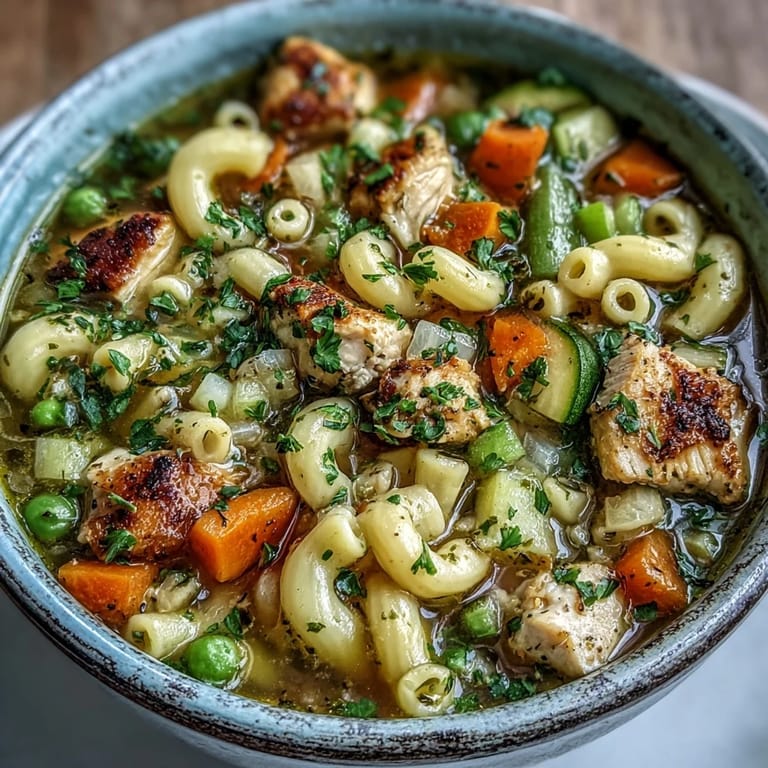
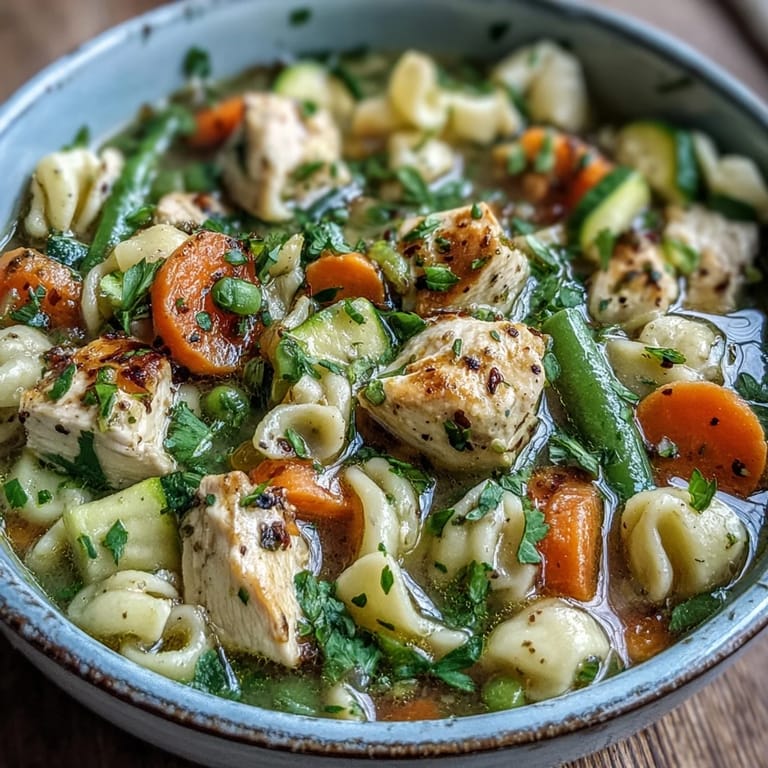
 There's something about the sound of vegetables hitting hot oil that signals comfort is on the way. My kitchen filled with that exact noise one chilly evening when I needed something warming but didn't want to spend hours cooking. This soup came together almost without thinking—chicken, pasta, vegetables, broth—the kind of dish that feels both simple and generous at once. It's the meal I make when I want my family gathered around the table without stress, and honestly, it never disappoints.
I made this for my neighbor after her surgery, and watching her face light up when she realized it was full of actual vegetables and chicken—not just broth and sadness—reminded me why simple, nourishing food matters. She texted me the next day asking for the recipe, which felt like the highest compliment. That's when I knew this soup had become something special in my cooking rotation.
Ingredients
- Boneless, skinless chicken breasts: Cut into bite-sized pieces so they cook quickly and distribute evenly throughout the pot—you want someone to find tender chicken in every spoonful.
- Carrots and celery: The aromatic base that gives this soup its foundation; slice them so they soften at the same rate as everything else.
- Onion and garlic: These two are doing the heavy lifting flavor-wise, so don't rush past them—let the garlic get fragrant before moving forward.
- Zucchini and green beans: Fresh vegetables that add texture and brightness; trim the green beans properly so they cook through without falling apart.
- Frozen peas: Added late in cooking so they stay tender and keep their color—a small detail that makes the final bowl look vibrant.
- Canned diced tomatoes: Use the kind without added sugar, and don't drain them; those juices are liquid gold for flavor.
- Small pasta shapes: Ditalini or elbow macaroni work perfectly because they cook in the same time as the peas and don't overpower the broth.
- Low-sodium chicken broth: This is your canvas—use good broth because you can taste it, and avoid oversalting before the end.
- Olive oil: Just enough to coat the pot and start the sauté; you're not deep frying here.
- Dried thyme and basil: These dried herbs are your secret weapons; they bloom as the soup simmers and taste almost fresh by the end.
- Bay leaf: Remove it before serving, but don't skip it—it ties everything together in a way you can't quite put your finger on.
- Fresh parsley: The final flourish that makes this soup taste like it came from someone's kitchen, not a can.
Tired of Takeout? 🥡
Get 10 meals you can make faster than delivery arrives. Seriously.
One email. No spam. Unsubscribe anytime.
Instructions
- Build your aromatic base:
- Heat olive oil in your pot over medium heat, then add onion, carrots, and celery. You'll know they're ready when the onion turns translucent and the kitchen smells like dinner is happening—about 5 minutes.
- Wake up the garlic:
- Add minced garlic and stir constantly for just 1 minute; you want fragrant, not browned, so listen to your instincts and nose here.
- Introduce the chicken:
- Add your cubed chicken and let it cook for 4 to 5 minutes, stirring occasionally. It'll lose its raw color and develop a light golden crust, but it won't be cooked through yet—that's exactly right.
- Layer in the vegetables and seasonings:
- Stir in zucchini, green beans, canned tomatoes with their juices, thyme, basil, bay leaf, salt, and pepper. The kitchen will smell incredible at this moment, and that's your signal you're on track.
- Bring it to life:
- Pour in the chicken broth and raise the heat to bring everything to a gentle boil. Once it's bubbling, reduce the heat, cover the pot, and let it simmer quietly for 15 minutes while the flavors marry together.
- Finish with pasta and peas:
- Add your pasta and frozen peas, stirring gently. Simmer uncovered for 10 to 12 minutes until the pasta is tender but not mushy and the chicken is completely cooked through; this is where timing matters, so taste a piece of pasta as it gets close.
- Final touches:
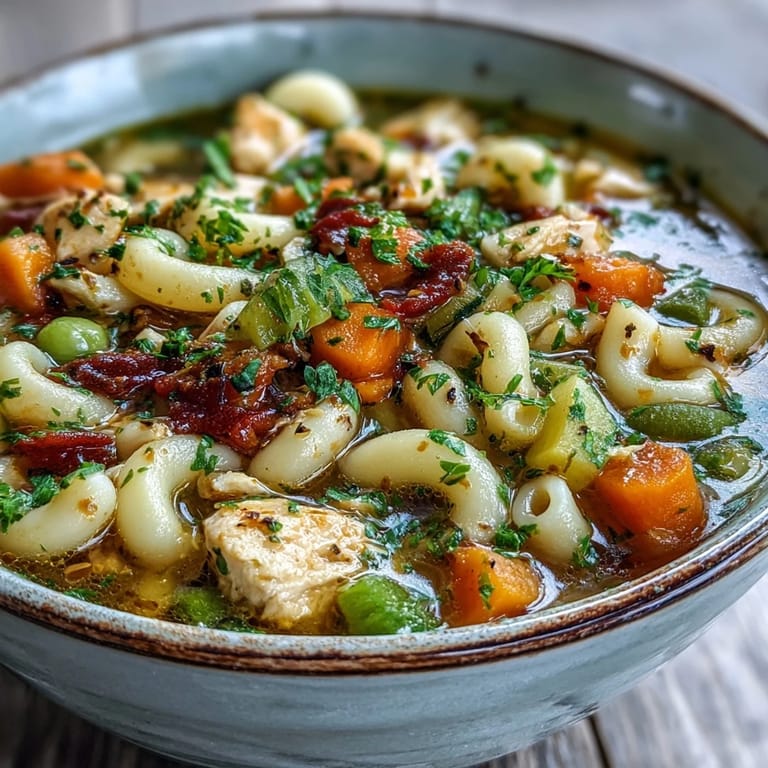
- Fish out the bay leaf, stir in fresh parsley, and taste everything one more time. Adjust salt and pepper if needed—this is your moment to make it taste like your version of perfect.
 Save to Pinterest
 There was a moment last winter when my daughter asked why this soup tasted like home, even though we'd moved that year. I realized then that food isn't about a place—it's about the feeling of being cared for, the warmth in your hands from holding a bowl, the taste of someone saying 'I made this for you' in every spoonful.
Variations and Swaps
One night I had rotisserie chicken in the fridge instead of raw breasts, so I shredded it and added it with the pasta instead of browning it raw. The texture changed slightly—more tender, less defined pieces—but the comfort factor went up because it meant less hands-on time. I've also swapped out zucchini for diced bell peppers, switched the green beans for corn, and even snuck in fresh spinach at the very end, letting it wilt into the broth in the last minute.
What to Serve Alongside
Crusty bread isn't optional here; it's essential for soaking up every last bit of broth from the bowl. A crisp white wine like Sauvignon Blanc cuts through the richness beautifully, and honestly, a simple green salad on the side makes the meal feel complete without adding work. Some evenings I've added grated Parmesan on top at the table, letting people customize their own bowls, which somehow makes everyone happier.
Storage and Make-Ahead Tips
This soup gets better the next day as flavors settle and deepen, which is why I often make it on a Sunday with the intention of eating it all week. Store it in the refrigerator for up to 4 days, or freeze it for up to 3 months—though I'd recommend leaving the pasta out if you're freezing and adding fresh pasta when you reheat, since frozen-then-thawed pasta can get mushy. Reheating is simple: just warm it gently on the stove with a splash of broth if it's thickened too much.
- Make the soup base without the pasta and peas, refrigerate it, then add fresh pasta and peas when you reheat and serve.
- If you're meal prepping, freeze in individual portions so a comforting dinner is literally minutes away on a hard day.
- A slow cooker version works beautifully too—just layer everything except the pasta and peas, cook on low for 6 hours, then add those final components 15 minutes before serving.
 Save to Pinterest
 This soup is proof that the most nourishing meals don't need to be complicated, and the best kitchen memories are the simple ones where everyone just sits down and eats. Make it this week.
Questions & Answers
- → What pasta shapes work best?
Small pasta shapes like ditalini, elbow macaroni, or shells work perfectly as they hold onto the broth while maintaining texture. Avoid larger shapes that may overpower the soup's balance.
- → Can I make this ahead of time?
Absolutely. This soup actually develops deeper flavors when refrigerated overnight. Store pasta separately if planning to keep it for more than a day to prevent it from becoming too soft.
- → How do I store leftovers?
Cool completely and refrigerate in airtight containers for up to 4 days. The broth may thicken as pasta absorbs liquid—simply add a splash of broth or water when reheating.
- → Can I freeze this soup?
Freeze without the pasta for best results. Cook fresh pasta when reheating. If freezing everything, expect the pasta to become softer but still enjoyable.
- → What vegetables can I substitute?
Swap zucchini for spinach, green beans for corn, or add bell peppers for sweetness. The medley is flexible based on what's in your crisper drawer.
- → Is this suitable for gluten-free diets?
Simply replace the pasta with gluten-free alternatives and ensure your chicken broth is certified gluten-free. All other ingredients naturally fit gluten-free requirements.