 Save to Pinterest
 I'll never forget the first time I created a sculptural cheese landscape for a dinner party. My guests arrived to find not just a cheese board, but an edible landscape—sharp Manchego peaks rising like mountains, soft Brie nestled in valleys, and a winding path of crackers inviting them to explore. That moment when their faces lit up, realizing they weren't just eating cheese but embarking on a culinary adventure, reminded me that food is about more than sustenance. It's about the stories we create together.
I remember making this for my partner's colleagues—people I was meeting for the first time. As they approached the board with hesitation, then curiosity, then delight, I watched strangers become comfortable with each other through the simple act of sharing food arranged like a landscape they wanted to explore together. That's when I understood that this wasn't just a cheese board; it was a bridge between people.
Ingredients
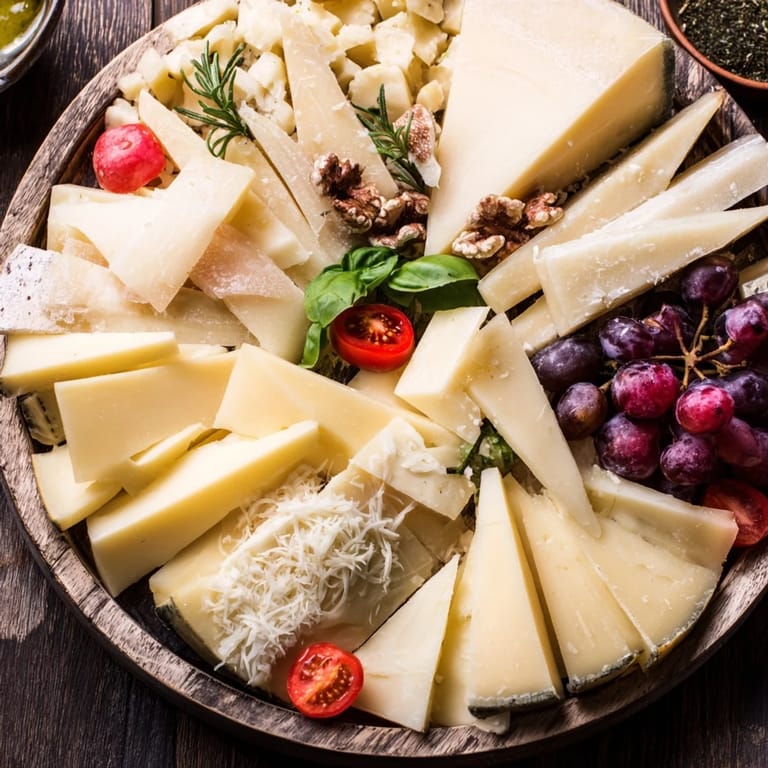
- Aged Manchego (150 g), cut into tall irregular chunks: This Spanish cheese has a nutty depth that anchors your landscape. Cut it tall and irregular—the imperfections make the mountains look more dramatic and inviting to guests who'll break off pieces as they explore
- Parmigiano-Reggiano (150 g), broken into rugged shards: Don't slice this one; break it with your hands or a knife. The crystalline fractures catch light beautifully and taste like umami itself. This is your show-stopper peak
- Aged Cheddar (150 g), sliced into tall triangles: Aged Cheddar brings color and sharpness. The geometric triangles feel intentional and architectural against the rough texture of the Manchego
- Brie (100 g), cut into thick wedges: This soft anchor melts slightly as it sits, becoming more luxurious. Cut thick wedges so they don't get lost in the landscape—they're the pillowy hills guests will return to
- Gorgonzola (100 g), broken into rustic pieces: Blue cheese adds mystery and complexity. The blue veining creates natural visual interest, and its boldness balances the sweeter elements
- Red grapes (1 cup), halved: These become your water features—clusters in valleys catch the eye and offer bursts of sweetness between cheeses
- Cherry tomatoes (1 cup), halved: The acidity here is your secret ingredient. They prevent the board from feeling too heavy and add a savory brightness that makes people keep reaching
- Cucumber (1 small), sliced into rounds: Refreshing and cooling, these offer textural contrast. Slice them just before serving so they stay crisp
- Apple (1 small), thinly sliced: The slight tartness of apple is the perfect companion to aged cheddar. Slice just before serving and toss lightly in lemon juice if you have it, to keep the color bright
- Dried apricots (1/2 cup): These concentrated sweetness pockets feel like hidden treasures scattered across your landscape. They're especially beautiful nestled between sharp and soft cheeses
- Roasted almonds (1/2 cup): Almonds are your boulders, scattered for texture and crunch. Toast them yourself if possible—store-bought roasted almonds are fine, but freshly toasted ones smell incredible
- Walnuts (1/2 cup): These darker nuts add visual depth and a slightly earthy flavor that grounds the sweeter elements
- Thin baguette slices (12): These aren't just carriers for cheese—they're the paths through your landscape. Toast them lightly an hour before serving if you prefer them crisp; if soft, assemble closer to serving time
- Assorted crackers (12): Mix shapes and colors. Water crackers, seeded crackers, and herb crackers each invite different flavor pairings
- Honey (2 tbsp): This is your finishing touch—golden pools that catch light and add sweetness strategically. Drizzle just before guests arrive so it stays glossy
- Fresh rosemary sprigs: Beyond flavor, these create height variation and a forest-like feeling that completes your landscape narrative
Tired of Takeout? 🥡
Get 10 meals you can make faster than delivery arrives. Seriously.
One email. No spam. Unsubscribe anytime.
Instructions
- Choose your landscape canvas:
- Set your large wooden board in front of you. Step back and imagine the geography you're creating. Where will your tallest peaks stand? Where will valleys naturally form? A slightly larger board gives you more room to play
- Build your mountain range:
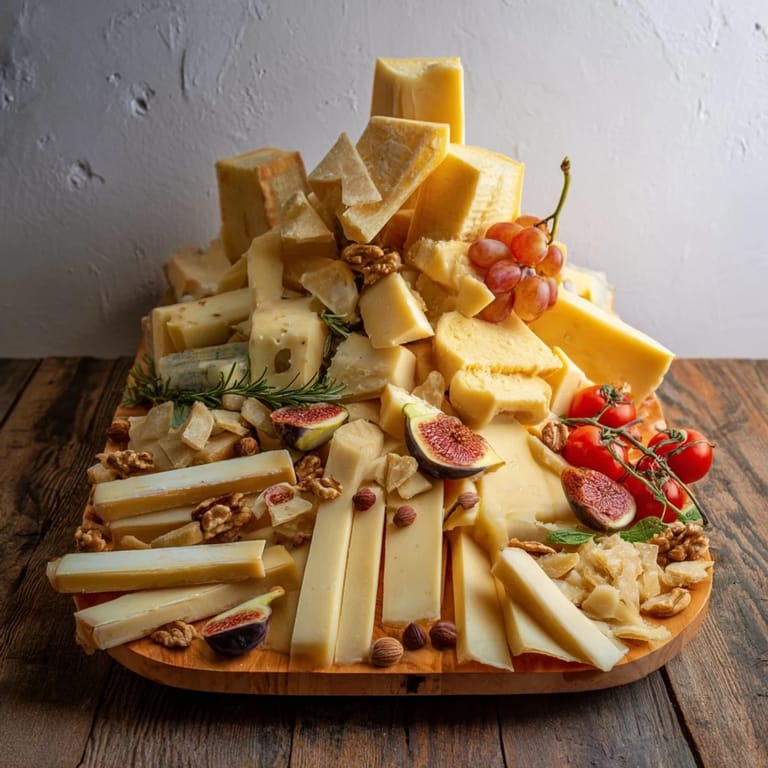
- Arrange your hard cheeses—Manchego, Parmigiano-Reggiano, and Cheddar—vertically and dramatically. Stand them at different heights and angles. They should look like peaks that catch different amounts of light. Trust the irregular shapes; perfection is boring, but ruggedness feels intentional and beautiful
- Create rolling hills:
- Now nestle your Brie and Gorgonzola around the base of these mountains. These softer pieces bridge the hard peaks and the flat board, creating elevation changes. Their creamy color and soft shapes create natural resting places for the eye
- Fill the valleys:
- Here's where your board comes alive. In the lower spaces between cheeses, scatter your halved grapes, cherry tomato halves, cucumber rounds, apple slices, and dried apricots. Think in clusters rather than uniform distribution. A pile of red grapes next to amber apricots feels more intentional than scattered singles
- scatter the boulders:
- Distribute almonds and walnuts across the board, using them to fill gaps and add texture. These nuts aren't random; they're visual anchors that help define pathways and valleys. Let some nestle into crevices between cheeses
- Create paths and plateaus:
- Arrange your baguette slices and crackers along the edges and in linear patterns that suggest paths through your landscape. They're both functional and decorative—guests will naturally follow these lines as they explore
- Add light and finishing touches:
- In the final moments before serving, drizzle honey strategically—pooled in valleys, draped over a wedge of Brie, or collected in small pockets. Tuck fresh rosemary sprigs into and around the arrangement, using height to vary the skyline further. These green accents add life and suggest a natural landscape
- Invite exploration:
- Step back and look at what you've created. Then place it in front of your guests and encourage them to build their own flavor combinations as they move through the landscape. This is interactive food at its best
 Save to Pinterest
 The most magical moment I've experienced with this cheese board was watching my elderly mother, who claimed she didn't eat much cheese, slowly work her way through the landscape with genuine curiosity. She'd take an almond, a piece of Brie, a grape, building combinations like she was solving a puzzle. At one point she laughed and said, 'I didn't know eating could be this fun.' That's when I realized this board wasn't about impressing anyone—it was about creating permission to play with food, to be curious, and to share something that felt special.
Building the Narrative Arc
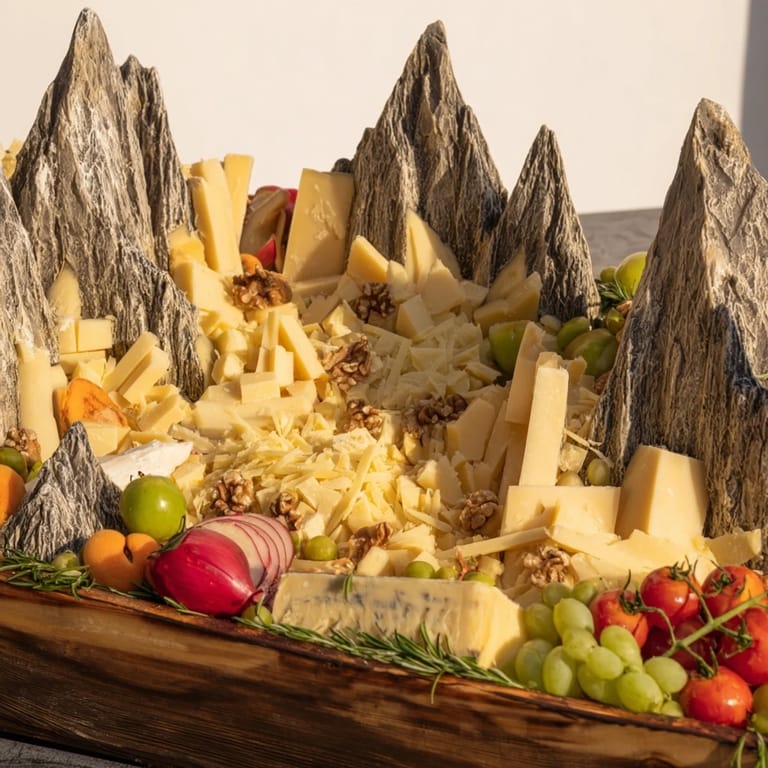
What makes this cheese board work isn't just the individual components—it's how they tell a story together. The hard cheeses are your dramatic peaks, demanding attention and conversation. The soft cheeses are the valleys, offering gentleness and ease. The fruits, nuts, and vegetables are the ecosystem—they make sense together, creating balance and inviting exploration. When you arrange them with this landscape metaphor in mind, you're not just presenting food; you're inviting people into a world you've created. Every element serves the narrative, and guests naturally understand they're meant to discover and combine rather than follow rules.
Customization Through Regional Exploration
I've learned that the magic of this board lies in its flexibility. One evening I used Italian cheeses—Parmigiano-Reggiano, Taleggio, and Gorgonzola—and suddenly the whole thing felt like Tuscan hills. Another time, I leaned into British varieties with aged Cheddar, Wensleydale, and Stilton, and the landscape felt completely different. You're not locked into what I've suggested; you're invited to travel through cheese geography. The structure remains the same, but the flavors can take you anywhere. Think about the cheeses you love, the wines you drink, the memories you want to create. Your landscape will be unique because it's genuinely yours.
The Art of Arrangement as Mindfulness
There's something meditative about arranging this board. As you place each element, you slow down. You think about color combinations, texture variations, flavor balance. Your hands work while your mind settles. I've found that this preparation ritual—the arranging, the final adjustments, the step back to look—is almost as valuable as the eating itself. It's a form of hospitality that begins before guests arrive, a way of saying I cared enough to make this moment special. And when you serve it, that intention translates into something guests can feel.
- Arrange your board at least 30 minutes before guests arrive so you can adjust lighting and take a final look
- Use odd numbers when possible—three grapes clustered, three walnut clusters scattered—it feels more natural than even distribution
- Remember that negative space matters. A board that looks like every inch is covered feels cluttered; a thoughtfully sparse board feels intentional and sophisticated
 Save to Pinterest
 As I've made this board countless times, I've realized it's not about perfection or following rules exactly. It's about creating a moment where food becomes an experience, where people slow down and connect, where the way something is presented matters as much as how it tastes. Make it your own, trust your eye, and remember that the best cheese boards are the ones that tell your story.
Questions & Answers
- → What types of cheeses work best for the landscape?
Hard cheeses like Manchego, Parmigiano-Reggiano, and aged Cheddar create dramatic height, while soft varieties such as Brie and Gorgonzola add softness and contrast.
- → How do I arrange the platter for the best visual effect?
Place tall chunks of hard cheese vertically as peaks, cluster soft cheeses at the base to form hills, and fill valleys with fruits and nuts for texture and color.
- → Can I customize the fruits and nuts used?
Yes, feel free to use seasonal fruits and nuts to complement the cheeses and enhance the board’s flavor profile.
- → What role does honey play on this board?
Honey adds a touch of natural sweetness, balancing savory flavors and enriching the experience with delicate floral notes.
- → Are there suggestions for accompanying the platter?
Pair this arrangement with a crisp white wine or a light-bodied red to complement the diverse textures and flavors.