 Save to Pinterest
 I discovered spicy peanut noodles during one of those late nights when my kitchen was completely bare except for a half-empty jar of peanut butter and a box of rice noodles I'd been saving. What started as desperation turned into something I couldn't stop thinking about for weeks. The way the sauce coated each strand, how the heat built gradually with every bite, the smell of ginger and sesame filling the whole apartment—it felt like I'd unlocked a secret. Now I make it whenever I need to turn nothing into something that tastes intentional and crave-worthy.
I once made this for a friend who'd just had a terrible day, and watching her face light up when she tasted it was honestly better than any compliment I've ever gotten. She asked for the recipe right there at the table, sauce still on her chin, and I realized this dish had the kind of power that goes beyond flavor—it just made people feel looked after.
Ingredients
- Rice noodles or spaghetti (12 oz): Rice noodles are silkier if you want to go authentic, but regular spaghetti works just as well and honestly, whatever you have wins.
- Creamy peanut butter (1/2 cup): Use the kind without added sugar if you can—it keeps the sauce from getting cloyingly sweet and lets the spice shine through.
- Soy sauce (1/4 cup): This is your backbone of umami, so don't skip it or water it down.
- Rice vinegar (2 tbsp): This tiny amount does the heavy lifting of brightening everything up so the sauce doesn't feel heavy.
- Toasted sesame oil (1 tbsp): Don't use regular sesame oil and definitely don't cook with this one—just drizzle it into the sauce and you'll understand why it matters.
- Honey or maple syrup (2 tbsp): Choose whichever you have, but the sweetness balances the salt and spice in a way that feels intentional rather than accidental.
- Sriracha or chili garlic sauce (2–3 tbsp): Start with 2 and taste as you go—heat builds differently depending on the brand and your own tolerance.
- Garlic and ginger (2 cloves and 1 tbsp fresh): Fresh is non-negotiable here; they give the sauce its personality and the reason people ask for your recipe.
- Warm water (1/4 cup, plus more): This is what makes the sauce pourable instead of a thick paste; you'll adjust as you go.
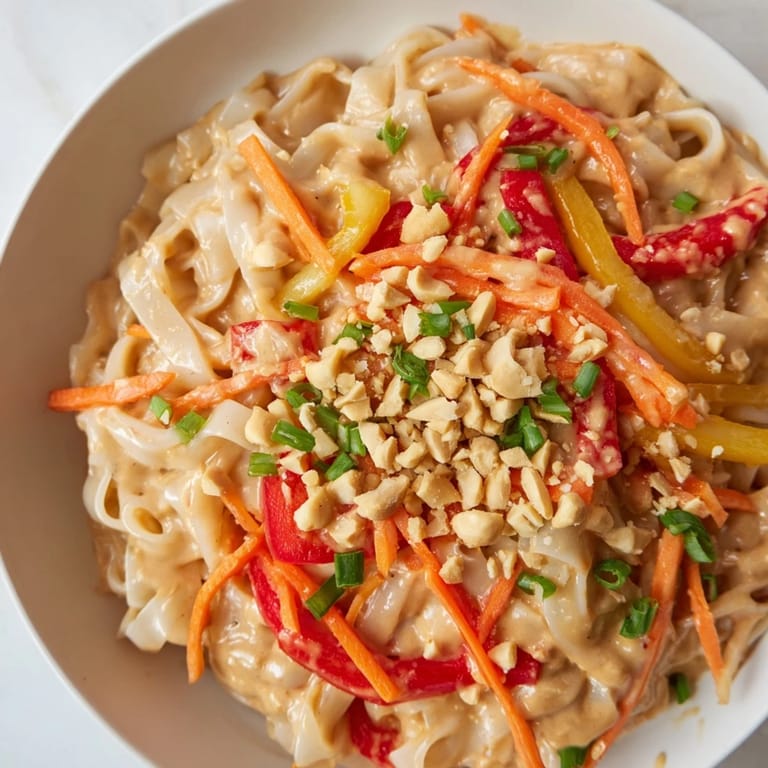
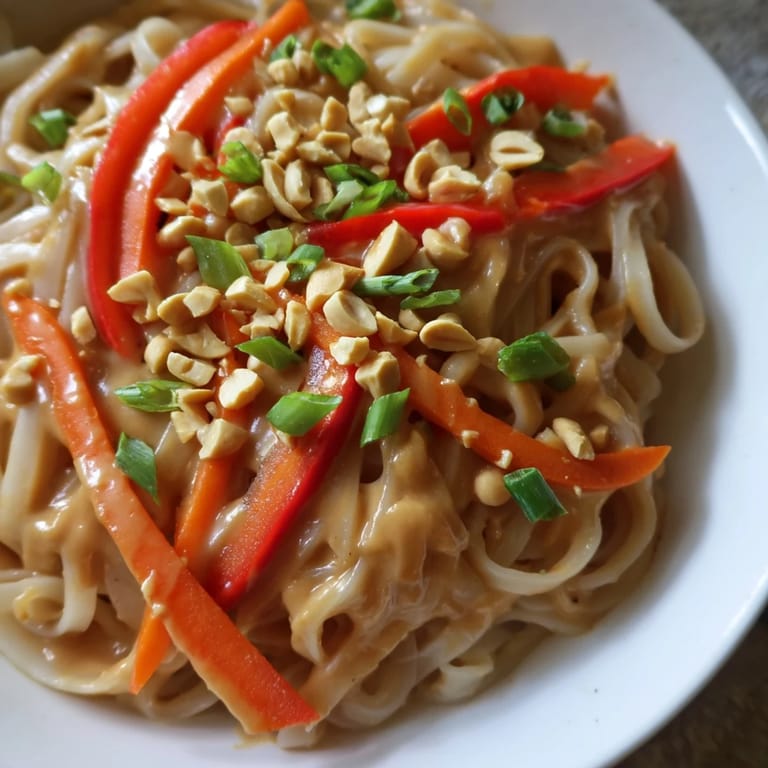
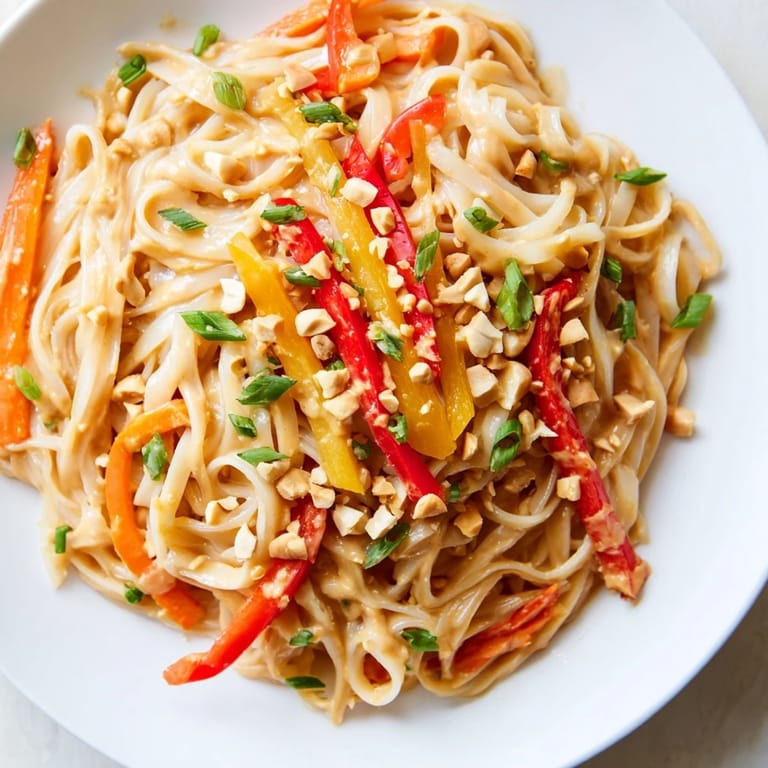
- Carrots, bell pepper, scallions, peanuts, cilantro, lime: These toppings aren't decoration—they're what makes each bite different and keeps the dish from being one-note.
Tired of Takeout? 🥡
Get 10 meals you can make faster than delivery arrives. Seriously.
One email. No spam. Unsubscribe anytime.
Instructions
- Boil the noodles:
- Follow the package timing exactly because overcooked noodles turn mushy and ruin the texture. As soon as they're tender, drain them into a colander and run cold water through them so they stop cooking and don't clump together.
- Make the sauce:
- Whisk everything together in a medium bowl and watch as it transforms from a pile of separate ingredients into something glossy and unified. If it looks too thick, add water a tablespoon at a time until it coats a spoon but still pours.
- Combine everything:
- Put the noodles, raw carrots, and bell pepper in your largest bowl and pour the sauce over while it's still slightly warm so the flavors meld instead of just sitting on top. Toss until every strand is coated and you can't see any white noodles left behind.
- Plate and garnish:
- Divide into bowls and top with the things that make it sing—the crunch of scallions, the nuttiness of roasted peanuts, the brightness of cilantro, and a squeeze of lime that ties everything together.
- Serve hot or cold:
- Eat it right away while the noodles are still warm and the sauce is at its most luxurious, or refrigerate it for a completely different but equally satisfying cold noodle salad.
 Save to Pinterest
 There's a moment when you're tossing the noodles and the sauce starts clinging to everything, and the kitchen fills with this aroma of peanut and ginger and a hint of heat—that's when you know this isn't just dinner, it's the kind of thing people remember. This dish stopped being a quick meal for me and became something I make whenever I need to remind myself or someone else that cooking for yourself is an act of kindness.
Balancing Heat and Flavor
The spice in this dish shouldn't overwhelm you—it should make you lean forward and take another bite. Start with less sriracha than you think you need because you can always add more at the table, but you can't take it out once it's mixed in. The real magic happens when the heat plays against the creamy peanut butter and the bright lime; they work together instead of competing, and that's what keeps you coming back for more.
Making It Your Own
This recipe is a foundation more than a rulebook. I've made it with almond butter when I was out of peanut butter and it was somehow better, added roasted chickpeas for crunch, thrown in whatever vegetables were in my fridge at the time. The beauty of a sauce-based dish is that it's forgiving and actually improves when you adapt it to what you have on hand. The only thing that matters is that the sauce hits all the notes—creamy, spicy, tangy, a little sweet—and everything else is just a vehicle for delivering that to your mouth.
Storage and Serving Ideas
This recipe keeps beautifully in the refrigerator for up to three days, and honestly, it might taste even better the next day when everything has gotten to know each other. Cold noodles are great for lunch boxes, warm noodles are what you want when you're feeding people, and room temperature noodles are somehow perfect for standing at the kitchen counter at midnight. If you're meal prepping, keep the sauce separate from the noodles and vegetables so everything stays fresh and you can reheat just what you need.
- Pair it with a cold beer or sparkling ginger ale to cut through the richness and heat.
- Add a fried egg on top for breakfast the next morning if you're feeling ambitious.
- Toss in some cooked protein—tofu, chicken, shrimp—to turn it into a complete meal without changing what makes it special.
 Save to Pinterest
 Spicy peanut noodles have become my answer to almost any evening where I need to eat something good without thinking too hard about it. Every time I make them, I remember why this recipe works—because it respects both your time and your hunger, and it never once tastes like a compromise.
Questions & Answers
- → Can I use different noodles?
Yes, alternatives like spaghetti or gluten-free noodles work well; just cook according to package directions.
- → How can I adjust the spice level?
Modify the amount of sriracha or chili garlic sauce to suit your preferred heat.
- → What are good protein additions?
Sautéed tofu, cooked chicken, or shrimp complement the flavors nicely for added protein.
- → Can I substitute the peanut butter?
Almond or cashew butter can be used for a different nutty profile or to accommodate allergies.
- → Is this dish suitable for gluten-free diets?
Use tamari instead of soy sauce and ensure gluten-free noodles to keep it gluten-free.
- → How should I store leftovers?
Keep leftovers refrigerated in an airtight container and enjoy within 2 days.