 Save to Pinterest
 My grandmother used to say that borscht wasn't just soup—it was a way of telling time through seasons. The first autumn chill would send her straight to the market for beets, and by the time the pot came to a simmer, the whole kitchen smelled like earth and possibility. I inherited that ritual without quite meaning to, and now whenever I make this vibrant, deeply flavorful Ukrainian classic, I find myself moving slower, paying attention to how the crimson broth deepens, how the kitchen fills with warmth. There's something about simmering beef with beets and vinegar that feels both ancient and entirely present.
I made this for a friend who'd just moved to the city in late November, homesick and restless. She sat at my kitchen table watching the beets turn the broth that impossible shade of crimson, and by the time we ate, she'd stopped checking her phone. Something about the warmth and the sweetness and the slight tang from the vinegar just... settled her. Now whenever she visits, it's what she asks for, and I'm always happy to stir that pot again.
Ingredients
- Beef chuck or brisket (400g): These tougher cuts break down into tenderness during the long simmer and give the broth real depth—don't skip this step by using something lean.
- Beets (3 medium, grated): The soul of the soup; grating them instead of cutting means they release their color and sweetness more quickly into the broth.
- Carrots (2 medium, grated): Grating creates surface area for caramelizing in the skillet, building flavor before they hit the pot.
- Potatoes (2 medium, diced): They thicken the broth naturally and add a subtle sweetness that balances the vinegar.
- Cabbage (1/4 small head, shredded): Essential for that authentic tangy note; it softens quickly and adds body.
- Tomato paste (2 tablespoons): Concentrated umami that brings everything into focus—don't dilute it, let it caramelize in the pan first.
- White vinegar (2 tablespoons): This is your secret weapon; it brightens the earthiness of the beets and creates that characteristic borscht tang.
- Sugar (1 tablespoon): A small amount cuts the vinegar's bite and lets the beet sweetness shine through.
- Sour cream (150g for serving): Not optional—the cool, tangy dollop transforms each spoonful.
Tired of Takeout? 🥡
Get 10 meals you can make faster than delivery arrives. Seriously.
One email. No spam. Unsubscribe anytime.
Instructions
- Start the broth:
- Place beef, water, bay leaves, peppercorns, and salt in your largest pot and bring to a rolling boil. You'll see grayish foam rise to the surface—skim it away with a spoon, it only takes a minute. Lower the heat to a gentle simmer; this is where patience begins.
- Sauté the vegetables:
- While beef cooks, warm oil in a skillet and add onions, stirring until they turn translucent and soft, about three minutes. Add your grated carrots and beets, and let them cook together for five minutes—the kitchen will smell incredible. Stir in tomato paste, sugar, and vinegar, then cook another seven or eight minutes, letting everything become tender and slightly jammy.
- Combine and layer:
- After forty-five minutes, remove the beef and set it aside on a cutting board. If you want crystal-clear broth, strain it gently; if you prefer it rustic, leave it as is. Bring it back to a simmer.
- Add the potatoes:
- Dice potatoes into small cubes and add them to the simmering broth, giving them ten minutes to soften just enough to break apart if you press them against the side of the pot.
- Finish with cabbage and flavor:
- Add shredded cabbage and the entire sautéed beet mixture, letting everything simmer together for about ten minutes until the cabbage is tender. Shred or cube the beef and return it to the pot, then add minced garlic and taste for salt and pepper.
- Rest and deepen:
- Turn off the heat and let the pot sit undisturbed for fifteen to twenty minutes. This resting time lets all the flavors marry and deepen—you'll notice the broth becoming richer, more complex.
 Save to Pinterest
 There's a moment about halfway through cooking when the house stops smelling like individual ingredients and starts smelling like borscht—warm, earthy, a little sweet, a little sharp. That's when I know the flavors have found each other, and everything else is just refinement.
The Beet: Heart of the Soup
Beets are temperamental in the best way—they stain everything they touch, they bleed color into water like they're telling secrets, and they're sweeter than you'd expect from something that looks so earthy. The reason borscht is so often described as having almost a burgundy wine quality is that the beets are doing all the heavy lifting. When you grate them raw and sauté them in oil before adding them to the broth, you're coaxing out their natural sugars and creating a deeper, more developed flavor than if you just boiled them whole. I learned this by accident once when I was in a hurry and dumped whole unpeeled beets into the pot; the result was pale and thin. Now I always grate, always sauté, and the difference is unmistakable.
Building Layers of Flavor
Borscht is one of those soups that rewards the small extra step of sautéing vegetables before they hit the broth. That skillet time isn't wasted—it's where the magic happens. The onions become golden and sweet, the beets and carrots develop a slight caramel crust, and when you add the tomato paste, it gets sticky and slightly dark, concentrating its umami. Then the vinegar hits that hot pan and creates this almost jammy depth. By the time this mixture slides into your broth, you're not adding raw vegetables; you're adding developed, complex flavor. It's the difference between a quick weeknight soup and something that tastes like it matters.
Serving and Storage
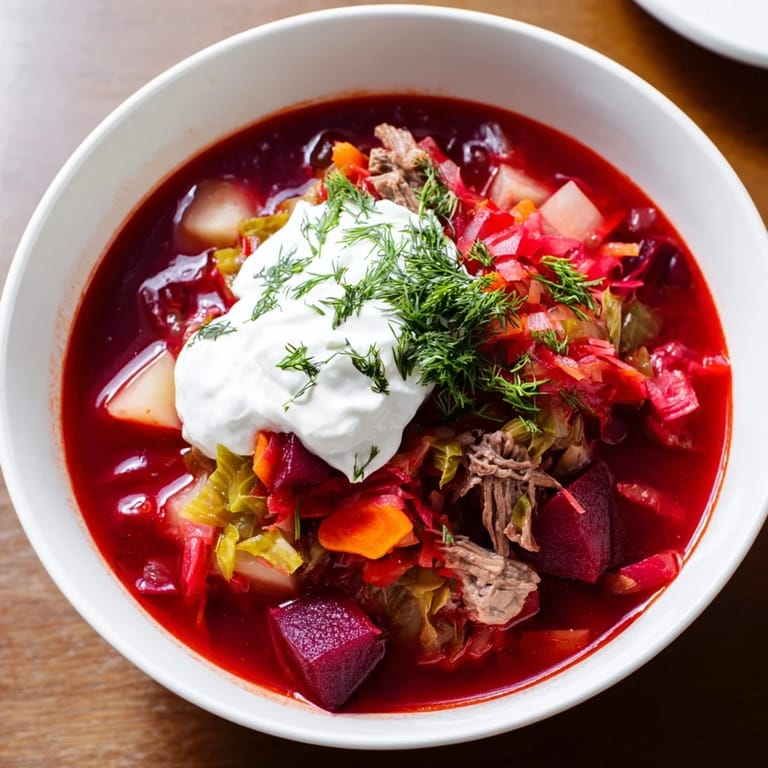
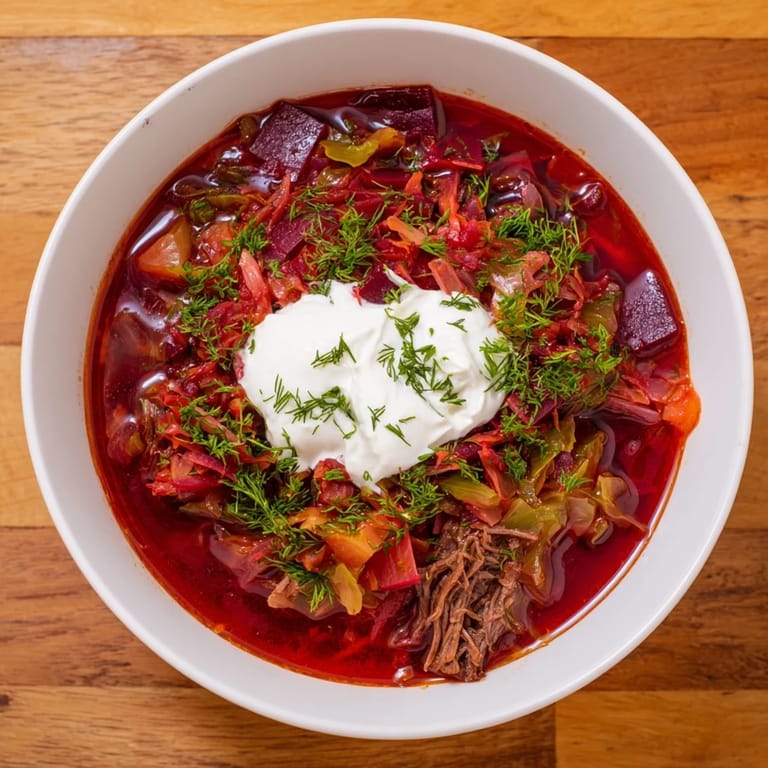
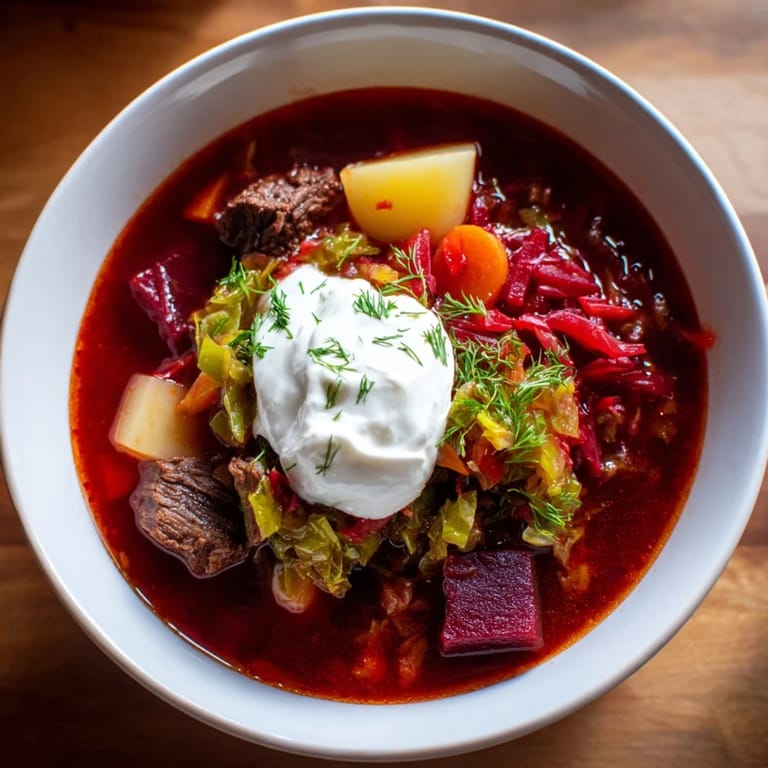
Serve borscht hot in deep bowls, with a generous spoonful of sour cream swirled into the center and fresh dill or parsley scattered across the top. The contrast of the hot, earthy soup and the cool, tangy cream is essential—don't skimp on the amount. Borscht keeps beautifully in the refrigerator for up to five days, and honestly, it develops even more flavor as it sits, so making it a day ahead is smart planning.
- Warm your bowls under hot water before serving; the soup cools quickly and warm bowls help it stay at that perfect eating temperature.
- A thick slice of rye bread or Ukrainian garlic rolls on the side makes this a complete, satisfying meal.
- If you want extra brightness, a splash of fresh lemon juice stirred in at the end is magical, though traditional recipes use vinegar alone.
 Save to Pinterest
 Borscht is the kind of soup that fills your kitchen with warmth and your body with comfort, the kind that tastes like home no matter where you're eating it. Make it when you need reminding that simple ingredients, given time and attention, become something worth savoring.
Questions & Answers
- → What cut of beef is best for this soup?
Beef chuck or brisket works well as they become tender when simmered slowly, releasing rich flavor into the broth.
- → Can I prepare the soup vegetarian style?
Yes, omit beef and use vegetable broth instead for a flavorful meat-free version.
- → Why are beets grated instead of chopped?
Grating the beets helps them cook evenly and release their vibrant color and natural sweetness into the broth.
- → How long should the soup rest before serving?
Letting the soup rest for 15–20 minutes after cooking allows the flavors to meld and intensify for a richer taste.
- → What is the purpose of adding vinegar in the cooking process?
Vinegar brightens the soup’s flavors and balances the sweetness of the beets while preserving their color.
- → What herbs complement this beet soup?
Fresh dill or parsley added just before serving enhances the fresh, earthy notes of the soup.